About Dasypeltis scabra (Linnaeus, 1758)
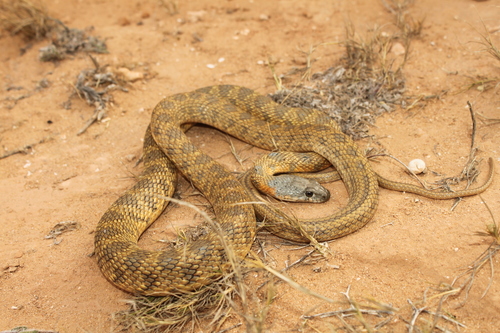
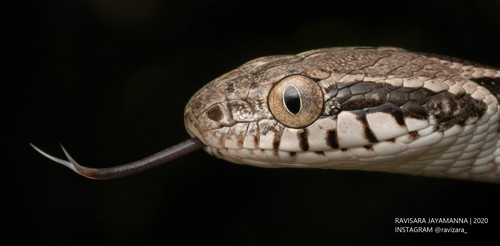
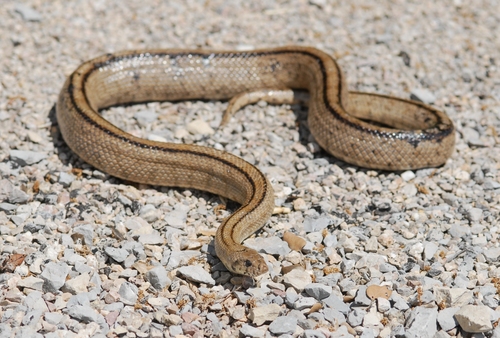
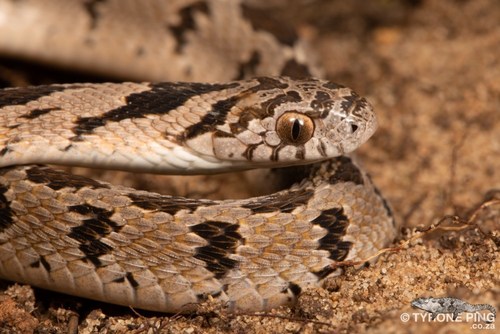
Dasypeltis scabra, formally described by Linnaeus in 1758, reaches a total length including the tail of 40–46 inches, which equals 100–120 cm. Its jaws are almost entirely toothless. On its dorsal side, this species has a pattern of rhomboidal dark brown spots set against a lighter background. An alternating series of brown spots runs along each of its sides, and it has a clear V-shaped mark at the back of the neck. Its ventral side is yellowish, and may be either uniformly colored or marked with dark dots. Dasypeltis scabra is distributed across sub-Saharan Africa. It occurs in a wide range of habitats at altitudes ranging from sea level up to 2,600 m, or 8,500 ft. It does not live in closed-canopy forests or true deserts, but occupies most ecosystems that fall between these two extremes. Dasypeltis scabra is oviparous. During the summer, a sexually mature female may lay one or two clutches, each containing 6 to 25 eggs. The eggs measure 36 mm × 18 mm, which is 1.42 in × 0.71 in. When they hatch, the young measure 21–24 cm, or 8.5–9.5 in, in total length.