About Dasymutilla occidentalis (Linnaeus)
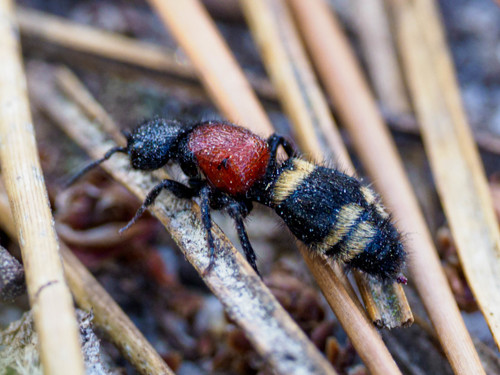
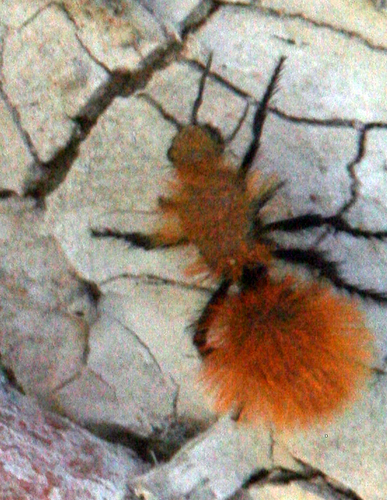
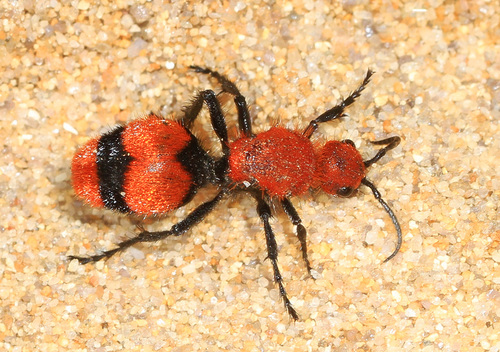
Dasymutilla occidentalis (Linnaeus) is a parasitoid wasp species. It is commonly mistaken for an ant due to its appearance and common name, and like all female Mutillidae, female D. occidentalis are wingless. This species can be recognized by its distinctive black coloration with bright red markings on the upper side of the head, thorax, and abdomen. Individuals are quick-moving and often adopt a defensive posture when threatened. Unlike females, males have dark, translucent wings and do not have a stinger. Ecologically, D. occidentalis functions as both a parasite and a prey item. Like most wasp species, velvet ants live solitary lives. For reproduction, males take flight to detect pheromones released by females, and will also fly toward stridulation sounds made by females. Once a receptive female is found, the male carries the female in his mandibles and moves her to a location he considers safe to mate; these mating sites are usually shaded and separated from potential competing mates. Both males and females stridulate during the mating process. After mating is complete, the female begins searching for the eggs and larvae of host species. Females are believed to mate only once in their lifetime. After mating, females seek out the brood cells of Eastern cicada killers, horse guard wasps, and other large ground-nesting members of Crabronidae. They sneak into these nests and deposit an egg onto a host larva. The egg hatches quickly into a white, legless grub, which consumes the host larva and passes through several larval stages before pupation. Pupation typically lasts 23 days.