About Dasymutilla gloriosa (Saussure, 1868)
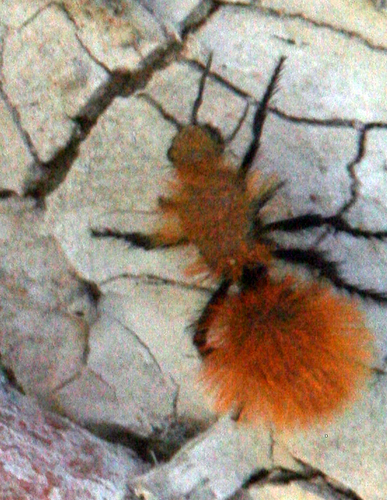
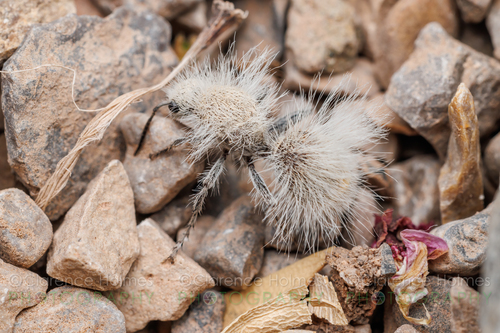
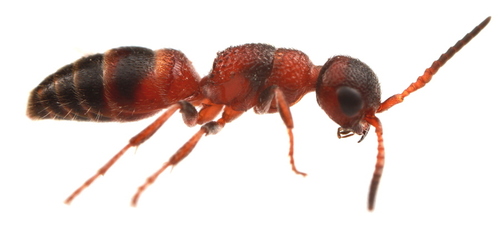
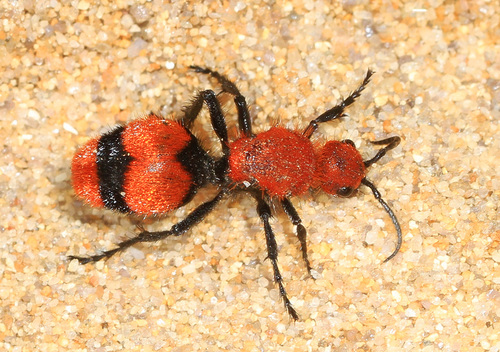
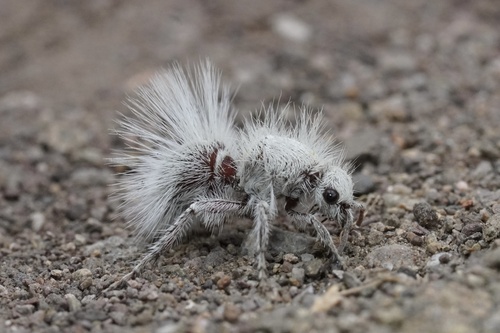
Dasymutilla gloriosa, sometimes called the thistledown velvet ant, belongs to the genus Dasymutilla. Like other mutillids, only females of this species are wingless. It is a mid-sized mutillid: it is larger than the smallest known mutillid species such as Dasymutilla vesta, and smaller than the largest known mutillid species such as Dasymutilla klugii. Its distribution spans Utah, Nevada, California, Arizona, New Mexico, Texas, and extends south into Mexico. Unlike other mutillids that have aposematic coloration, female D. gloriosa are camouflaged because they resemble the fruit of Creosotebush, which grows in the same habitats this species occupies. This species' coloration is thought to be primarily an adaptation to hot desert conditions, rather than a response to predation pressure. D. gloriosa maintains lower internal and external body temperatures than orange Dasymutilla species living in the same habitat. Like other mutillids, female D. gloriosa can deliver a very painful sting for defense. As a mid-sized mutillid, its sting is more powerful than the stings of most smaller mutillids, but weaker than the stings of most larger mutillids.