About Daphne cneorum L.
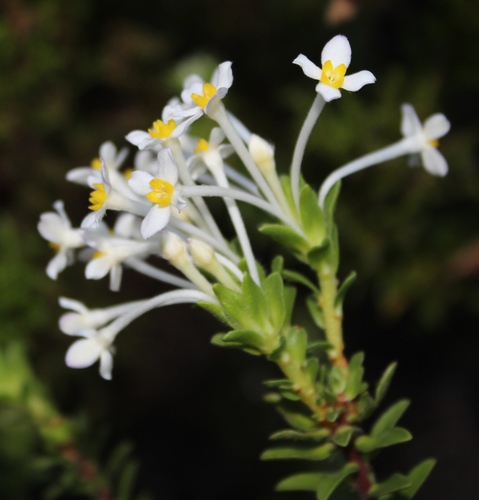
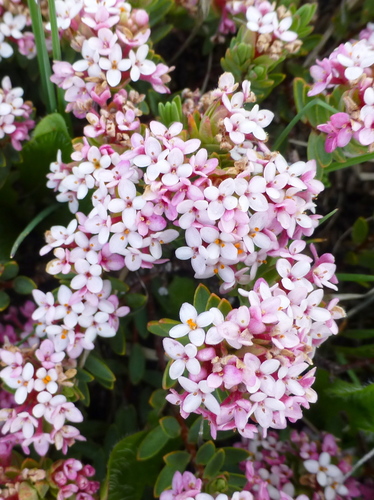
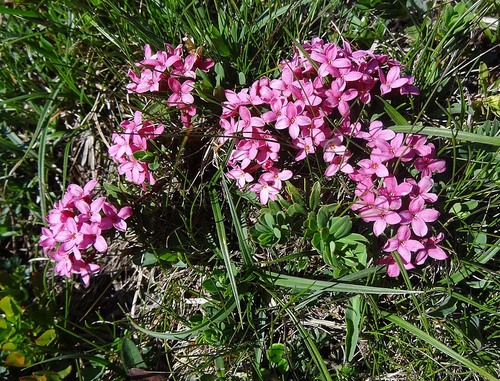
Daphne cneorum, commonly known as rose daphne or garland flower, is a flowering plant species in the family Thymelaeaceae. It is native to mountain regions of central and southern Europe, ranging from the Pyrenees east through the Alps, Apennine, Carpathian, and Balkan Peninsula mountains. It also grows in scattered local lowland populations further north and east, reaching as far as Ukraine and westernmost Russia. This is a prostrate, spreading evergreen shrub that grows up to 50 cm (20 inches) tall. It has downy stems that carry evergreen, hairless leaves shaped oblanceolate to spatulate, measuring 10–20 mm long and 3–5 mm wide. In spring, it produces highly fragrant pink flowers arranged in dense clusters of 6 to 8 blooms. All parts of this plant are poisonous to humans. In the mountains of central and western Europe, Daphne cneorum grows in meadows and stony ground on limestone, at altitudes up to 2150 m or higher. In colder climates further north and east, it occurs at lower altitudes, often on sandy soil. One example population grows in the Pays de Bitche region of the Vosges in northeastern France, at 250–300 m altitude, where the species' survival depends on protection from commercial forestry intensification, provided by the area's use as a military training ground. Another set of populations is found in the Lviv and Rivne regions of Ukraine, and in the Dnipro valley in the Kyiv area, at altitudes around 100–200 m. In these lower-altitude locations, Daphne cneorum typically grows in open pine forests, as well as mixed pine-oak and pine-beech forests. Other plant species that commonly occur in these habitats alongside Daphne cneorum include Vaccinium myrtillus, Lycopodium annotinum, Pteridium aquilinum, Maianthemum bifolium, and Trientalis europaea. Daphne cneorum is generally found in well-lit patches of rocky soil that forms over carbonate bedrock. During the Boreal age, Daphne cneorum grew predominantly in pine forests, alongside other species such as Galium boreale and Rubus saxatilis. Daphne cneorum is a popular cultivated plant for alpine and rock gardens, valued for its attractive, sweetly scented flowers. It grows best in moist, well-drained soil.