About Danthonia spicata (L.) Roem. & Schult.
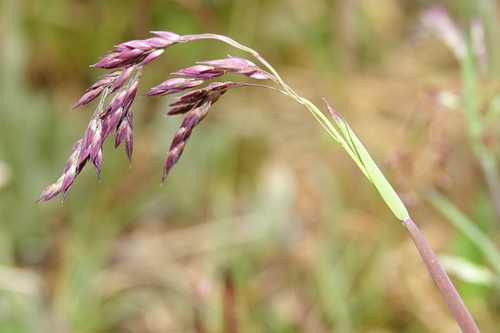
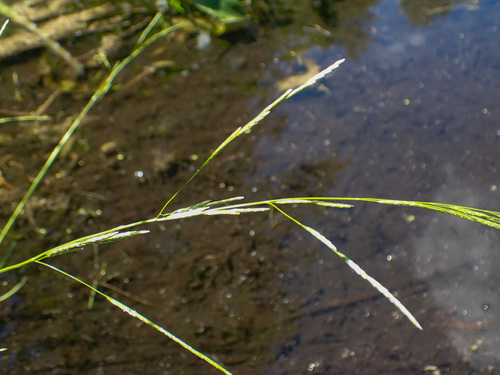
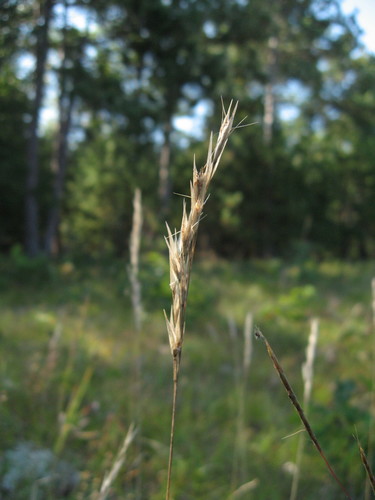
Danthonia spicata (L.) Roem. & Schult. is a grass species commonly known as poverty oatgrass, or simply poverty grass. It is native to North America, where it is widespread and common across many regions. Its distribution covers most of Canada and the United States, and extends into northern Mexico. This species is a variable perennial bunchgrass that does not produce rhizomes or stolons. It can reach heights between 7 and 100 cm (2.8 to 39 inches) tall, and grows as a crowded tuft of leaves at ground level. Its leaves often become curly and persist as they dry out, though plants growing in shady, moist areas may not develop curly leaves. The inflorescence is a narrow panicle that holds up to 18 spikelets, which have twisted, hairy awns. Cleistogamous, unopening florets also grow next to the leaves and within the panicles. This species forms a long-lasting soil seed bank, where seeds can persist for decades before being stimulated to germinate. Poverty oatgrass grows in many types of habitat across a range of forest and grassland ecosystems. It grows well on poor, dry, rocky soils, which is the origin of its common name. When a habitat is disturbed, for example after a wildfire, long-buried seeds in the soil are stimulated to germinate. This makes the species a pioneer species that colonizes recently cleared land, and it becomes less common as other plant species establish in the area. It is a common member of plant communities in some ecosystems maintained by a frequent fire regime, such as jack pine (Pinus banksiana) barrens.