About Dallia pectoralis Bean, 1880
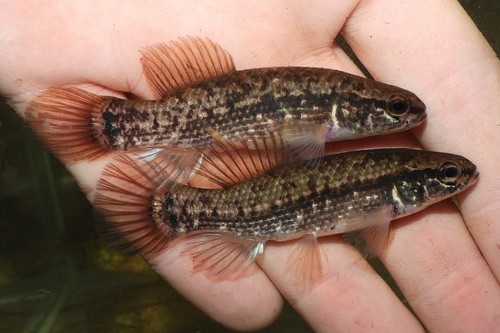
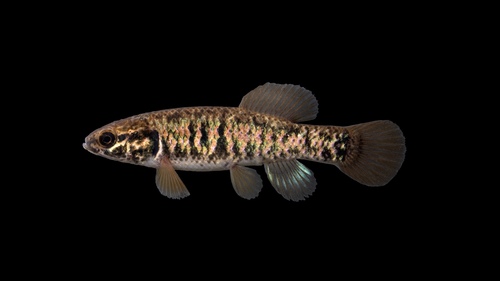
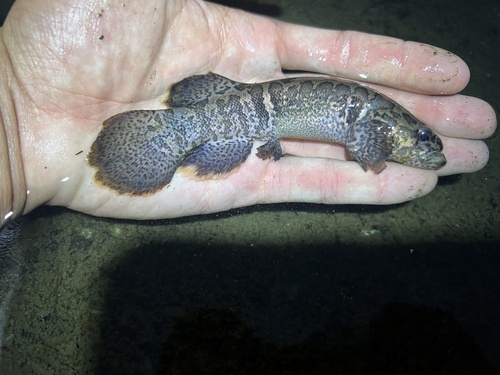
Alaska blackfish (Dallia pectoralis Bean, 1880) are small fish, with an average length of 108 mm (4.3 in), and a recorded maximum length of 330 mm (13 in). They have easily distinguishable structural features: relatively large dorsal and anal fins positioned toward the rear of the body, large lobed pectoral fins located just behind the operculum, a diphycercal caudal fin, and small pointed pelvic fins. Their head is broad and flat, and their trunk is long and slender. The dorsal side of their body ranges from dark green to brown, their underside is pale, and light-colored blotches appear along their lateral sides. Males can be told apart from females by a reddish fringe along their dorsal, caudal, and anal fins; additionally, the tips of males' pelvic fins extend beyond the anal fin, while females' pelvic fin tips do not. The Alaska blackfish is well-known for its ability to breathe atmospheric oxygen through a modified esophagus. The blackfish esophagus is divided into a non-respiratory section and a respiratory section. The respiratory section has extensive mucosal folding, high vascularization, and widespread capillaries throughout its epithelium. This specialized respiratory structure suggests selection pressures that led to the development of separate purely respiratory organs and purely hydrostatic organs. The species also retains a hydrostatic swim bladder, which appears unnecessary unless it helps maintain neutral buoyancy in cold winter months under ice cover. Alaska blackfish are distributed across Bering Sea islands, Siberia, and Alaska. In Alaska, their range extends from the Colville Delta south to the central Alaska Peninsula near Chignik, as well as upstream through the Yukon-Tanana drainage to near Fairbanks. They live in heavily vegetated swamps and ponds, and are occasionally found in rivers and densely vegetated lakes, where water is often stagnant during the summer. Their spawning migrations are limited: they move inshore and upstream in spring, then return to deeper water in fall. In winter, Alaska blackfish typically live in the benthic regions of lakes. When oxygen levels drop below a certain minimum, they move to the surface and gather around breathing holes. These breathing spots can be pre-existing holes created by muskrats, beavers, and fishers, or simply thin areas of ice. Blackfish have been observed schooling below the ice; when they swim upward to breathe, they gnaw at the ice and produce an audible snapping or sucking sound. This species is known for its tolerance of cold water, and has been recorded surviving exposure to −20 °C (−4 °F) for 40 minutes. Even with this hardiness, Alaska blackfish can develop edema and experience mass mortality events during winter. Spawning takes place from May to August, and adult fish can spawn multiple times. Because of this, females do not usually release all of their eggs in a single spawning event. Depending on her size, a female releases a total of 40 to 300 eggs in batches over the spawning period. Eggs attach to vegetation and hatch in a short time, hatching after nine days when held at 12 °C (54 °F). Newly hatched young are approximately 6 mm long, and survive on their yolk sac for an average of 10 days. Growth rate varies across Alaska. Blackfish from Interior Alaska and the Anchorage area reach about 108 mm (4.3 in) at age 2, 138 mm (5.4 in) at age 3, and 178 mm (7.0 in) at age 4. In comparison, Bristol Bay blackfish grow much slower and live longer. Four-year-old Bristol Bay blackfish are approximately 64 mm (2.5 in) long, and the species can live up to 8 years in this region. Female blackfish reach sexual maturity at a length of 80 mm (3.1 in).