About Daktulosphaira vitifoliae (Fitch, 1855)
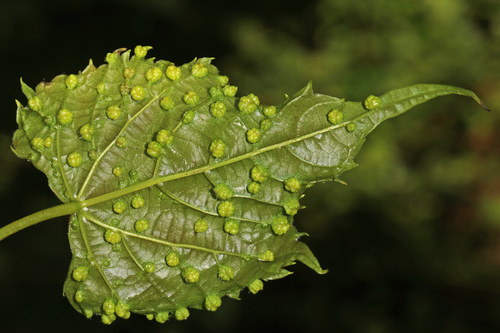
Grape phylloxera, whose scientific name is Daktulosphaira vitifoliae (Fitch, 1855), is an insect pest of grapevines found worldwide, and is originally native to eastern North America. It belongs to the family Phylloxeridae within the order Hemiptera (the bugs). It was originally described in France as Phylloxera vastatrix, and this species has been equated to the previously described Daktulosphaera vitifoliae and Phylloxera vitifoliae. The insect is commonly referred to simply as phylloxera; the name comes from Ancient Greek words for leaf (φύλλον) and dry (ξηρός). These are almost microscopic, pale yellow sap-sucking insects related to aphids. Depending on the phylloxera genetic strain, they feed on either the roots or the leaves of grapevines. On Vitis vinifera, the root deformations (called "nodosities" and "tuberosities") caused by feeding, along with secondary fungal infections, can girdle roots, gradually cutting off nutrient and water flow to the vine. Nymphs also form protective galls on the undersides of grapevine leaves of some Vitis species, and overwinter under the bark or on the vine roots; these leaf galls are typically only found on the leaves of American vines. American grapevine species such as Vitis labrusca have evolved multiple natural defenses against phylloxera. The roots of these American vines exude a sticky sap that repels nymphs by clogging their mouthparts when they attempt to feed. If a nymph successfully creates a feeding wound on the root, American vines respond by forming a protective layer of tissue to cover the wound and protect it from secondary bacterial or fungal infections. Currently, there is no known cure for phylloxera. Unlike other grape conditions such as powdery mildew or downy mildew, no chemical control options exist for this pest. The only successful method of controlling phylloxera has been grafting phylloxera-resistant American rootstock, most often hybrid varieties developed from Vitis berlandieri, V. riparia, and V. ruprestris, to more susceptible European V. vinifera vines.

