About Dactylorhiza maculata subsp. saccifera (Brongn.) Diklic
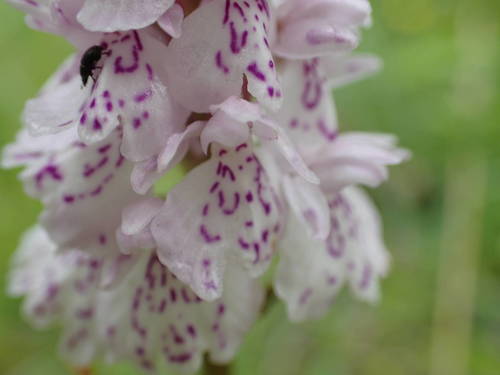
Dactylorhiza maculata subsp. saccifera, a subspecies of Dactylorhiza maculata, typically grows between 15 and 45 centimetres (5.9 to 17.7 in) tall, and can reach a maximum height of 70 centimetres (28 in). These plants are tuberous geophytes, meaning they develop buds inside underground tubers that produce new stems, leaves, and flowers each year. They are also terrestrial orchids, so unlike epiphytes, they do not grow on other large plants. This orchid produces an erect, hairless, cylindrical stem with a streaked surface. Its leaves are oblong or oval-lanceolate, marked with dark ellipsoid-shaped spots that give the species its scientific name. Leaves are amplexicaul (clasping the stem), and may grow at the plant's base (radical/basal) or along the stem (cauline). The underground portion of the stem holds two tubers, each deeply split into several lobes or tubercles, a feature characteristic of the genus Dactylorhiza. One tuber supplies nutrients to the current growing stem, while the second tuber stores nutrients to support the next year's new plant growth. The inflorescence ranges from 5 to 15 centimetres (2.0 to 5.9 in) long, and is made up of flowers arranged in a dense spike. Flowers grow from the axils of membranous, lanceolate-shaped bracts. Flower color ranges from light pink to purple or white, with darker streaks that appear mostly on the labellum, and sometimes on the margins of tepals. Individual flowers average 10 to 15 millimetres across. The flowers are hermaphrodite and pollinated by insects. This subspecies of heath spotted orchid prefers sunny locations in lowlands or hills. It grows in slightly damp meadows, dry forest undergrowth, areas with shrubs, and along stream edges. It can grow on both siliceous and calcareous substrates, and occurs at elevations up to 2,200 metres (7,200 ft) above sea level. In Northern Europe, it flowers from June to July. Orchids in the genus Dactylorhiza are mycorrhizal generalists. D. maculata forms mycorrhizal associations with a range of common fungal species in the Tulasnellaceae family, as well as with species in Ceratobasidiaceae and Sebacinales. Dactylorhiza maculata is pollinated by insects, especially bumblebees. Its flowers are food deceptive — they do not produce nectar for visiting pollinators.