About Cyttaria gunnii Berk.
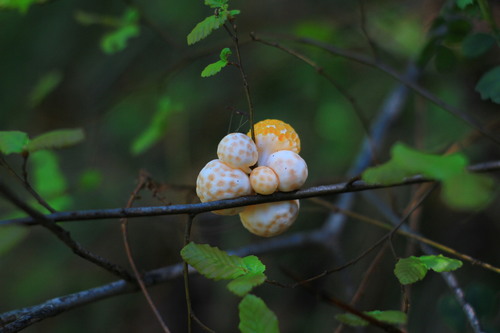
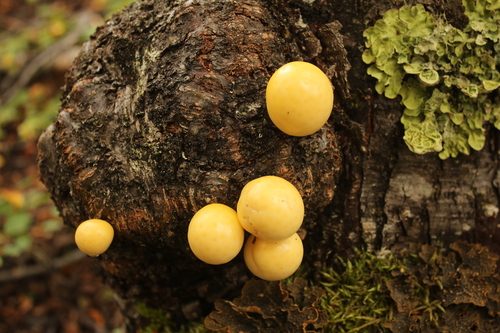
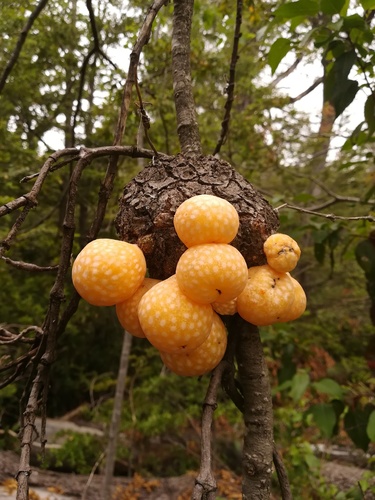
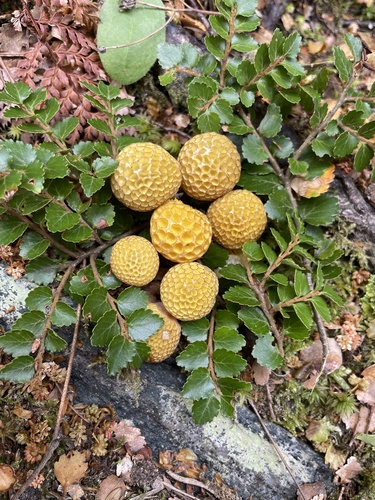
Cyttaria gunnii (common names myrtle orange or beech orange) is an orange-white edible ascomycete fungus native to Australia. It is a specialized parasite that grows only on myrtle beech (Nothofagus cunninghamii) trees. This fungus forms globose woody galls on its host trees, and does not spread throughout the host tree tissue. It is a perennial species that produces a crop of fruit bodies every year. Fruit bodies grow in clusters that resemble bunches of grapes, and emerge in late spring and summer between November and January. Each fruit body is globular or pear-shaped, and can reach up to 2.5 cm (1 inch) in diameter. A membrane covering the fruit body eventually bursts, revealing a network of hollow concavities. The spore print of Cyttaria gunnii is black, and individual spores measure 12 by 7–12 μm. Aboriginal Australians have historically eaten this fungus's fruit bodies as food. The fruit bodies have a jelly-like consistency and are reported to have a pleasant taste.