About Cystotheca lanestris (Harkn.) Miyabe
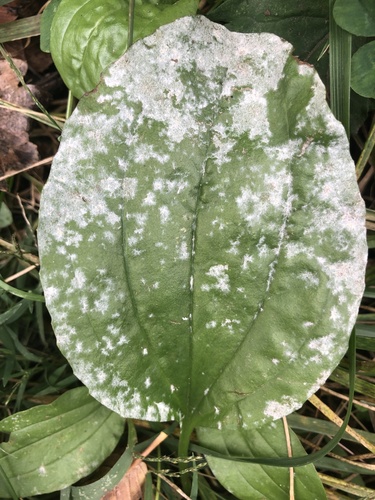
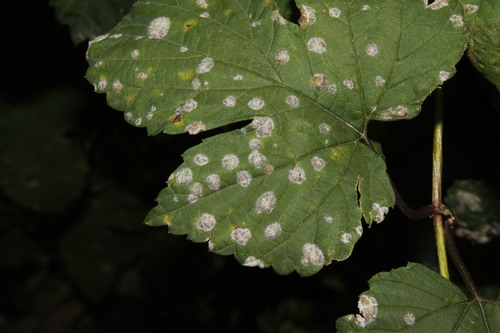
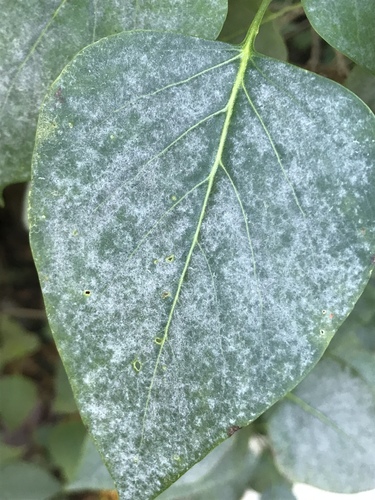
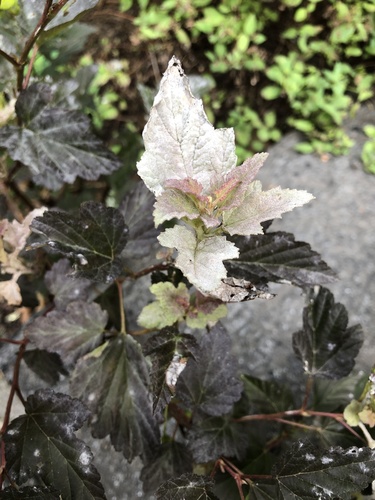
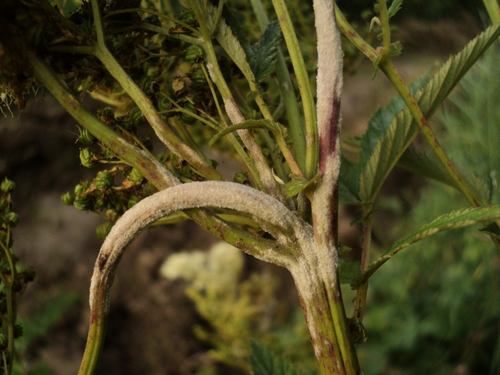
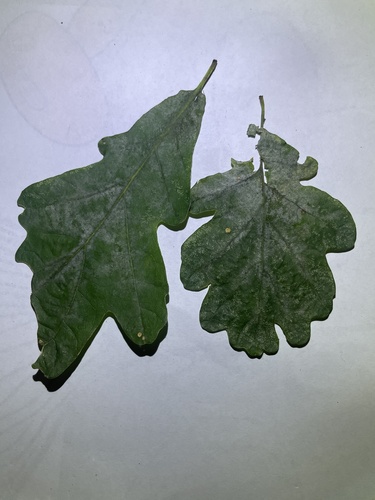
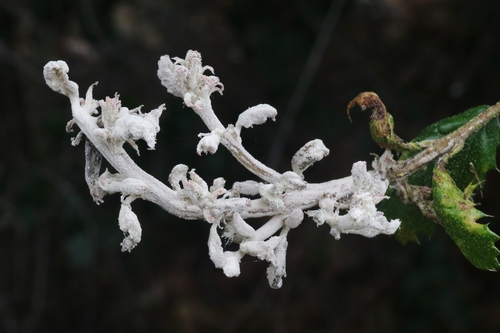
Cystotheca lanestris (Harkn.) Miyabe produces white mycelium that changes color to grey and eventually tan brown as it ages. This fungus causes witch's-broom galls, which are abnormal clusters of thickened, elongated, highly branched shoots that bear very small leaves. Like most members of the Erysiphaceae family, Cystotheca lanestris is fairly host-specific, and only infects species in the oak genus Quercus. It has been recorded on a wide variety of oak species within this genus: Quercus agrifolia, Q. alba, Q. bicolor, Q. canbyi, Q. cerris, Q. chrysolepis, Q. coccinea, Q. crassipes, Q. douglasii, Q. engelmannii, Q. garryana, Q. ilex, Q. kelloggii, Q. laceyi, Q. laeta, Q. laurifolia, Q. lobata, Q. macrocarpa, Q. michauxii, Q. nigra, Q. obtusata, Q. palmeri, Q. palustris, Q. phellos, Q. polymorpha, Q. potosina, Q. robur, Q. rubra, Q. stellata, Q. suber, Q. toumeyi, Q. velutina, Q. virginiana, and Q. wislizeni. Older Asian plant collections that were previously identified as Cystotheca lanestris actually belong to a phylogenetically distinct species, C. kusanoi. A second species of Cystotheca that infects Quercus in North America, Cystotheca mexicana, is endemic to Mexico and occurs on oak species that are also endemic to the region.