About Cyrilla racemiflora L.
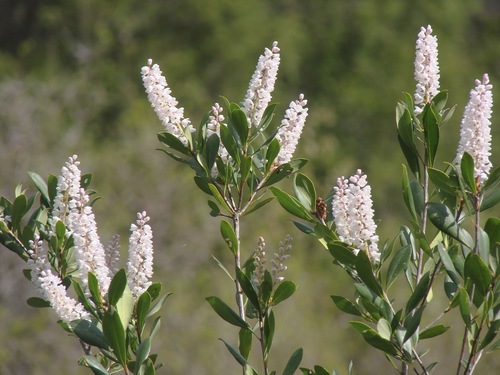
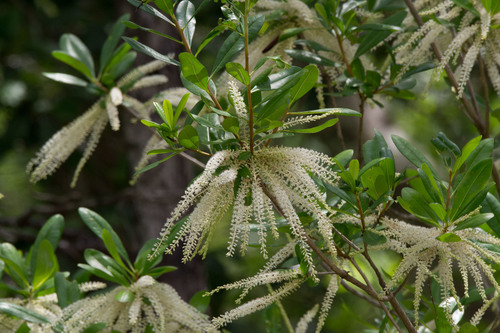
Cyrilla racemiflora L. grows as a large tree in tropical rainforests, reaching 15 metres (49 ft) or more in height and over 1 metre (3 ft 3 in) in trunk diameter. At the northern edge of its range in temperate regions, it only grows as a shrub reaching 4 metres (13 ft) in height. It is most easily recognized by its white flowers, which are prominent on the plant during the summer. It is primarily evergreen, but in autumn some leaves turn a brilliant red before falling. Plants growing at the northern edge of its range are usually deciduous. Its leaves are alternate, simple, and range from oblanceolate to oval in shape. They are rounded or pointed at the tip, narrowed toward the base, thick, toothless, and smooth, with reticulate venation. Leaves measure 4–10 centimetres (2–4 in) long and 1.2–3 centimetres (15⁄32–1+3⁄16 in) broad. The flowers are tightly clustered in 8–15 centimetre (3–6 in) long racemes that grow on twigs from the previous year. Each flower is 5–10 millimetres (3⁄16–13⁄32 in) in diameter, has five white petals, and is subtended by a slender bract. The fruit is a yellow-brown capsule 2–3 millimetres (5⁄64–15⁄128 in) long. Large individuals have thin, reddish-brown bark that is often shaggy in appearance, while smaller individuals have gray to brown bark that is mostly smooth with light fissuring. This species can be found in rainforests, swamps, along streams, bogs, bayheads, backwaters, wet prairies, low pinelands, pocosins, and flatwood depressions. It prefers acidic, sandy, or peaty soils.