About Cypseloides niger (J.F.Gmelin, 1789)
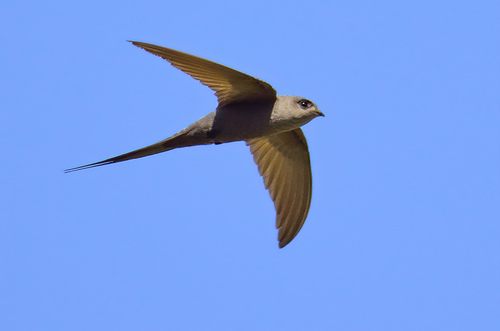
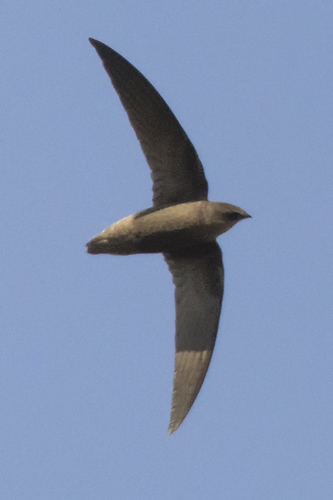
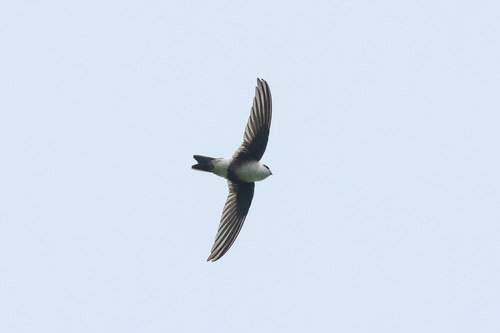
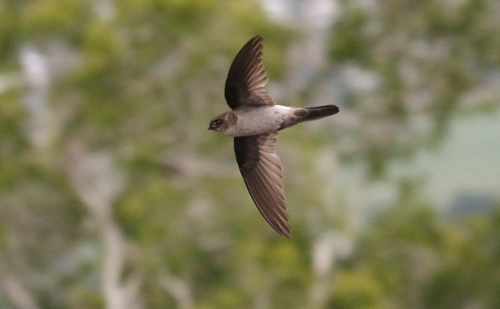
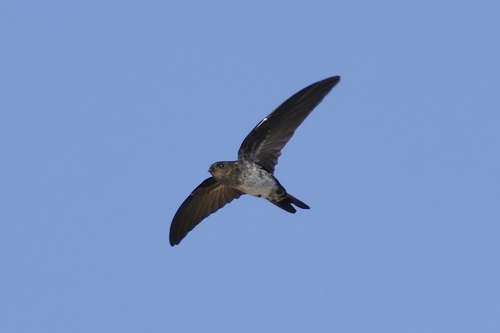
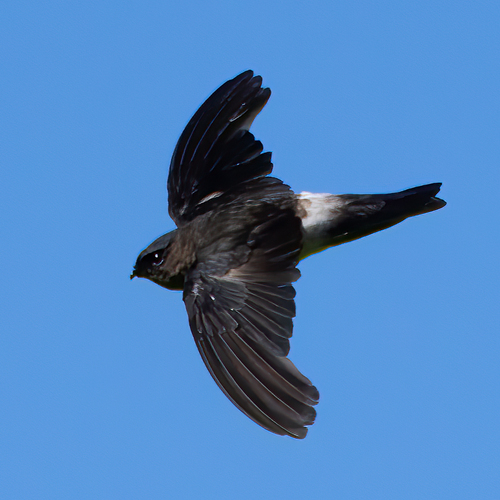
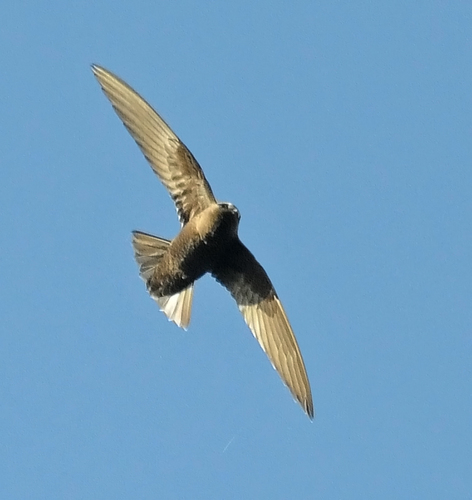
Cypseloides niger, commonly known as the American black swift, has a distinct appearance in flight. These birds look like flying cigars with long, slender, curved wings. Their plumage is mostly a dark, sooty gray. There is visible color contrast between the inner and outer sections of the wing, and the shoulders are distinctly darker than other parts of the wing. They have short, slightly forked tails. Fewer than 150 breeding sites for this species are known in the United States and Canada, and 108 of these sites were recorded in Colorado as of July 2012. Known breeding sites are located across multiple regions: In Alberta, Canada, breeding sites occur near a waterfall in Johnston Canyon, Banff National Park, where populations are declining and have received extra protection as of August 2018, and in Maligne Canyon, Jasper National Park. In California, breeding sites are found along the Santa Cruz coast, where the population is declining, at Berry Creek Falls, Burney Falls State Park, Yosemite National Park, Sequoia National Park, Kings Canyon National Park, the San Bernardino Mountains, and the San Jacinto Mountains. In Colorado, breeding sites include Box Canyon near Ouray, Hanging Lake, Hawk Creek Falls, Falls Creek Falls, Niagara Gulch, and Cataract Gulch. In New Mexico, a breeding site is located at Jemez Falls. In Utah, a breeding site is at Stewart Falls. In Washington, a breeding site occurs at Semiahmoo Bay. After the breeding season, these birds leave North America to migrate. The main wintering location for most of the population is still unclear, though some individuals have been tracked as far south as Brazil. A 2012 study used light-level geolocators to tag four breeding birds from Colorado, and found these individuals wintered in the lowland rainforest of western Brazil. Some populations of this bird in the West Indies appear to be permanent residents that do not migrate. American black swifts arrive late in spring to their breeding ranges; breeding birds in Colorado do not arrive until the very end of May through June. Large flocks of migrating birds are occasionally spotted in spring and fall, but they are only very rarely seen far south of the U.S. breeding range. American black swifts spend most of their lives on the wing and forage for food while flying. They feed on flying insects, primarily flying ants and beetles, and they often forage in small groups.