About Cyprinus rubrofuscus Lacepède, 1803
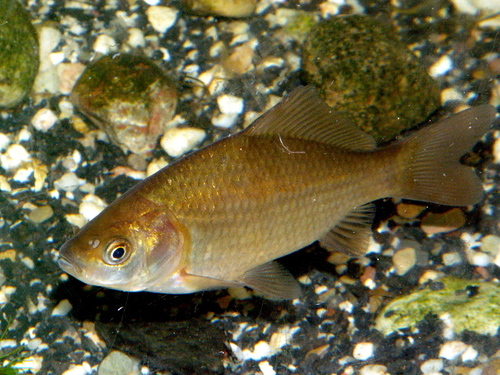
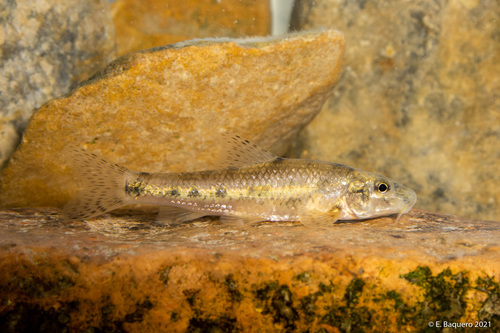
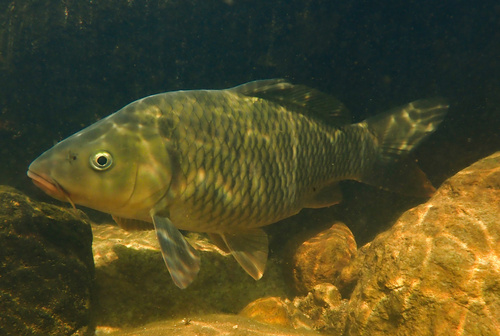
Cyprinus rubrofuscus Lacepède, 1803 (common name Amur carp) has a fusiform body that varies in roundness. Typical adults measure 30 to 60 centimetres (12 to 24 inches) long and weigh 50 to 350 grams (0.11 to 0.77 pounds), with size varying by life stage. It has large, bright elasmoid scales that fully overlap and sit in pockets of the dermis. Its dorsal fin is thin, elongated, and extends along the posterior half of the body, and it has large pectoral fins. Amur carp usually have 29 to 33 (+2–3) lateral line scales, and 18 to 22.5 branched dorsal rays. The most posterior anal ray is bony and serrated, and its caudal fin is lightly forked. The sub-terminal mouth is downturned and protrusible. Like many other bottom-feeding cyprinids, C. rubrofuscus has four barbels that work to detect food and receive other mechanical stimuli. C. rubrofuscus can be told apart from common carp Cyprinus carpio by its lower count of lateral line scales (29–33 compared to 33–37 for C. carpio) and higher count of dorsal rays (18–22 compared to 17–20 for C. carpio). C. carpio typically shows grey and bronze coloration, while wild C. rubrofuscus usually has a silver body with red pelvic, anal, and caudal fins. Some wild stocks in Laos have been reported to have solid grey colouring instead. In scientific literature, this species is often listed under the synonym C. carpio haematopterus. Classification of Amur carp has been debated historically: some sources treated it as an eastern Asian subspecies of common carp (C. carpio), but other studies have identified genetic differences between the two species. Only recently has it been recognized as a separate distinct species by taxonomic authorities including ITIS and the IUCN Red List. Some studies examined differences between northern (“haematopterus”) and southern (“viridiviolaceous”) populations within the eastern Asian range, but later research found these two groups do not share a unique common ancestor. Amur carp originates from Eastern Asia, and its native range includes Mongolia, Russia, China, Laos, and Vietnam. It mostly lives in freshwater environments including the Amur and Red River drainage basins and ponds, and is tolerant of slightly brackish water. C. rubrofuscus has been widely introduced to ponds across southeastern Asia, and is distributed for use in aquaculture. Most distribution reports group both ornamental Koi and wild Amur carp together, so it is currently not possible to confirm which type of fish existing occurrence records represent. This species is found in lakes and rivers, and prefers slower-flowing water at an average depth around 2 metres (6.6 ft), though it can tolerate a wide range of turbidity and flow conditions. It is an omnivorous bottom-feeder, with a diet made up of benthic organisms and detritus including arthropods, larvae, and aquatic weeds. The proportion of these food sources shifts seasonally between wet and dry months, depending on which resources are more readily available. The genus Cyprinus is widely known for high tolerance to variable environmental conditions, and C. rubrofuscus is further set apart by its particularly strong resistance to cold temperatures, high alkalinity, and low oxygen conditions.