About Cyprinodon eremus Miller & Fuiman, 1987
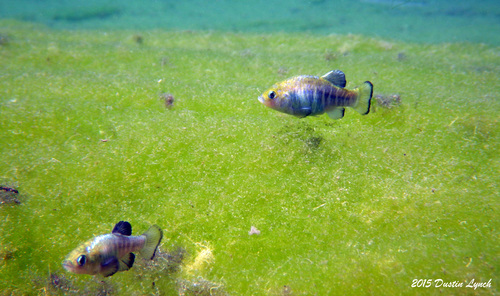
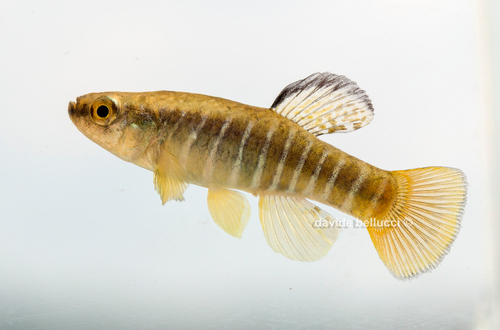
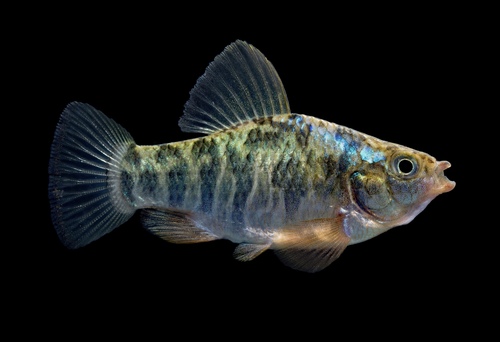
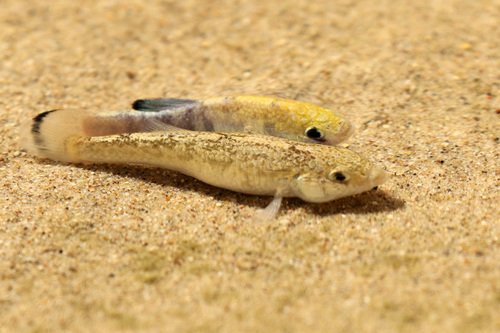
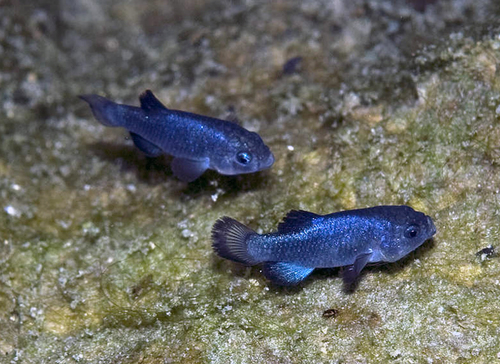
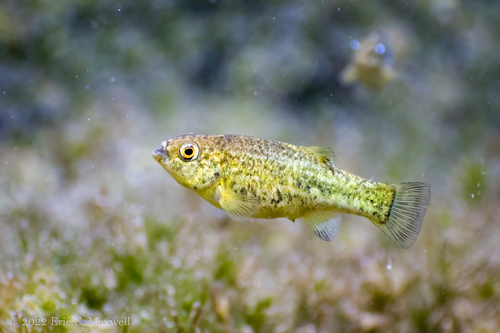
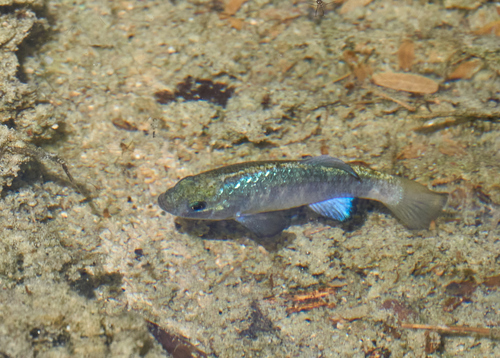
The Sonoyta pupfish (also called the Quitobaquito pupfish) has a thick, chubby body with a superior mouth that contains tricuspid teeth. Its scales have spine-like projections. Body color differs between males and females. Females and juveniles have narrow, vertical dark bands along their sides, plus a disjoined lateral band. While their bodies are silver, their fins are mostly colorless, with the exception of an ocellate spot on the dorsal fin, and sometimes a dark spot on the anal fin. Mature breeding males have a light to sky-blue body paired with darker fins. The posterior section of their caudal peduncle (the base of the tail) is yellow or orange, and occasionally an intense orange-red. Compared to other pupfish species, this fish has a larger head, mouth, and overall body, but smaller fins and a shorter caudal peduncle. It also has a deeper head and longer jaw. The Sonoyta pupfish currently occupies a very small range, estimated to cover less than 11 square kilometers (4.2 square miles). In the United States, it only survives in Quitobaquito Springs, which is part of the Sonoyta River basin in Organ Pipe Cactus National Monument in south-central Arizona. It also occurs just across the border in Mexico, where it is only found in two short stretches of the Sonoyta River in Sonora. Sonoyta pupfish live in springs, lakes, pools, marshes, and slow-moving streams. The species generally prefers shallow, heavily vegetated water. It can tolerate a wide range of water temperature fluctuations, as well as salinity levels up to three times that of seawater and temperatures over 95 °F (35 °C). During reproduction, male Sonoyta pupfish defend a territory against other males and attempt to attract females. Females deposit their eggs randomly within the male's territory. Males have distinct coloration that grows more intense during the breeding season.