About Cyprinodon elegans Baird & Girard, 1853
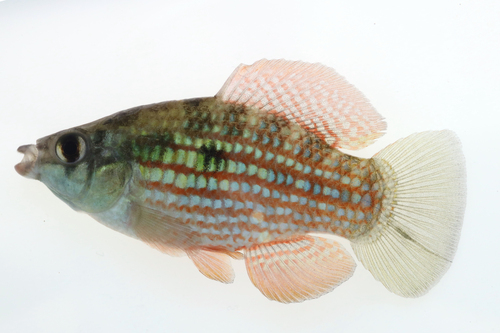
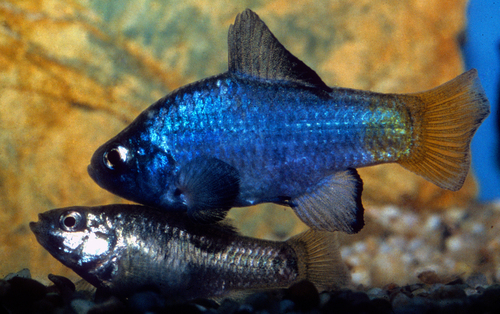
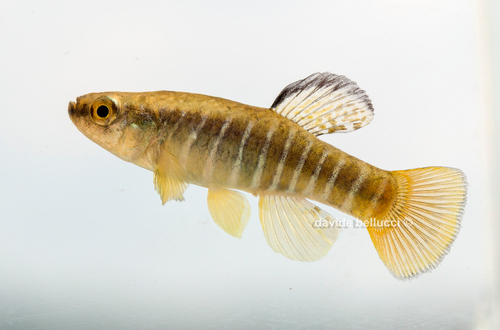
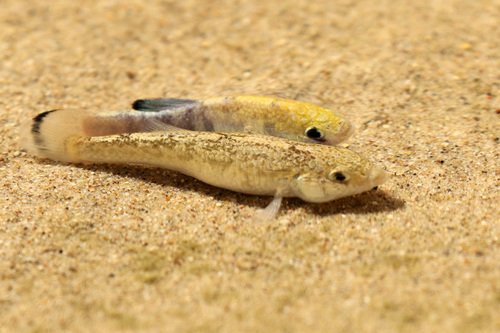
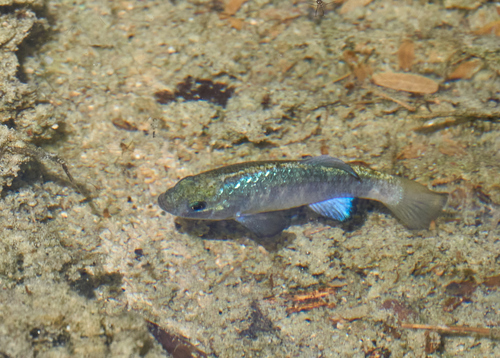
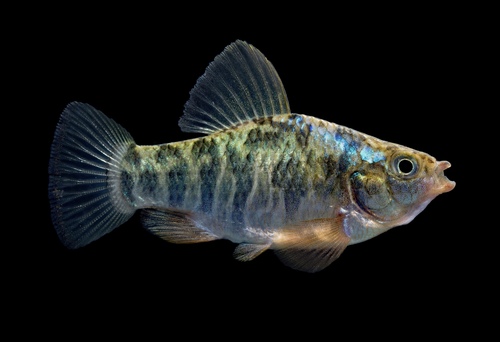
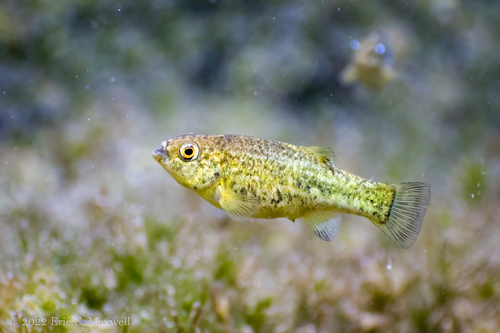
The Comanche Springs pupfish (scientific name Cyprinodon elegans Baird & Girard, 1853) differs from other species in its genus through the prominent speckled color pattern of males, along with a more streamlined body shape and the absence of vertical bars. Its back is relatively flat, and the species reaches a maximum total length of approximately 50 mm (2.0 in). Populations from different locations also differ in fin ray counts and belly scale patterns. This species is currently found in an interconnected spring system near Balmorhea, Texas, including Phantom Lake Spring in Jeff Davis County; San Solomon Springs, Giffin Spring, and Toyah Creek in Reeves County. Base water flow for these springs originates from the Edwards-Trinity aquifer system, and runoff from the Davis Mountains recharges the overlying alluvial aquifers. The amount and quality of available habitat changes quickly in response to these recharge events. Historically, these springs supported extensive marshes that likely held large populations of this pupfish. Toyah Creek is intermittent, only flowing after heavy rain, so it only provides pupfish habitat occasionally. A population for which the species was named once existed in Comanche Springs near Fort Stockton, Texas; these springs dried out in 1955, leading to the local extinction of that population. Small numbers of pupfish have also been recorded immediately downstream of East Sandia Spring during surveys conducted in 1993 and 2001. West Sandia Spring and Saragosa Spring, which are now mostly dry, likely supported the species before human modification of the area. Most remaining habitat for this pupfish has been converted into a 97 km (60 mile) network of interconnected irrigation canals dug from earth or lined with concrete. Water flow in these canals is swift and often temporary, and much of the network is not suitable for pupfish. Since canal water is sometimes diverted, which causes pupfish mortalities, canals are not considered permanent habitat. Instead, they act as connections between larger populations living in the springs. Lower water levels in the aquifer have greatly reduced flow from Phantom Lake Spring, which caused canals to dry out and shrank available pupfish habitat to a single pool at the cave where the spring emerges. In response, the U.S. Fish and Wildlife Service filled in the old canals and built a more natural ciénega at the cave mouth. A pumping system was installed to maintain stable water levels, and an alarm notifies authorities if the pump system fails. Artificial refugia for the species have also been built at Balmorhea State Park, which contains San Solomon Spring. The entire head of this spring was converted into a concrete-lined swimming pool by the Civilian Conservation Corps in the 1930s, which destroyed the original natural ciénega. The first refugium, a 275 m (902 ft) long concrete-lined canal that curves around the park motel, was completed in 1975. A 2.5 ha (6.2 acres) ciénega was added to the park grounds in 1996, designed to match the appearance and function of the original natural wetland. This artificial wetland now holds the largest known concentration of Comanche Springs pupfish. Finally, between 2009 and 2010, a second small ciénega was built next to the 1975 canal to replace the aging, deteriorating original structure. The Comanche Springs pupfish prefers water temperatures between 20 °C and 30 °C, and cannot survive in water warmer than 40 °C. It lives in water with lower salinity than other pupfish species found in the Pecos River system, which indicates this species has been isolated from close relatives for a long period of time. Comanche Springs pupfish spawn year-round in spring outflows and small pools. Females reach sexual maturity at 5 months old. Males use visual cues to identify and establish territories, choosing sites over algal mats in swift-moving water. Males position themselves upstream of their territory, which lets them use the current to launch high-speed attacks on intruding males. Females enter the territory from downstream and choose a breeding site on the algal mat. Females lay eggs one at a time, up to 30 eggs per day, onto the algal mat or a rock. The male aggressively guards the eggs until they hatch. Less dominant, average-sized males live on the edges of larger male territories, while the smallest males called sneaker males mimic female coloration to gain access to eggs in dominant male territories without triggering an attack. In slow-moving water, breeding behavior is the same except that territories are centered around a clear landmark such as a rock or patch of vegetation. Eggs have an average diameter of around 1.5 mm (0.059 in), and hatch within 5 days when held at 20 °C. Newly hatched fry have a relatively large yolk sac. Growth is rapid, and sexual maturity is reached at 5 months. Most Comanche Springs pupfish live for about one year.