About Cyprinella spiloptera (Cope, 1867)
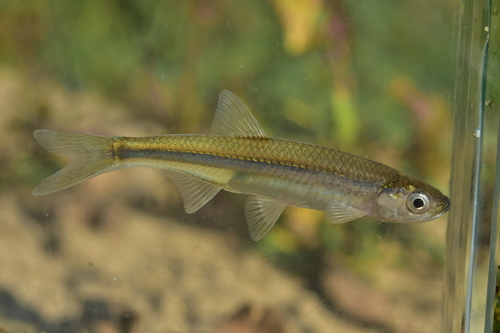
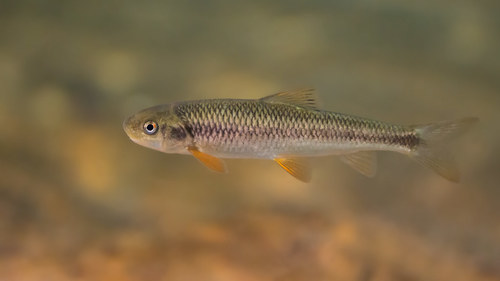
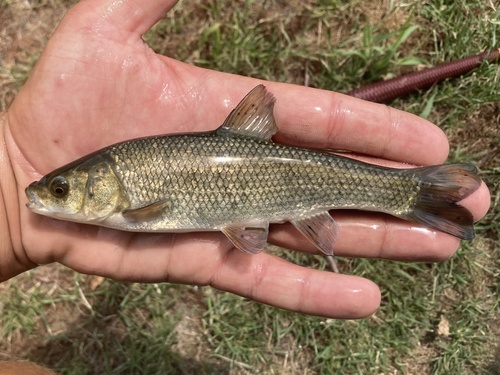
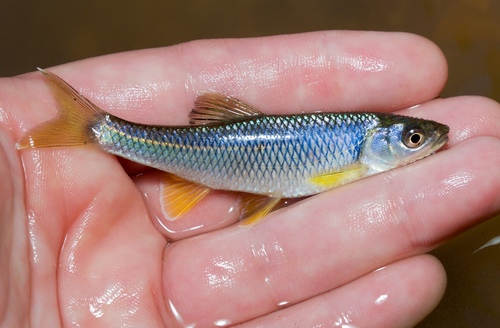
Cyprinella spiloptera, commonly called the spotfin shiner, has a distinct black pigment blotch on the membrane between the last three rays of its dorsal fin; this blotch may be obscure or faint in small individuals. Spotfin shiners are deep-bodied, with a black vertical bar located just behind the operculum. They have a terminally positioned mouth and diamond-shaped scales, each outlined with black pigment. Breeding males develop heavy pigmentation and a steel blue color during late spring and early summer, and their ventral fins turn from dull yellow to bright yellow. Small tubercles cover the entire head of breeding males, creating a rough, sandpaper-like texture. This species has between 37 and 39 lateral line scales, and has eight anal fin rays, which distinguishes it from its close relative the satinfin shiner. Spotfin shiners are present in all Great Lakes except Lake Superior. Their range extends from the Saint Lawrence drainage in Quebec south to the Potomac River drainage in Virginia, and from Ontario and New York west to North Dakota, then south to Alabama and eastern Oklahoma. Isolated populations also occur in the Ozark Mountains. They are freshwater benthopelagic fish that favor temperate climates, and live in sand and gravel runs and pools of creeks, as well as small to medium clear rivers with permanent flow. The spotfin shiner spawning season runs from mid-June to mid-August. Adult females lay eggs in small crevices within rocks, submerged logs, or roots. Males guard the eggs, which typically hatch in approximately five days. The maximum recorded age for this species is five years, though most individuals live only around two years.