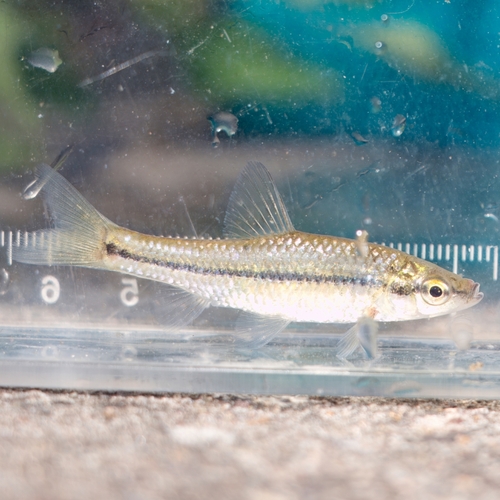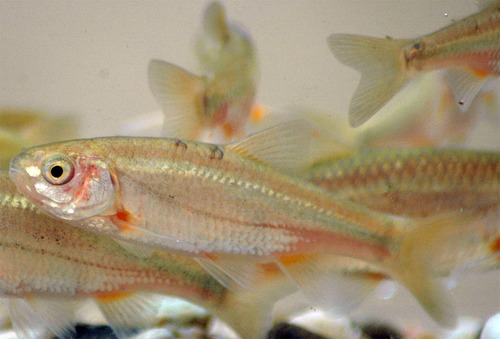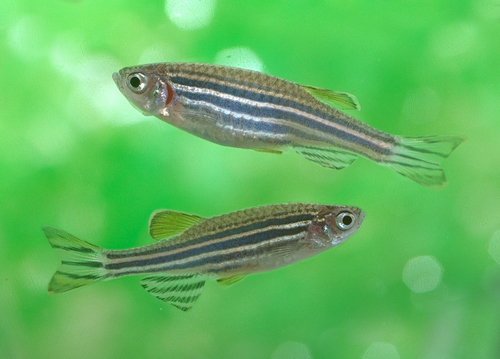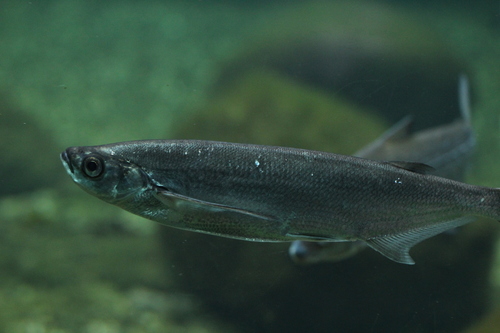
About Cyprinella analostana Girard, 1859
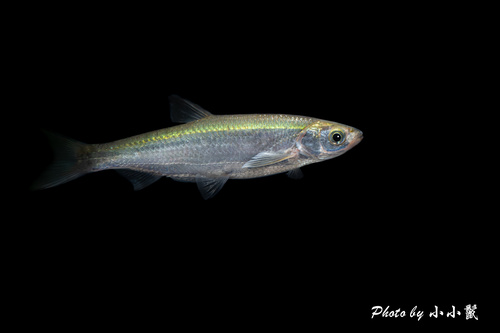
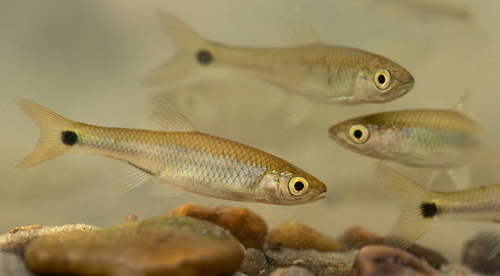
The satinfin shiner, scientifically named Cyprinella analostana, is a species of freshwater ray-finned fish that belongs to the family Leuciscidae, the group that includes shiners, daces and minnows. This species is native to the eastern United States, with its natural distribution stretching from New York to South Carolina. It is a common species that is not considered threatened. Most adult satinfin shiners reach around 7 to 9 centimeters in length, with a maximum recorded length of 11 centimeters. As a freshwater fish, it lives in rivers and creeks, and sometimes enters pools and riffles. It can be found from river headwaters all the way to areas that experience tidal influence. Its diet consists of insects, particularly flies and mayflies. Spawning takes place in spring and summer, and individual fish spawn multiple times over a single breeding season. Females lay their eggs in cracks and crevices, under rocks, on tree roots, and on wood debris. Males guard the eggs until the young emerge, which takes approximately one to two weeks depending on water temperature. The overall lifespan of this species is 3 to 4 years. Satinfin shiners produce vocalizations that help them recognize members of their own species and distinguish between sexes. The specific epithet analostana comes from the original name of Theodore Roosevelt Island, which was called Analostan Island. Type specimens for this species were collected from Rock Creek, which flows into the Potomac River opposite this island.