About Cyphoderris monstrosa Uhler, 1864
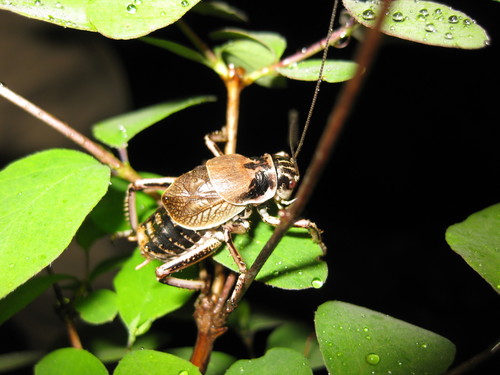
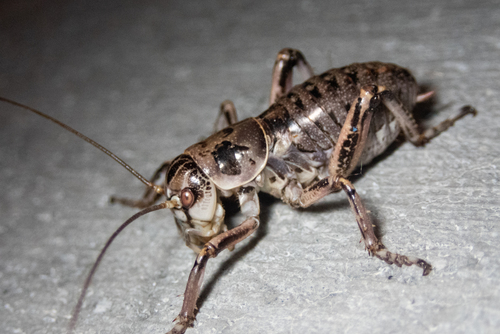
Cyphoderris monstrosa, described by Uhler in 1864, typically reaches a body length of 20–30 mm and weighs approximately 1.5 grams. These crickets have dark dorsal coloration, ranging from lighter brown to black, while their ventral side is lighter, most often white or beige. This color pattern is thought to have evolved as camouflage, helping the crickets blend into the dark bark of coniferous trees, where they spend much of their time. Like many cricket species, male Cyphoderris monstrosa produce mating calls via stridulation: they scrape specialized file-like structures on their tegmina against scrapers located on the rear edge of the opposite tegmen. In this species, the file-like structures are evenly developed along each tegmen, with a rigid dorsal portion positioned at a 90-degree angle to a rigid lateral portion. Both males and females of this species possess a structure called Ander's organ. Unlike the tegminal scrapers, which only appear in adult males, Ander's organ is present in all life stages of the species. Ander's organ can also produce sound, but studies indicate it is used predominantly by females and juveniles; males prefer to use their tegmina for sound production. Males can be distinguished from other similar species by a distinct hook-shaped structure on the ventral side of their subgenital plate. This species ranges across most of the northwestern United States and southwestern Canada, extending south to northern California and north to southern Alberta and British Columbia. It favors coniferous forest habitats that contain lodgepole pine and Engelmann spruce. Its diet consists primarily of coniferous tree pollen, though it also feeds on flowers and fruits of other plants, and occasionally consumes small insects. As a member of the order Orthoptera, this species undergoes incomplete metamorphosis. Late instar nymphs overwinter in autumn, emerge in spring, and develop into adults that mate from June through August.