About Cyperus papyrus L.
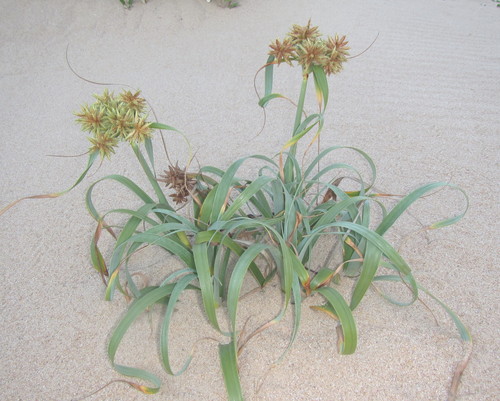
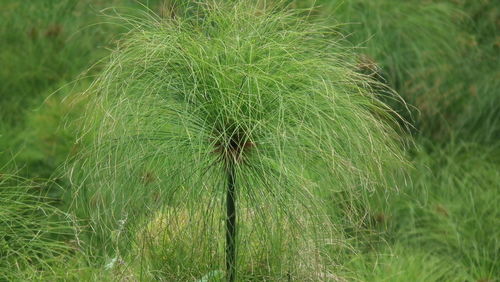
Cyperus papyrus L. is a tall, robust aquatic plant. It typically grows 4 to 5 meters (13 to 16 feet) high, though on the margins of high altitude lakes, its culms can reach up to 10 m (33 ft) tall. It grows in grass-like clumps of triangular green stems that emerge from thick, woody rhizomes. Each stem is topped with a dense cluster of thin, bright green, thread-like rays around 10 to 30 cm (4 to 10 in) long; when the plant is young, this cluster resembles a feather duster. Greenish-brown flower clusters eventually develop at the ends of the rays, which later produce brown, nut-like fruit. No leaves are visible above the soil line, but the younger parts of the rhizome, as well as the base of the culms, are covered by red-brown, papery, triangular scales. These scales are technically reduced leaves. Three subspecies of Cyperus papyrus are currently accepted: Cyperus papyrus subsp. madagascariensis (Willd.) Kük. found in Madagascar; Cyperus papyrus subsp. papyrus found throughout the full species range, except for Madagascar (where subsp. madagascariensis occurs) and the southwestern part of the range (where subsp. zairensis occurs); and Cyperus papyrus subsp. zairensis (Chiov.) Kük. found in Angola, Congo, and DR Congo. In terms of ecology, papyrus grows in tropical rain forests, and tolerates annual temperatures of 20 to 30 °C (68 to 86 °F) and a soil pH of 6.0 to 8.5. It flowers in late summer, prefers full sun to partly shady conditions, and like most tropical plants, it is sensitive to frost. Papyrus sedge forms large, dense stands in swamps, shallow lakes, and along stream banks across the wetter regions of Africa, but it has become rare in the Nile Delta. In deeper waters, it is the main component of the floating, tangled masses of vegetation called sudd. It also grows naturally in Madagascar, and some Mediterranean areas including Sicily and the Levant. The feather-duster shaped flowering heads of papyrus are ideal nesting sites for many social bird species. Like most sedges, papyrus is pollinated by wind rather than insects, and mature fruits are dispersed by water after release. Papyrus is a C4 sedge that forms highly productive single-species stands across large areas of African wetland. For cultivation, papyrus is relatively easy to grow from seed, though splitting rootstock is more common in Egypt. It grows quite quickly once established. It prefers extremely moist soil or roots submerged in water, and can flower year-round. Vegetative propagation is the recommended method for growing new papyrus plants. This method involves splitting rhizomes into small groups and planting them normally. C. papyrus is rated as hardy in USDA hardiness zones 9 and 10. In the United States, it has become invasive in Florida, and has escaped from cultivation in Louisiana, California, and Hawaii. Both the full species and the dwarf cultivar C. papyrus 'Nanus' have received the Royal Horticultural Society's Award of Garden Merit, confirmed in 2017.