About Cyperus erythrorhizos Muhl.
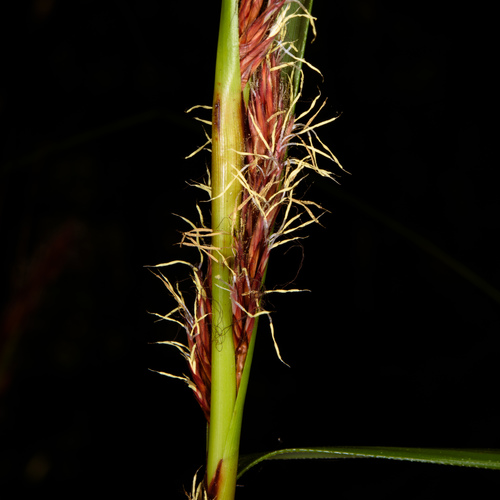
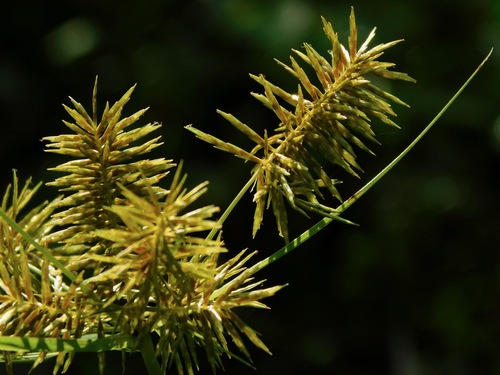
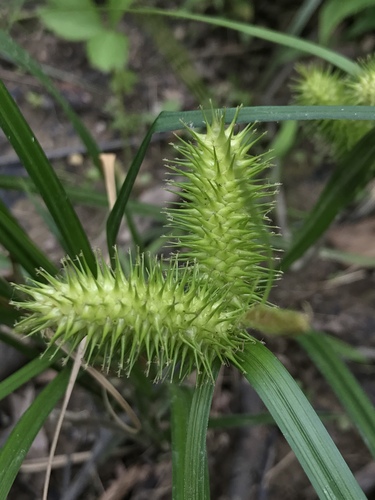
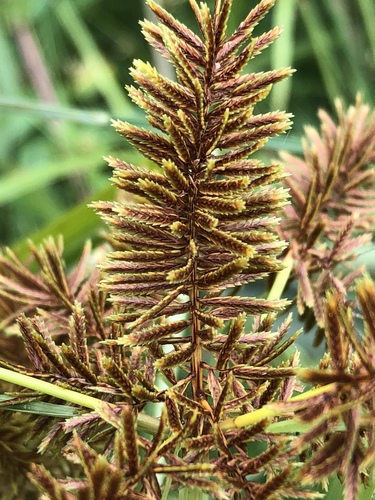
Cyperus erythrorhizos Muhl. is an annual sedge with red fibrous roots. It reaches a maximum height of one meter, though most individuals are considerably shorter. Multiple long, wispy leaves often grow around the base of the plant. Its inflorescence holds between one and several spikes; each spike contains 20 to over 100 spikelets. Spikelets range in color from light greenish brown to reddish brown, and each is made up of up to 30 bracted flowers. The fruit produced is a glossy achene approximately one millimeter long. This species is native to North America, with a distribution that extends from Canada to Mexico, and it is most common across the United States. In Canada, it occurs in British Columbia, Manitoba, Ontario, and Quebec. In Mexico, it was first documented in 1894 from a specimen collected in Baja California, near the U.S. border; it was later found in the southern Mexican state of Tabasco. In the U.S. state of Vermont, the species was discovered in 2014. It grows in wet habitats such as rivers and ditches, typically at low elevations. As a flowering annual, its growing and flowering season runs from July to December.