About Cyperus congestus Vahl
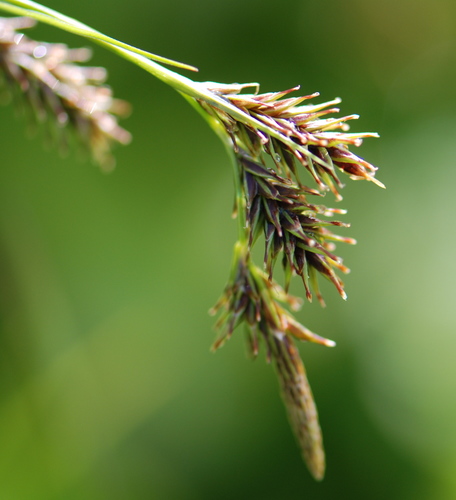
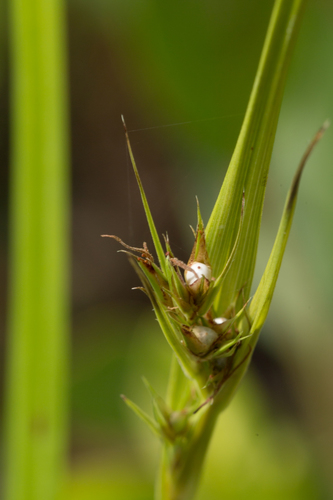
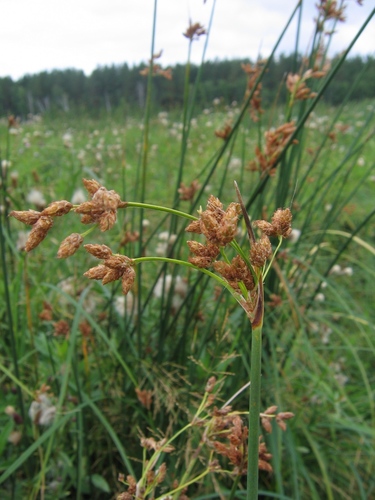
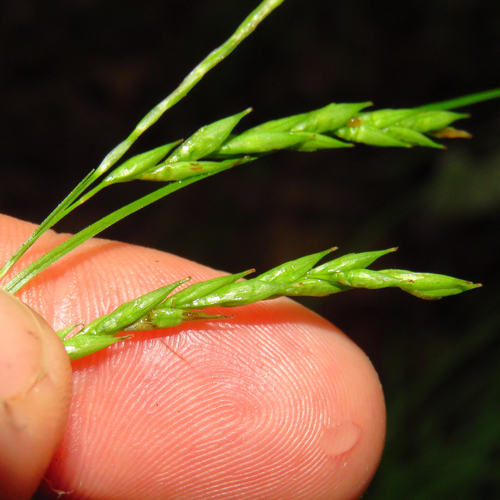
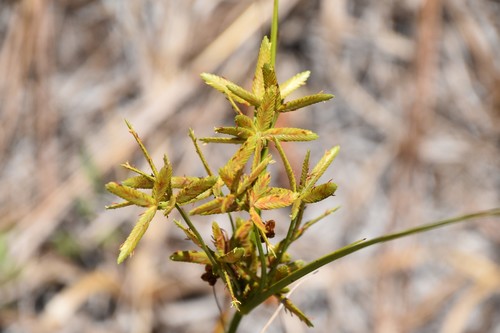
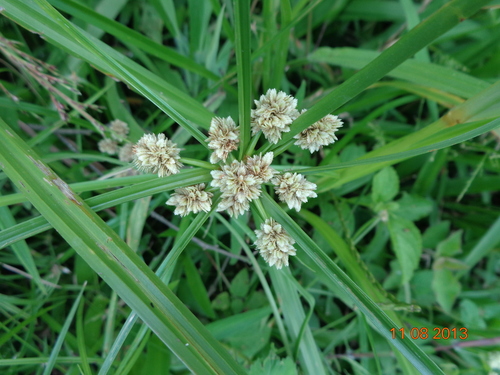
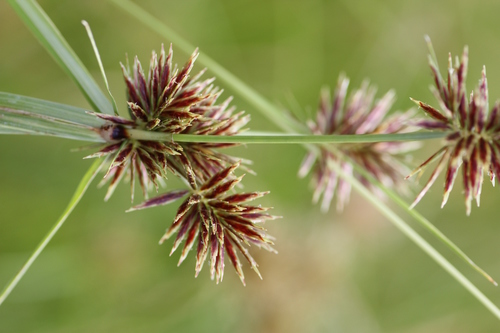
Cyperus congestus Vahl is a perennial tufted sedge that usually grows to 1 metre (3.3 ft) in height. It has a short connecting rhizome. Its culms are smooth, triangular in cross-section, and pink-red toward the base. Leaves are 4 to 8 millimetres (0.16 to 0.31 in) wide, ridged, with a deep, sharp depression down the center. Each stem produces two to seven inflorescences. Each inflorescence is made up of up to 20 small red-brown spikelets that measure 10 to 28 mm (0.39 to 1.10 in) in length. Flowering occurs between July and March, and produces brown flowers. After flowering, the plant forms a narrow-obovoid, trigonous dark brown-black nut. The nut is approximately 1.5 mm (0.059 in) long and around 0.6 mm (0.024 in) in diameter. This species is native to Mozambique, Zimbabwe, South Africa, Lesotho, and Namibia. It colonizes easily, and has been introduced and become naturalized in Australia. In Western Australia, it is recognized as a weed; it grows in sandy-clay soils in swamps and around creeks in coastal areas of the Wheatbelt, Peel, South West, Great Southern and Goldfields-Esperance regions. It is also found in coastal areas of New South Wales, Victoria, South Australia, Tasmania, and around parts of Brisbane in Queensland. It is also a common weed in New Zealand and Hawaii.