About Cynomya mortuorum (Linnaeus, 1761)
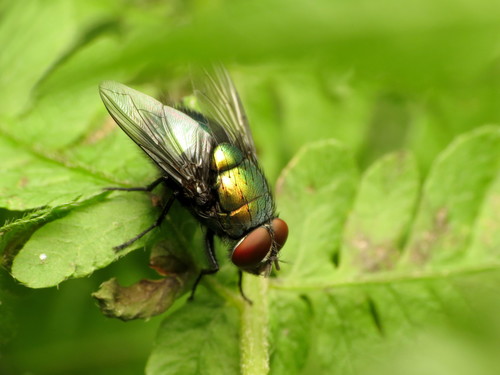
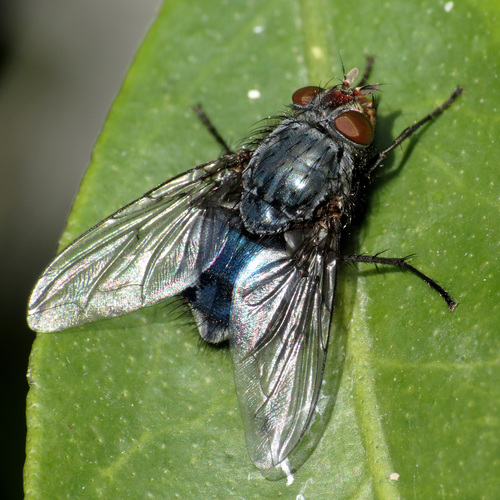
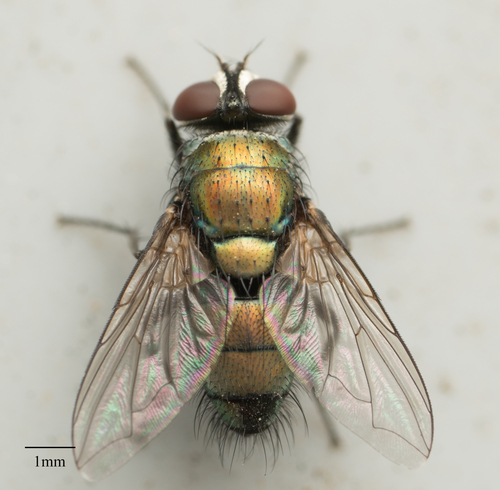
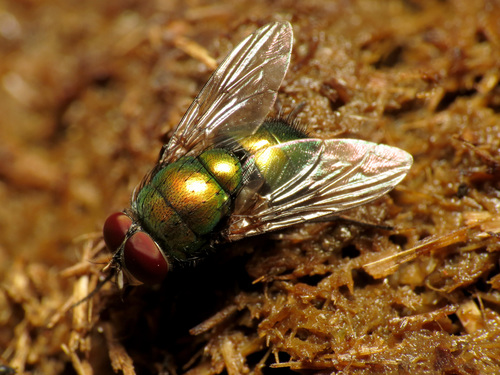
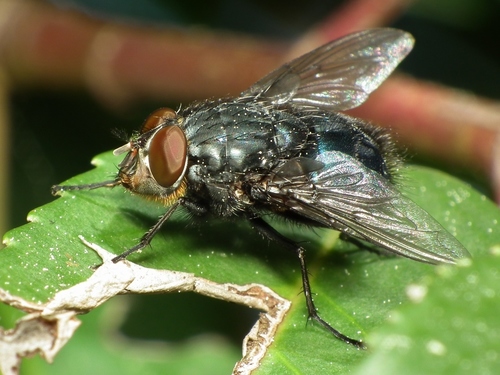
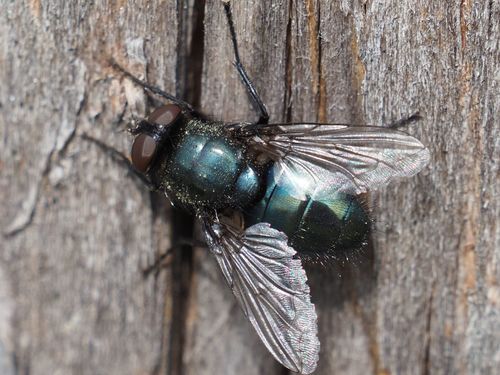
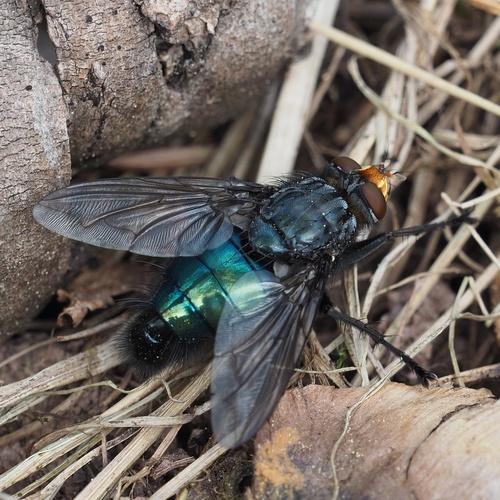
Cynomya mortuorum (Linnaeus, 1761) is a cold-adapted blow fly species first described by Carl Linnaeus in 1761. Adult C. mortuorum are deep blue-green, shiny metallic flies with yellowish faces and jowls, and have a body length ranging from 8 to 15 mm. Like most blow flies (family Calliphoridae), C. mortuorum has holometabolous development, meaning its life cycle includes distinct egg, three larval instar, pupal, and adult (imago) stages, where the larval form looks completely different from the adult. Each of these life stages has unique identifying characteristics specific to C. mortuorum. Females lay their eggs on carrion, which provides food for developing larvae, and total development from egg to adult takes approximately 38 days. The genus Cynomya can generally be identified by the absence of a presutural intra-alar seta, a shiny abdomen, and no visible microtomentum when viewed from the posterior. Within the genus, C. mortuorum is often confused with Cynomya cadaverina, but several features distinguish the two species. C. mortuorum has bright yellow to orange gena (cheeks) and parafacials, while C. cadaverina has black or reddish brown gena and parafacial setae. C. mortuorum has only one postacrostichal seta, compared to two in C. cadaverina. C. cadaverina is also far more common across North America. C. mortuorum is found in Europe and Asia, in habitats including woodland edges, meadows, and other areas with flowers. It occurs in northern regions of both Europe and North America, and ranges east to Turkestan. In England, it is mostly found in upland areas above 500 m. Adults are active from May to September, and feed on pollen. The species can develop on a wide range of carrion, from rotting fish to Arctic vole carcasses. In English uplands, it occurs mostly on small carcasses such as mice and other small mammals, and is occasionally found on larger carcasses like sheep. When carrion is not available, excrement can act as a food source for larvae. C. mortuorum has not been documented to cause myiasis. As a cold-adapted fly, it is generally expected to appear in the fall, but one study recorded it on a mouse carcass in mid-August and on a sheep carcass in mid-June. C. mortuorum is most commonly used in the medicocriminal branch of forensic entomology, to help estimate the post-mortem interval of human cadavers. By examining the morphology and developmental stage of C. mortuorum collected from a body, forensic practitioners can estimate the time of death. While factors including temperature, specific chemicals, and location affect development, assessing an arthropod's developmental stage on a corpse is an accurate technique for this purpose. C. mortuorum eggs typically hatch 24 to 48 hours after being laid. After hatching, larvae go through three instars over 4 to 21 days, followed by a 3 to 14 day pre-pupal stage, and a 3 to 20 day pupal stage. Based on these timelines and relevant environmental variables, forensic entomologists can determine the developmental stage of C. mortuorum, and estimate how long the species and the carcass it feeds on have been present.