About Cymopterus glomeratus DC.
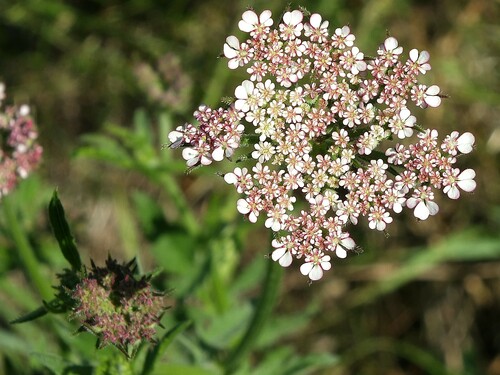
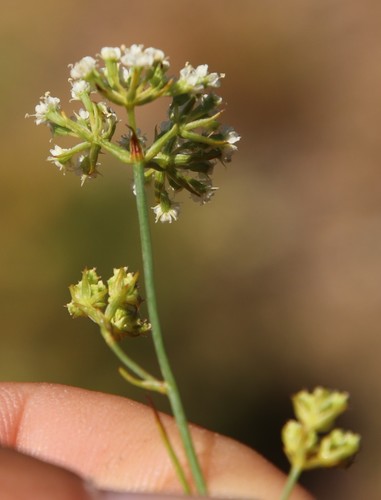
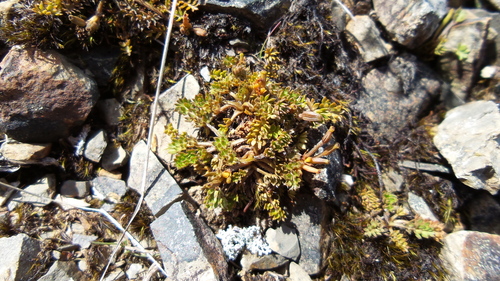
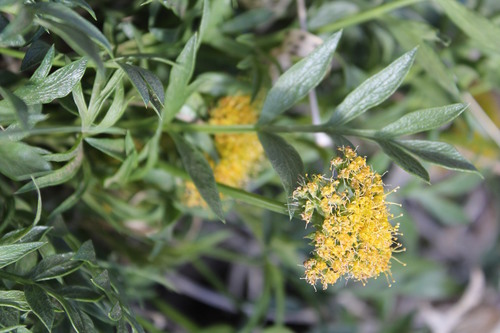
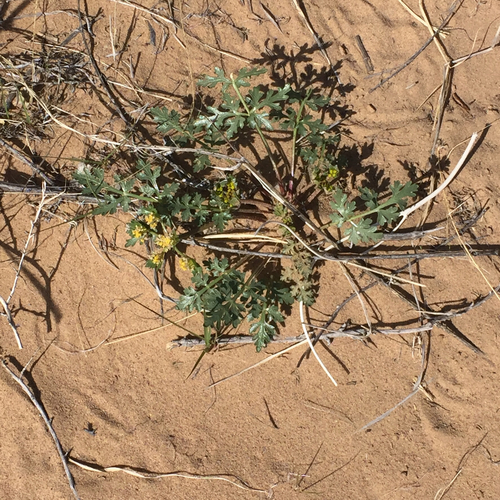
Cymopterus glomeratus DC. has large taproots that grow downward and laterally. It produces peduncles, which are specialized stems that support inflorescences – clusters of small flowers. Its leaves generally grow from the base of the plant, split two to three times, and are pinnately divided, forming a rosette around the plant's base. This species occurs across a wide range of environments, spanning from southern Canada, through southwestern North America, to northern Mexico. More specifically, it can be found in southern Alberta and Saskatchewan, Canada; Oklahoma and Texas, United States; and northern Chihuahua, Mexico. It grows on plains or mountain meadows up to 7,500 feet (2,300 m) in elevation. It is also found in open foothills and valleys, and occurs scattered across high deserts, particularly in sandy, loamy, and clay soils. It tolerates elevations up to 2000 m, and generally prefers well-drained soils with light shade, growing in either dry or moist conditions in cultivated beds. Due to its aromatic characteristics, Cymopterus glomeratus DC. is eaten both raw and cooked. When raw, its leaves are consumed as greens; when cooked, it is used in condiments and as a flavoring for soups.