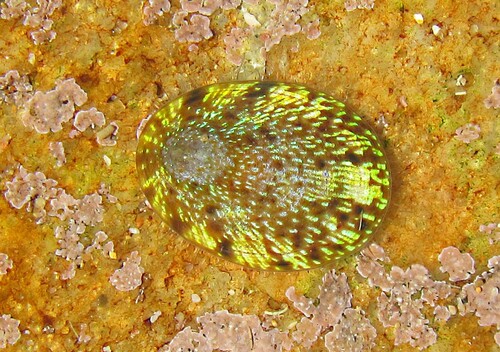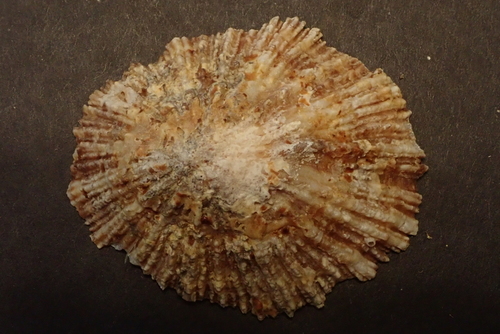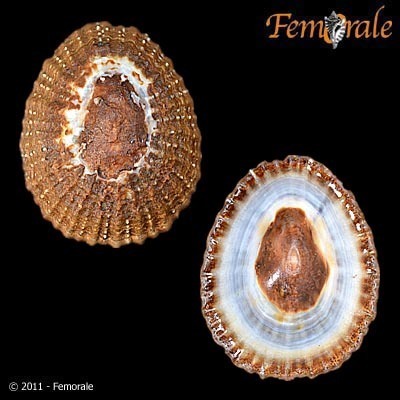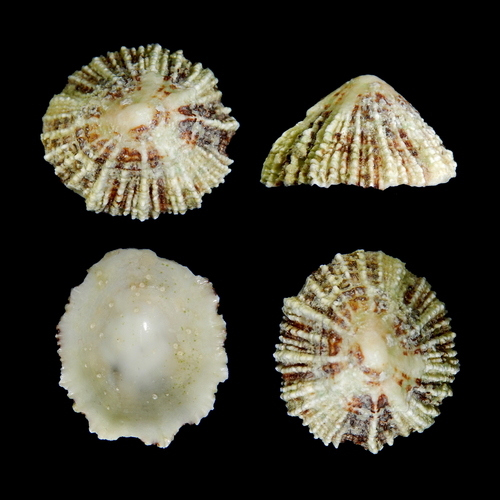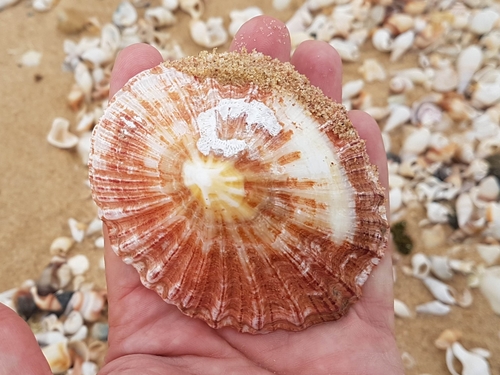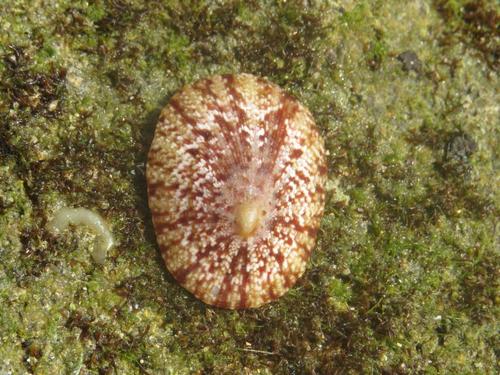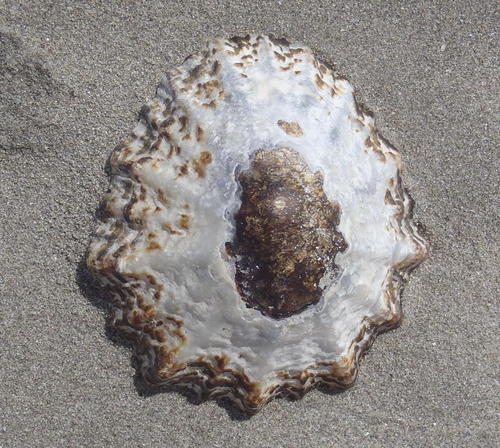
About Cymbula granatina (Linnaeus, 1758)
The shell size of Cymbula granatina ranges between 50 millimeters and 90 millimeters. This species is found in the Atlantic Ocean off the coasts of South Africa and Angola. It is commonly found on the upper shore of the cool temperate Benguela biogeographical region, stretching from Lüderitz to the Cape of Good Hope. Cymbula granatina is one of the most common limpet species living on the foreshore. It is a herbivore that feeds on many different types of algae, and it does not maintain or defend a territory. This species has a relatively high growth rate and produces a large number of gonadal cells. Its larvae are planktonic, and settle on the lower section of the shore after hatching. After reaching approximately two years of age, the limpets gradually move higher up the shore. When out of water, they cling tightly to rocks, but they move around to graze on algae with their toothed radula once the incoming tide covers them. Like other limpets, Cymbula granatina has strong homing ability: it typically returns to the same spot when the tide recedes, and often creates a visible scar on the rock at this location.