About Cymbopogon citratus (DC.) Stapf
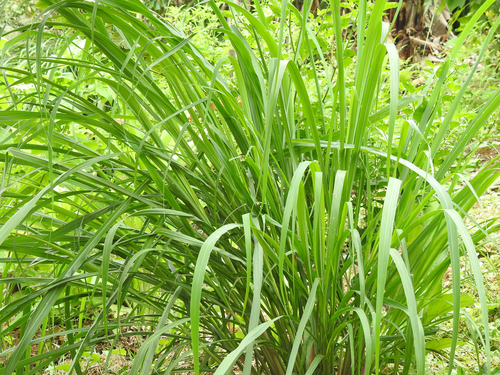
Cymbopogon citratus (DC.) Stapf is a species in the grass family, Poaceae. It produces simple, linear bluish-green leaves with entire margins and parallel venation (a characteristic common to all grasses). Leaf blades typically grow 18–36 inches in length.
Cymbopogon citratus is native to South Asia and Maritime Southeast Asia (Malesia). It was introduced to Madagascar, South America, and Central America after World War I, and is now naturalized across all tropical and subtropical regions of the world. Within its native range, it has multiple local common names: in Indonesia and Malaysia, it is called sereh, serai, or serai dapur; in the Philippines, it is called tanglad (a name originally referring to Themeda gigantea, a type of elephant grass, from the Proto-Austronesian root *Caŋelaj), salai, or balioko; in the language of the Hmong people (a diasporic group spread across Southeast Asia including Laos and Thailand), it is called tauj dub.
This plant, commonly known as lemongrass, has a range of culinary uses. It grows abundantly in the Philippines and Indonesia, where it is called tanglad and sereh respectively. Its fragrant leaves are traditionally used in cooking, most notably for lechon and roasted chicken. Dried leaves can be brewed alone into a tea, or used as a flavoring for other teas, producing a flavor similar to lemon juice with mild sweetness and no significant sourness or tartness. In Sri Lanka, where it is called sera (සේර), it is used as a culinary herb and also harvested for its essential oils. In Thailand, where it is called takhrai (ตะไคร้), it is a core ingredient in tom yam and tom kha kai. Thin slices of fresh lemongrass stem are also used in the traditional snack miangpla.
The leaves of Cymbopogon citratus have a history of use in traditional medicine, and the plant is commonly included in modern herbal supplements and teas. There is documented evidence that Cymbopogon citratus essential oil has anti-protozoal activity against Leishmania amazonensis. In the folk medicine of the Krahô people of Brazil, the plant is believed to have anxiolytic, hypnotic, and anticonvulsant properties. In Indian traditional medicine, the leaves are used as a stimulant, sudorific, antiperiodic, and anticatarrhal, while the essential oil is used as a carminative, depressant, analgesic, antipyretic, antibacterial, and antifungal agent.