About Cymbalophora pudica (Esper, 1784)
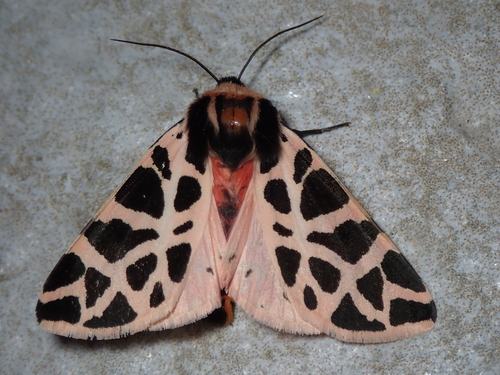
Cymbalophora pudica (Esper, 1784) typically has a wingspan of 35–42 mm in males and 37–42 mm in females. The background wing color and marking shape of this species are quite variable. The outer surface of the forewings is usually milky white or pinkish, marked with black triangular patches. Hindwings range from white to pinkish and have marginal spots. The thorax is covered in blackish hairs, and features two yellowish longitudinal stripes and a broad yellowish cervical spine. Male antennae are ciliated (hairy), while female antennae are filiform (thread-like). The abdomen is reddish with black spots. This species has several recorded forms: in Cymbalophora f. flaveola Schultz, 1906 the wings may be shaded yellowish; in Cymbalophora f. fumosa Oberthür, 1911 the wings are shaded gray; Cymbalophora f. Cohaerens Schultz, 1905 has confluent wing spots; and very pink individuals are called rosina. The caterpillars are gray brown and hairy, with black-brown warts on each segment. Like other species in the genus Cymbalophora (the "cymbal bearers"), males are able to produce sounds from their wings while flying. Cymbalophora pudica occurs in southern Europe, from the Iberian Peninsula to Greece, and in western North Africa. These moths favor sunny rocky areas, grasslands, scrublands, and mountain slopes at low to middle elevations.