About Cymatogaster aggregata Gibbons, 1854
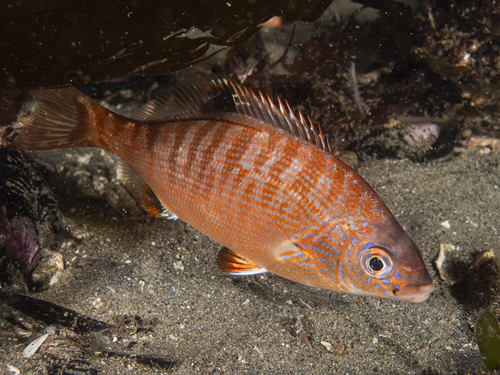
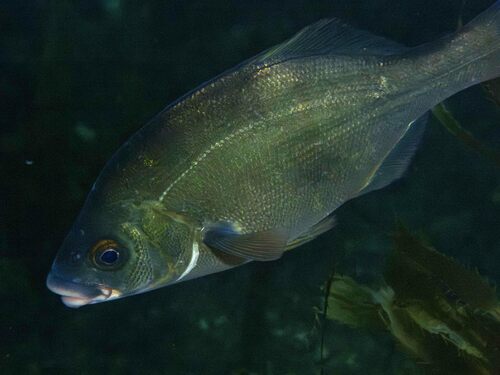
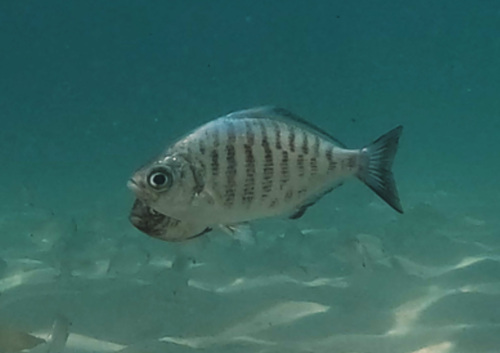
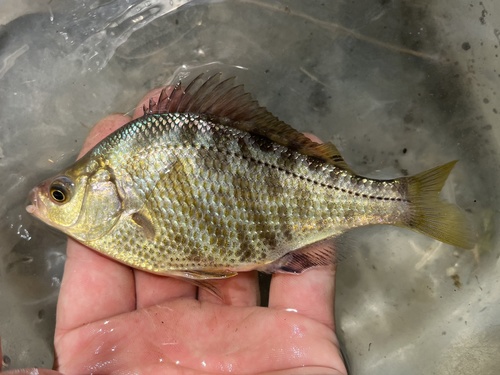
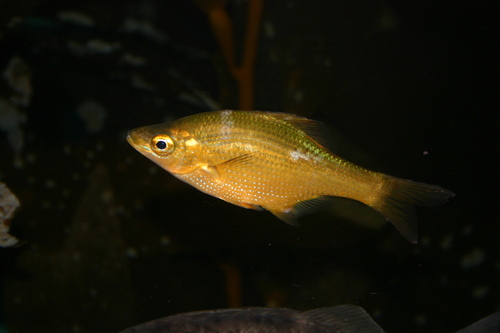
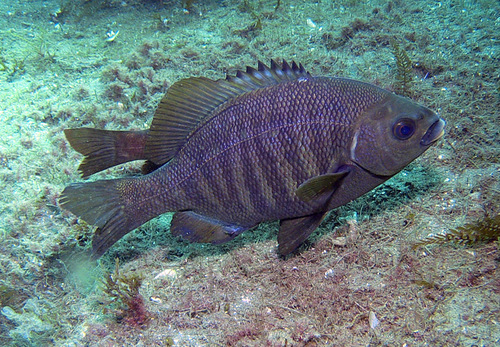
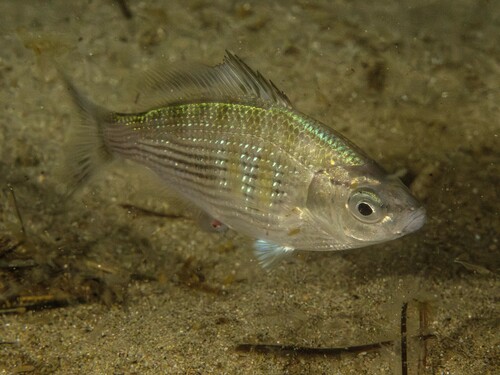
Shiner perch (Cymatogaster aggregata Gibbons, 1854) is similar in form to tule perch, with a deep body. It has a dusky greenish back and silvery sides that bear a pattern of fine horizontal bars combined with three broad yellow vertical bars. When breeding, males turn almost entirely black, and their original barred pattern is obscured by dark speckles. Shiner perch can be distinguished from tule perch by having fewer dorsal fin spines: shiner perch have only 8 to 9 spines, while tule perch have 15 to 19. The rayed section of the dorsal fin of shiner perch holds 18 to 23 rays. The anal fin has 3 spines, followed by 22 to 25 rays. This species can reach a maximum total length of 21 centimetres (8.3 in), but most individuals are commonly under 10 to 15 centimetres (3.9 to 5.9 in) in total length. Shiner perch mature soon after birth, but females often wait until they reach one year of age before spawning. Shiner perch are distributed from Punta Baja, Northern Baja California, to Saint John Baptist Bay near Sitka in Southeastern Alaska. It is one of the most common fish found in the bays and estuaries across its range. The species favors eelgrass beds, and often gathers around piers as well. While it typically lives in shallow waters, it has been recorded at depths up to 120 metres (390 ft). It is also able to live in brackish water.