About Cylindroiulus caeruleocinctus (Wood, 1864)
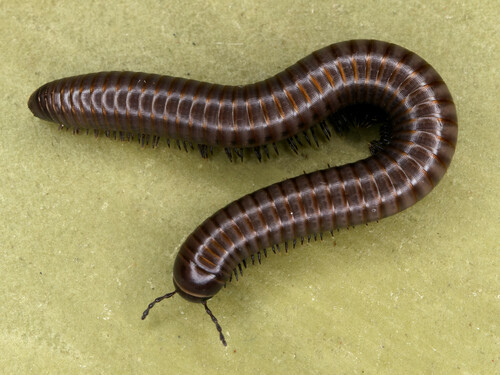
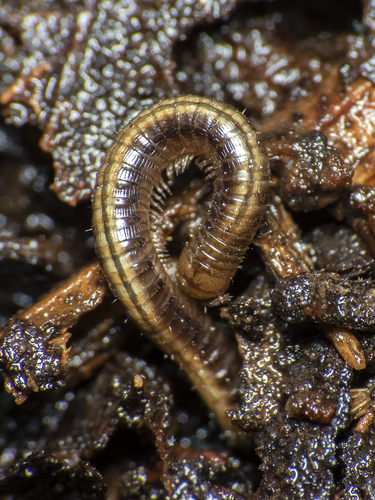
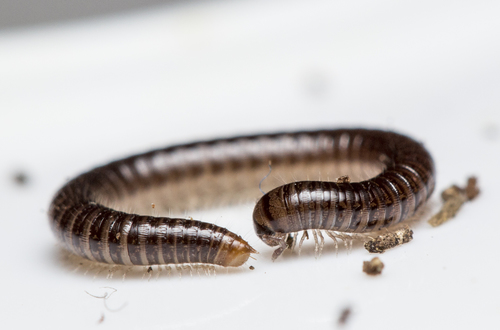
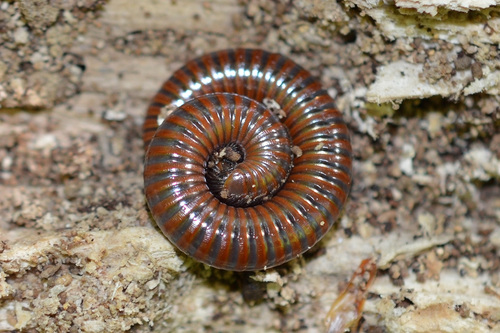
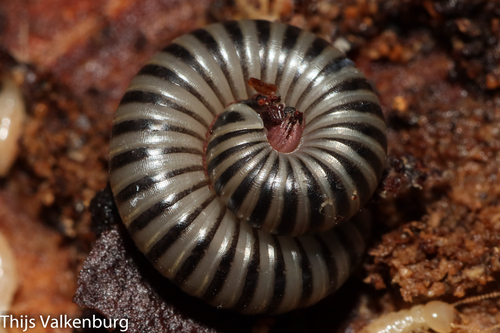
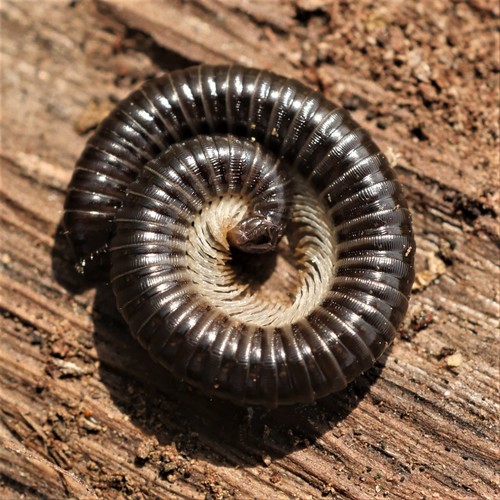
Cylindroiulus caeruleocinctus (Wood, 1864) is a species of millipede with the characteristic cylindrical, multi-segmented body shape of its group. Individuals are dark brown or bronze in color, with a darker or blue band on each body segment. This is a relatively large millipede, reaching up to 30 mm in length at full maturity. It has bean-shaped eyes. Its telson, the final body segment, is smooth and flat, rather than projecting outward. This millipede is most commonly found in Germany, the United Kingdom, Sweden, and Switzerland. It also occurs in Canada, Norway, Luxembourg, the United States, the Netherlands, and France. It typically inhabits grasslands, hedgerows, and small woods, and is rarely found in large forests. Large populations of this species have been recorded in urban areas, and it is common in urban parks, gardens, and cemeteries. It can often be found under wet leaves in parks, and alongside rivers within towns. In order of preference, its known diet consists of broadleaves, followed by grass, and then moss. There are documented records of this species acting as an agricultural pest. Sightings and activity of C. caeruleocinctus increase significantly in spring and autumn, and drop sharply in summer and winter.