About Cydonia oblonga Mill.
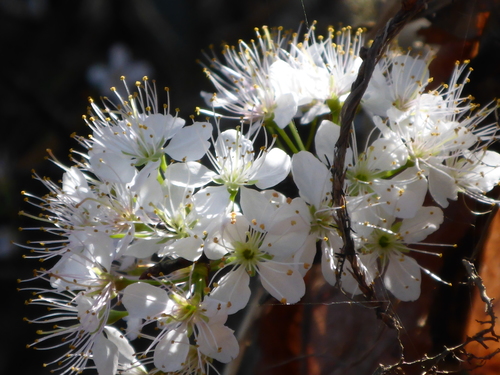
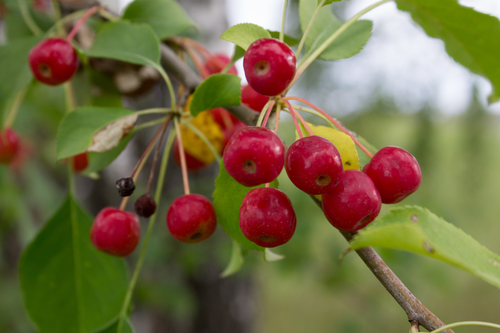
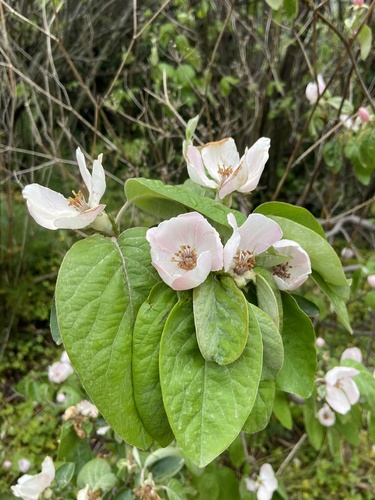
Quince (Cydonia oblonga Mill.) grows as a shrub or small tree, reaching 4 to 6 metres (13 to 20 feet) tall and 3 to 4.5 metres (10 to 15 feet) wide. Its young twigs are covered in grey down, and its oval leaves have a downy coating on their undersides. Flowers grow singly, emerging in late spring after leaves develop, and are white or pink. Ripe quince fruit are aromatic but stay firm, with gritty stone cells scattered through their flesh. The fruit is larger than most apples, weighing up to 1 kilogram (2.2 lb); it is usually pear-shaped but may also be roughly spherical. Quince seeds contain nitriles, a compound common to seeds in the rose family. In the stomach, stomach enzymes, stomach acid, or both can hydrolyze these nitriles to produce toxic volatile hydrogen cyanide. The seeds are only toxic if eaten in large quantities. Quince is a hardy, drought-tolerant plant that adapts to many soils with low to medium pH. It tolerates both shade and full sun, but sunlight is needed to produce larger flowers and ensure fruit ripens fully. It requires very little maintenance, and can tolerate years without pruning, with few major issues from insects or disease. It is cultivated across all continents in warm-temperate and temperate climates. To flower properly, it needs a cool seasonal period with temperatures below 7 °C (45 °F). Quince is propagated by cuttings or layering. Cuttings produce higher-quality plants, but these take longer to mature than plants grown from layering. Named cultivars are propagated from cuttings or layers grafted onto quince rootstock. Seed propagation is not used for commercial cultivation. Quince naturally forms thick bushes, so commercial fruit-bearing trees must be pruned to reduce the plant to a single stem. The tree is self-pollinating, but produces better yields when cross-pollinated. Fruit is usually left on the tree to ripen fully. In warmer climates, the fruit can become soft enough to eat directly from the tree, but fruit grown in cooler climates often requires additional ripening after harvest. Fruits are harvested in late autumn, before the first frost. Quince is also used as a rootstock for certain pear cultivars. In Europe, quince is typically grown in small quantities, with just one or two trees usually planted in mixed orchards alongside apples and other fruit trees. Quince fruit has an intense aroma, strong flavour, and high tartness. Most varieties are too hard and tart to eat raw, though a small number of cultivars including 'Aromatnaya' and 'Kuganskaya' can be eaten raw. Quince is high in pectin, so it is commonly cooked or roasted to make jams, marmalade, jellies, or pudding; it can also be peeled and baked, roasted, or stewed. Pectin content in quince decreases as the fruit ripens. When cooked for a long time with sugar, the fruit flesh turns red due to the presence of anthocyanin pigments. Its strong flavour means small amounts can be added to apple pies and apple jam, and diced quince added to apple sauce enhances the sauce's overall taste. The word marmalade, which originally referred to quince jam, comes from marmelo, the Portuguese word for quince. Quince cheese or quince jelly originated in the Iberian Peninsula; it is a firm, sticky, sweet reddish paste made by slowly cooking quince fruit with sugar. It is called dulce de membrillo across the Spanish-speaking world, where it is typically eaten with Manchego cheese. In the Levant, especially in Syria, quince is added to chicken or kibbeh to give dishes an intense, unique flavour, most notably in the dish kibbeh safarjaliyeh.