About Cydia fagiglandana (Zeller, 1841)
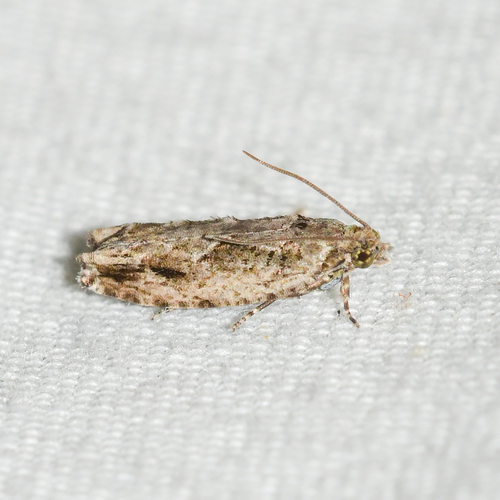
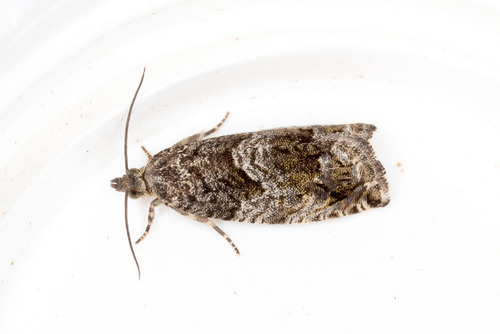
Cydia fagiglandana, also known as Cydia fagiglandana (Zeller, 1841), has a wingspan that ranges from 12 to 16 mm. Its forewings are brown-black, dusted with whitish scales, and are crossed by pairs of fine dark brown stripes. The basal patch of the forewings is slightly darker, with a sharply angulated edge. Two leaden-metallic streaks run from the posterior part of the costa, and there is a large darker coppery-tinged terminal patch that barely reaches the costa. Within this terminal patch, the ocellus is edged with leaden-metallic and encloses several blackish marks. The hindwings are fuscous in color. Fully grown larvae are light yellowish or whitish, with longitudinal cloudy orange markings; their spots are orange, the head is pale brownish, and the prothoracic plate on the second segment is pale ochreous. This species looks quite similar to Cydia splendana. This moth can be found across most of Europe. It primarily inhabits beech woodlands, as it is a specialist species that relies on beech seeds as the main food source for its larvae.