About Cycnogeton procerum (R.Br.) Buchenau
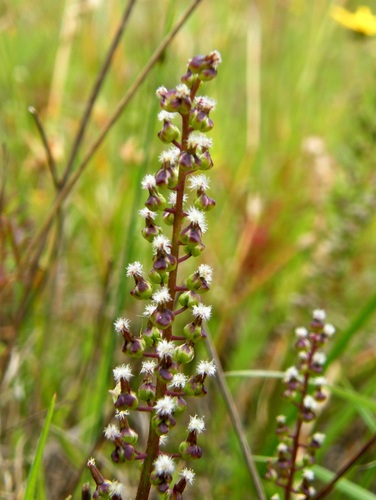
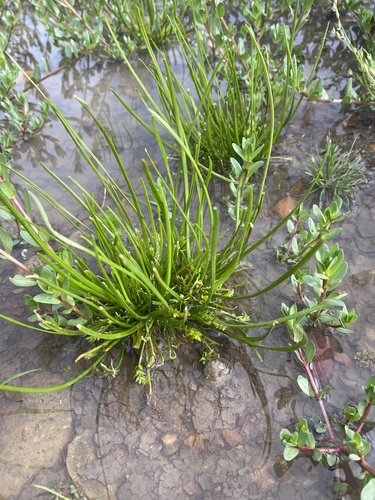
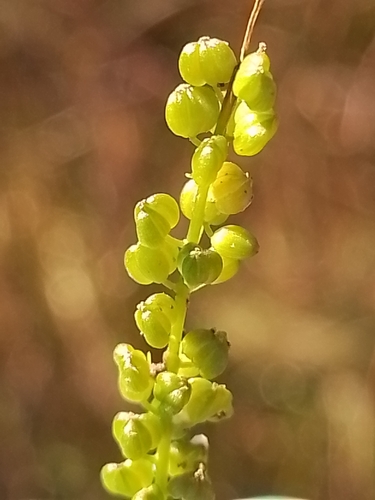
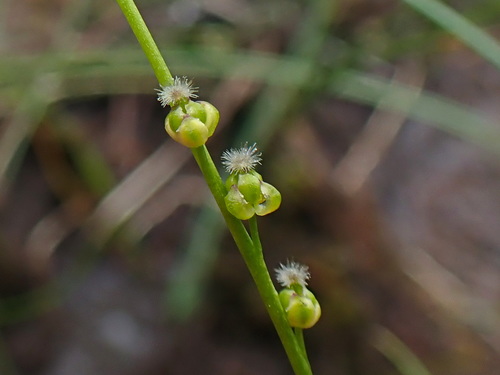
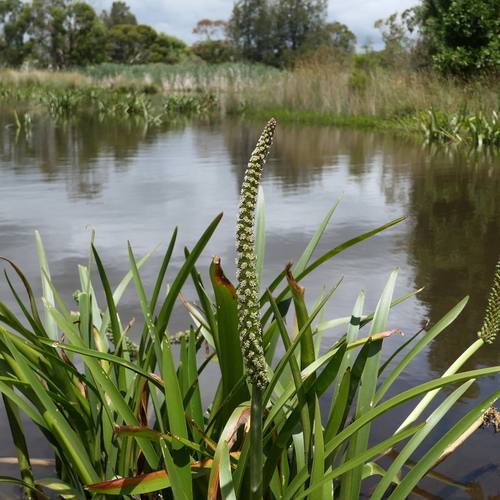
Cycnogeton procerum is a distinctive aquatic herb. It produces light green, flat, strap-like leaves that often bend down to float on water. Its growth habit is quite variable, and this variation is partly determined by environmental conditions. The species has erect, slender green stems that measure 20–50 cm (8–20 in) in length. Its inflorescences are terminal dense racemes shaped like long spikes, reaching around 30 cm (12 in) long. Flowers form terminal spikes at the end of the inflorescence and are green or white; plants can bear anywhere from few to many flowers. Fruits are 1-seeded, indehiscent, round capsules, 5–10 mm (0.2–0.4 in) long. Cycnogeton procerum grows from a stout rhizome that supports its aboveground growth.
This species grows in fresh or brackish water, and is most commonly found in shallow lakes, ponds, or slow-flowing streams. It is native to Australia, occurring commonly in all Australian states, though it is only rarely found in Queensland. It is most widespread across southeastern Australia and Tasmania.
Cycnogeton procerum is a monoecious species. It flowers during the warmer months of the southern hemisphere, primarily between September and February, and fruits between September and March. It reproduces both by seed and vegetatively.
Cycnogeton procerum and other similar species were an important food source for Aboriginal Australian people, particularly in coastal Adelaide and surrounding regions. The tubers growing at the base of the stem were eaten either roasted or raw. Some sources report these tubers are sweet with a pea-like flavour.
Cycnogeton procerum has been cultivated for its ornamental qualities, especially for aquatic gardens and water features. It grows well in a range of garden settings and is commercially available through Australian plant nurseries and indigenous plant nurseries. Its ideal growing conditions are slow-flowing water up to 2 m (7 ft) deep, in locations with full sun or partial shade.