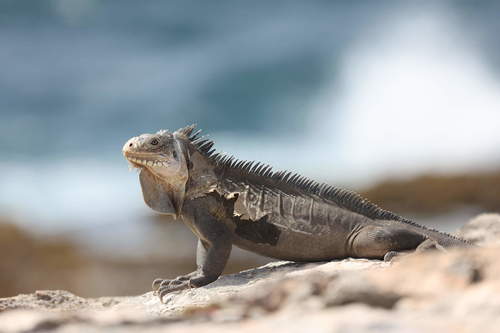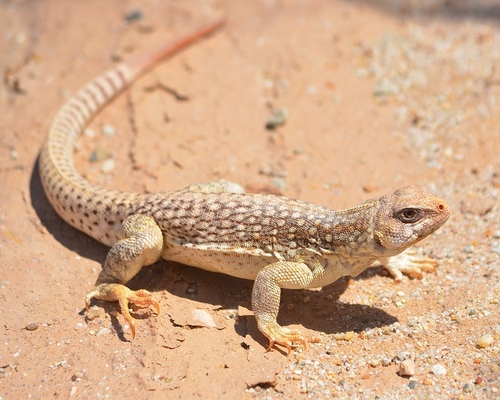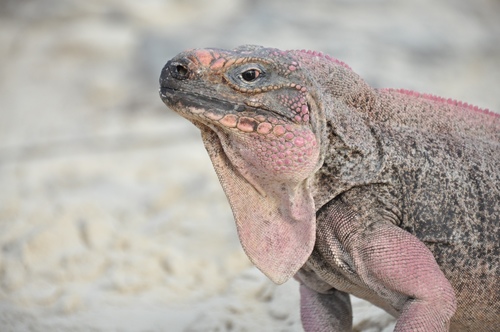
About Cyclura cychlura (Cuvier, 1829)
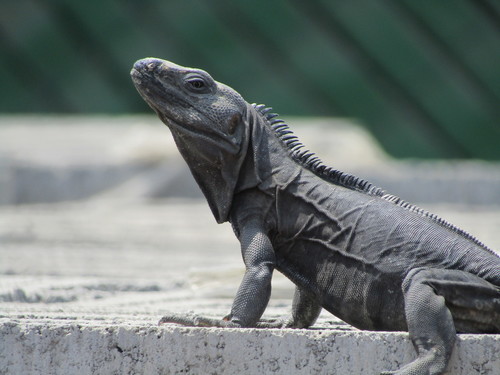
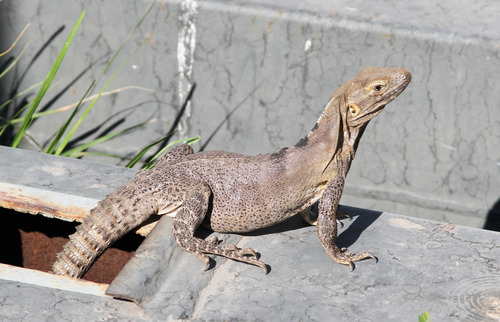
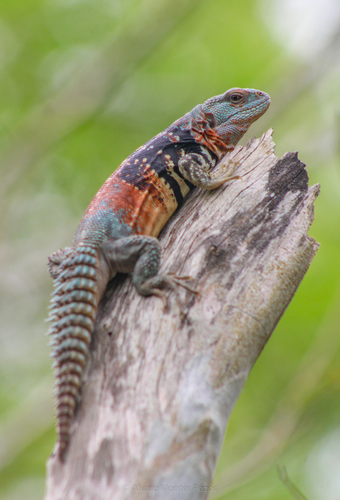
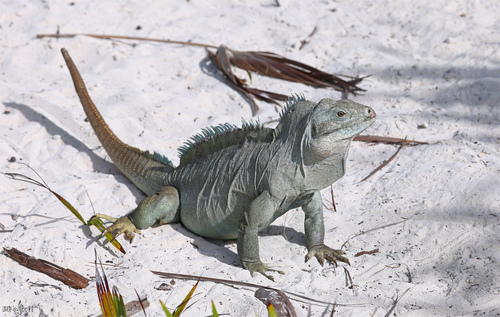
Like other species in the genus Cyclura, Cyclura cychlura is sexually dimorphic: males are larger than females, and have more prominent femoral pores on their thighs, which are used to release pheromones. This species is found exclusively in the southwestern Bahamas. Around 18,000 years ago during the last ice age, sea levels were much lower, and many of the Bahamas' islands were connected to one another. This species likely existed as a single unbroken population at that time; its current relict populations inhabit Andros Island and the Exuma islands. It lives in tropical dry forest, pine barrens, coastal coppice, mangrove, and beach strand habitats, which occur on low islands formed from karst limestone plateaus. Like all Cyclura species, the northern Bahamian rock iguana is primarily herbivorous. It is a ground-dwelling species, though juveniles often climb into branches in the morning to bask and feed.