About Cyclosa bifida (Doleschall, 1859)
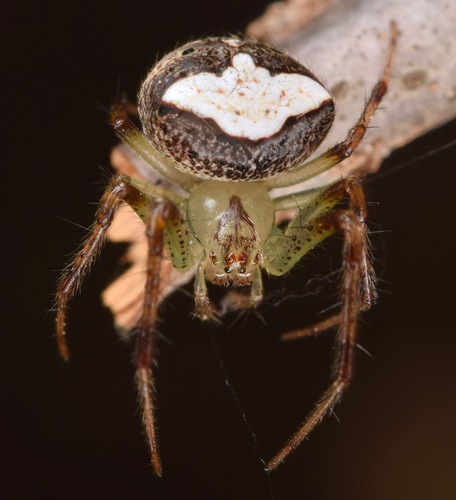
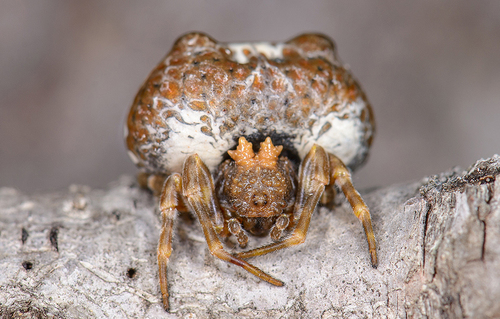
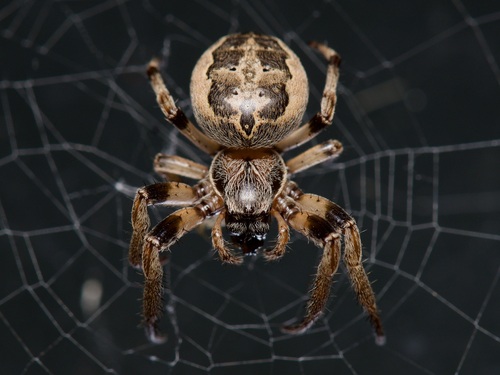
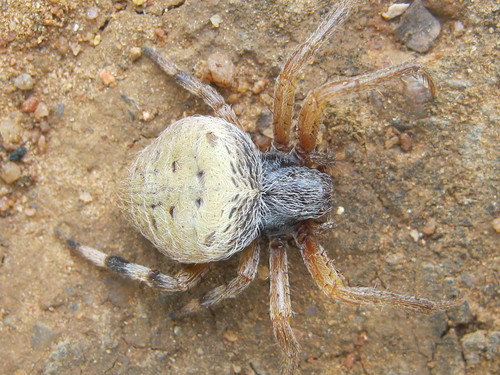
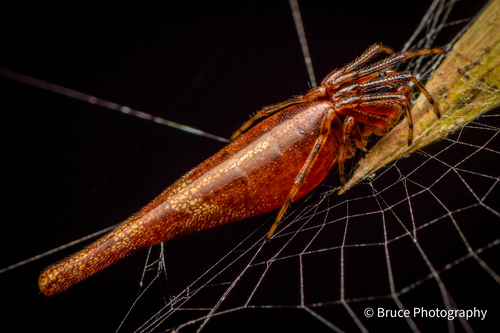
Cyclosa bifida (Doleschall, 1859) shows strong sexual dimorphism. Females are considerably larger than males, with a total body length of 11 mm. The female cephalothorax is 2.7 mm long, while the female abdomen reaches 8.5 mm in length and has a maximum breadth of 3 mm. Female legs have the proportional characteristics typical for the Cyclosa genus. Males are much smaller, with a total body length of 3.75 mm. The male cephalothorax is about 1.75 mm long and more than 1 mm broad; the male abdomen is less than 2 mm long and 1.2 mm broad. This species has been recorded across a wide range of locations in Asia. It occurs throughout India, including the Khasi Hills and Jaintia Hills of Assam, the Dooars region of West Bengal, and various other Indian states. Its range extends east through Southeast Asia, with confirmed records from Thailand, Laos, the Philippines, and Indonesia, including New Guinea. Historical observations from Amboina, now known as Ambon Island, note that C. bifida builds large regular webs in dark spots near buildings. On these webs, the spider positions itself in the center and secures the web with a flat angular cocoon. In Singapore, recorded webs are perpendicular, 5 to 7 inches in diameter, with specific structural features: 40 to 60 rays, 7 to 11 turns in the inner spiral, and 40 to 50 turns in the outer spiral. In Singapore, the spider typically does not sit at the center of the web, instead positioning itself sideways; sometimes a leaf is attached to the web to provide camouflage.