About Cyclocybe parasitica (G.Stev.) Vizzini
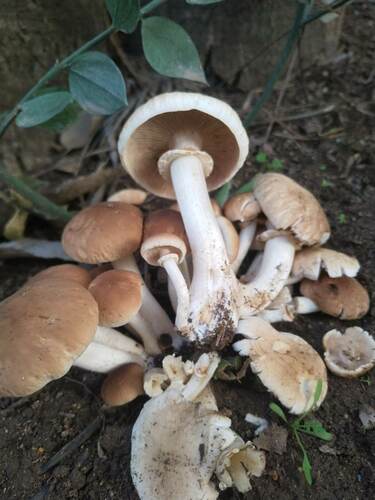
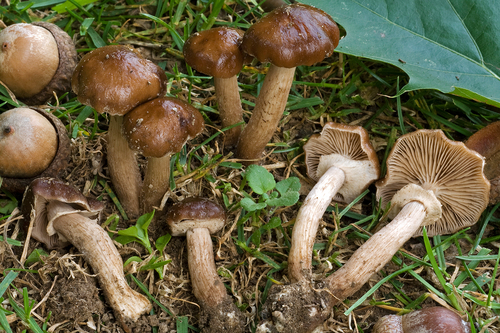
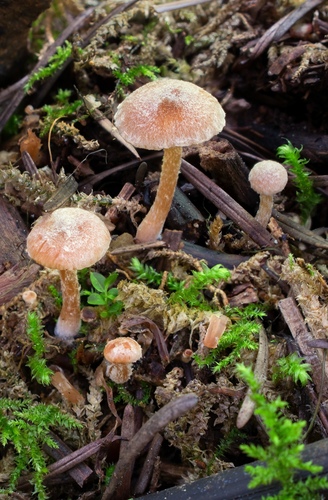
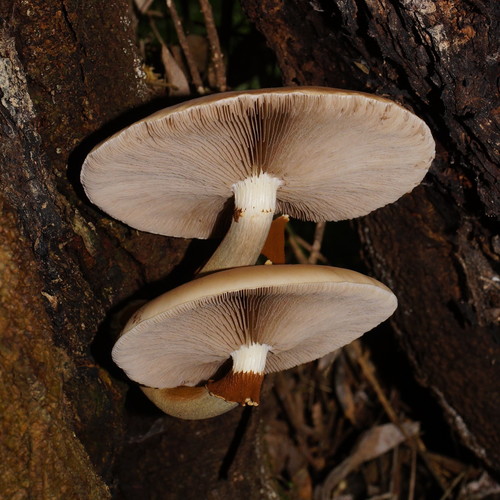
Cyclocybe parasitica, commonly known as tawaka, has a centrally attached, buff-colored cap that is darker at the center. Its stem is pale with white flesh. A partial veil that presses against the gills, which range from pink to dark, develops into a prominent ring on the expanded stem, which is often marked with striations from dark brown spore deposits. Its spores are cylindrical, thick-walled, and have a prominent germ pore. This species is found primarily in New Zealand and Australia, growing from November to June. It grows on native and introduced trees, where it can cause heart rot, and is not associated with conifers. It grows both parasitically and saprotrophically on hardwood trees including Beilschmiedia tawa, Hoheria, or Plagianthus, and can also be found on Nothofagus, birches, and poplars. It is native and thought to be indigenous to New Zealand. Fruiting bodies usually appear in late summer and autumn, sometimes growing alone but most often occurring in clusters. Tawaka is an edible mushroom with a meaty, savoury taste. It can be collected from the wild or cultivated on logs, which are inoculated four to eight weeks after the trees are cut and defoliated. A 1990 study from Lincoln University found that dry mass tawaka contains approximately 20% protein, which is roughly half the protein content of the common button mushroom, while the composition of essential amino acids is similar between the two species. Tawaka’s available carbohydrate content is almost three times higher than that of the common button mushroom. Historically, Māori people used tawaka as a traditional medicine.