About Cyclocybe cylindracea (DC.) Vizzini & Angelini
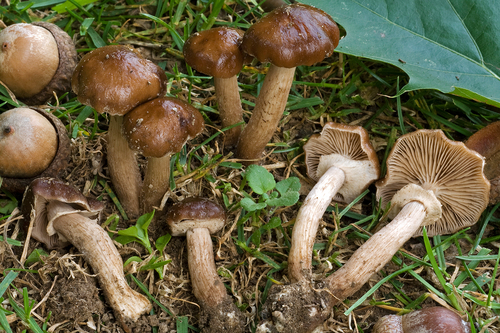
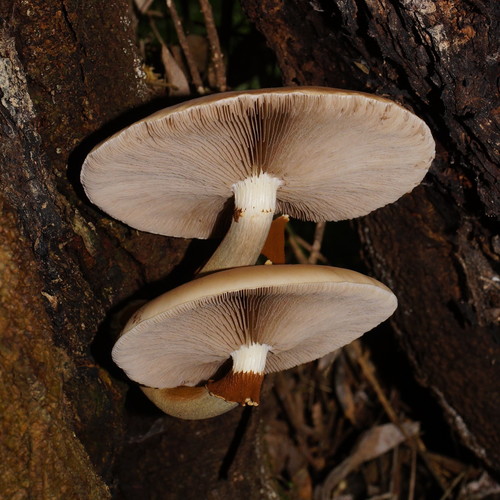
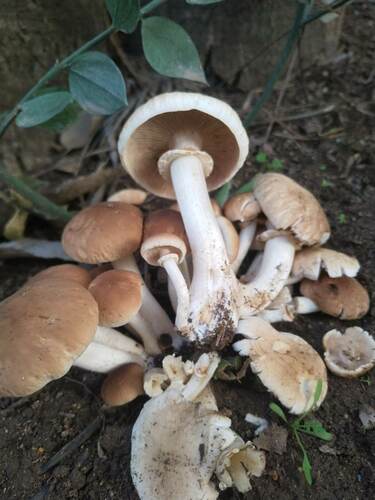
This is Cyclocybe cylindracea (DC.) Vizzini & Angelini, a medium-sized agaric mushroom. It has a very open, convex, almost flat cap that is 3–10 centimetres (1–4 inches) in diameter. Very young mushrooms can have a reddish-brown cap colour, which later fades to light brown, becoming more ochre toward the cap centre and whiter around the cap edge. Under the cap, numerous whitish radial gills adhere to the stem, and these gills later turn brownish-grey. The mushroom produces light elliptic spores that measure 8–11 by 5–7 μm. Its white fibrous stem is generally curved, with a membranous ring on the upper part that quickly turns tobacco colour from falling spores. This mushroom is difficult to identify, and some other species in its genus are poisonous. It is a white rot fungus that grows in tufts on logs and in hollows of poplars and other large-leaved trees. This mushroom is edible, but it resembles some deadly species. It is a standard ingredient in Southern European and Chinese cuisine. In East Asia, it is used fresh or rehydrated in many dishes including stir fries, soups, stews, and hot pot. It is cultivated in Korea, Japan, China, and Australia. In traditional Chinese medicine, it is often used as a diuretic. Together with Mycetinis alliaceus and Chondrostereum purpureum, it can counteract plant toxicity caused by olive-mill wastewater.