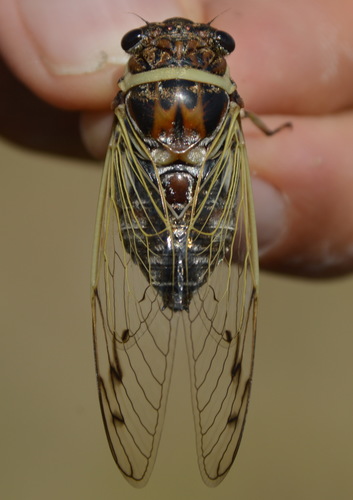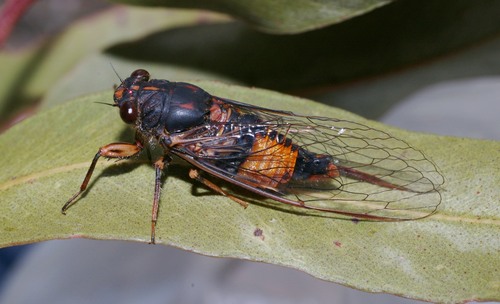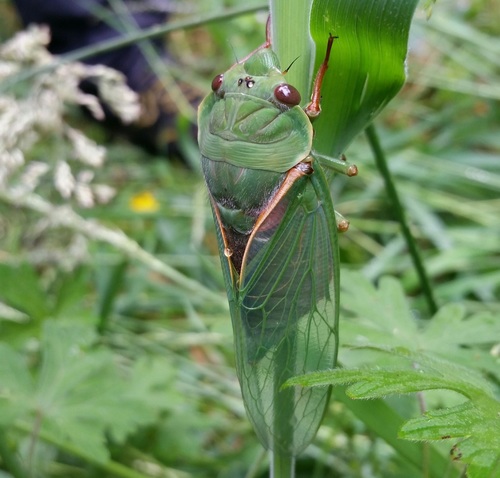
About Cyclochila australasiae (Donovan, 1805)
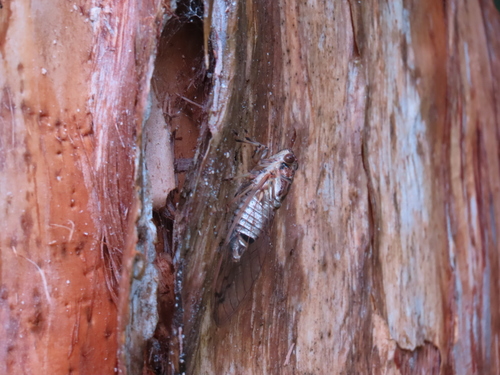
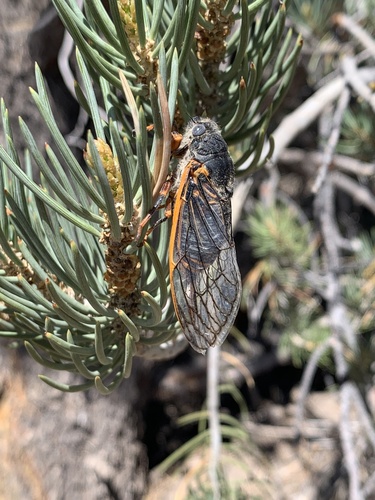
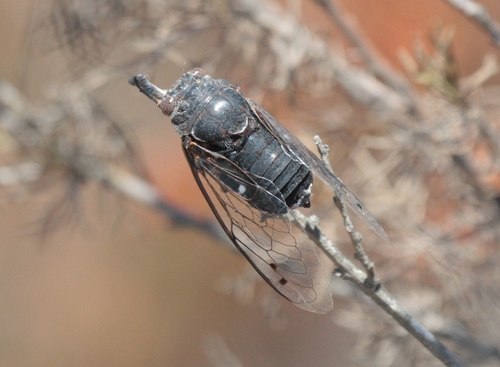
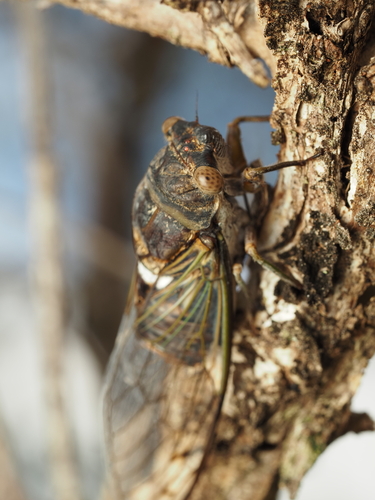
Cyclochila australasiae measures around 4 cm (1.6 in) in body length, with a wingspan ranging from 11 to 13 cm (4.3–5.1 in). It has multiple different color forms; the most common forms are mostly green or brownish yellow, and it has red eyes. During summer, the discarded empty nymph exoskeleton, called an exuvia, is often seen on tree trunks in both gardens and bushland. Male Cyclochila australasiae produce loud, harsh, high-pitched calls throughout summer that can reach as high as 120 decibels. These calls are generated by the rapid buckling of timbal ribs, amplified by resonance in an air sac, and have a frequency of around 4.3 kHz. Males call during the afternoon and dusk on warm days. Cyclochila australasiae ranges from Kroombit Tops in southeastern Queensland, through eastern New South Wales and Victoria to the Grampians, and continues to Mount Gambier in southeastern South Australia. It is common along the Great Dividing Range, and is also found in the Warrumbungles. It is frequently seen and heard around Sydney, Melbourne, the Blue Mountains, and Gippsland. In Brisbane, it is only found at elevations above 300 m (1000 ft). A study conducted at three sites in western Sydney found this species associated with white stringybark, Eucalyptus globoidea. The median total life cycle length of Cyclochila australasiae, from egg to natural adult death, is around six to seven years. Most of this lifespan is spent as a nymph. The cicada stays underground as a nymph for up to seven years, feeding by drinking sap from plant roots, before emerging from the ground to become an adult. Adult cicadas live for six weeks, and spend the summer flying, mating, and breeding. Live Cyclochila australasiae are often collected by climbing trees, and can be kept temporarily as pets in shoeboxes. They cannot be kept successfully for longer than one or two days, because they require flowing sap as food.