About Cycleptus elongatus (Lesueur, 1817)
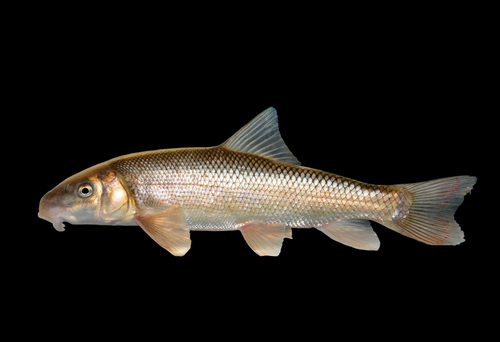
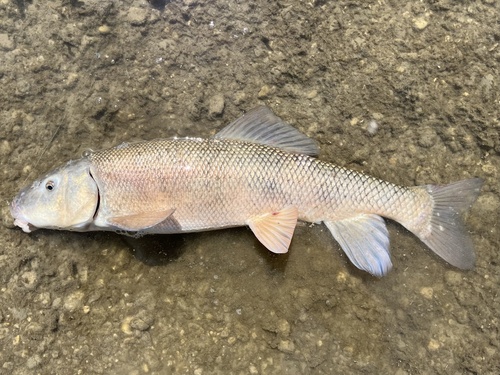
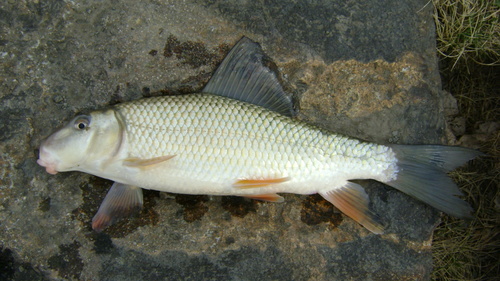
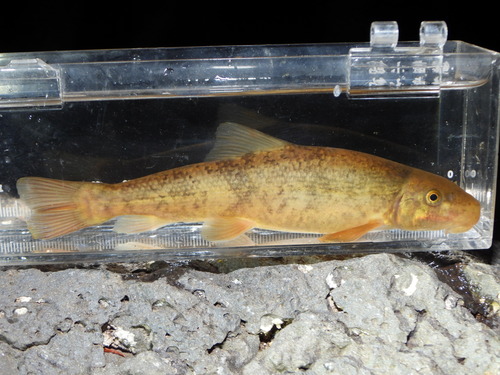
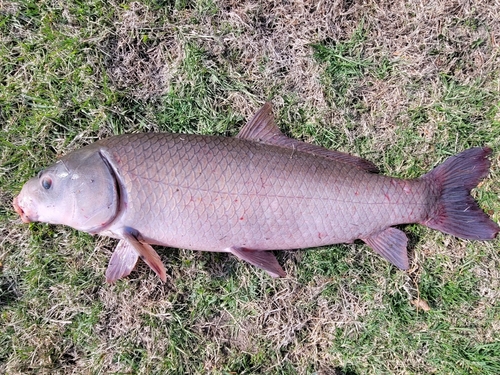
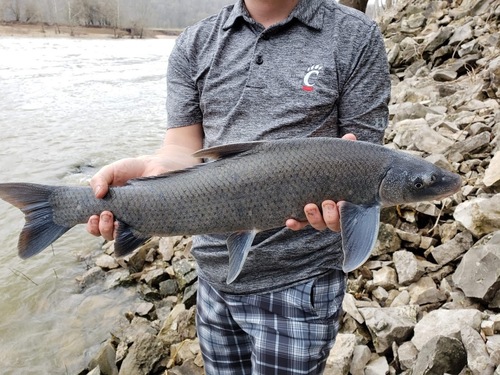
Color of Cycleptus elongatus is variable, ranging from light steel-gray to almost jet black during the spring. This fish has a streamlined body, an inferior mouth, and a small, slender head that tapers to a fleshy snout. The position of the mouth lets the fish feed from the bottom of its habitat. Its body is elongated and slightly compressed, with a long, falcate dorsal fin that is elevated at the anterior portion and has 24 to 35 rays. It also has a long caudal peduncle and a forked caudal fin, while the anal fin averages 7 to 8 rays. Its scales are large, with 55 to 58 scales along the lateral line.
The blue sucker, the common name for Cycleptus elongatus, is native to the United States and Mexico. In the United States, it occurs in the Mississippi River basin as far north as Minnesota and Wisconsin. It also lives in the Missouri River drainage extending to North Dakota, South Dakota, and Montana, and can be found in Gulf drainages from the Sabine River to the Rio Grande.
Historically, large migrations of these fast, powerful blue suckers moved throughout the Mississippi River basin, and spring harvests of blue sucker were a staple food source for early pioneers. Today, blue suckers are very rare, a change thought to stem from habitat fragmentation caused by thousands of dams constructed over the last century. Blue suckers most often live in the thalweg of large river systems, in areas with heavy current.
Spawning for blue sucker occurs from approximately March to June, and the timing varies based on the fish's location and water temperature. On average, males and females select spawning areas when the water temperature is around 53 degrees Fahrenheit. These spawning areas are located in fast-moving water about two feet deep, with rocks larger than gravel but smaller than boulders. Peak spawning occurs when water temperature reaches 62 degrees Fahrenheit, and the entire spawning period typically lasts around two weeks. Males continue to arrive at the spawning area until spawning is complete, while females enter the area, release their eggs, and leave once their eggs have been fertilized. Recent evidence shows that blue sucker recruitment patterns are episodic, and the species has a longer lifespan than was previously understood.