About Cycas revoluta Thunb.
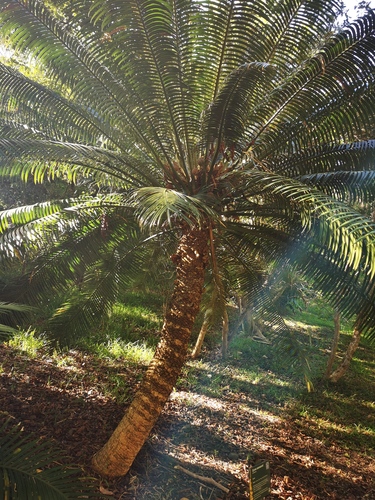
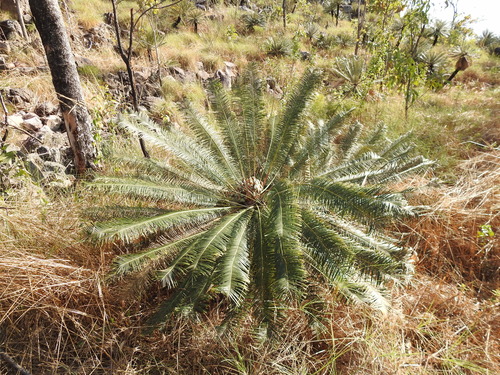
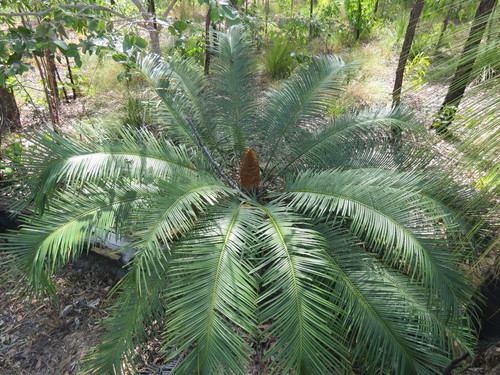
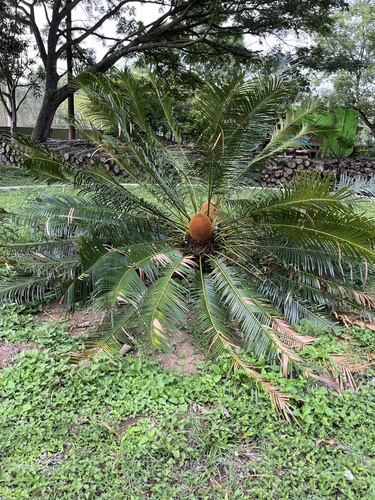
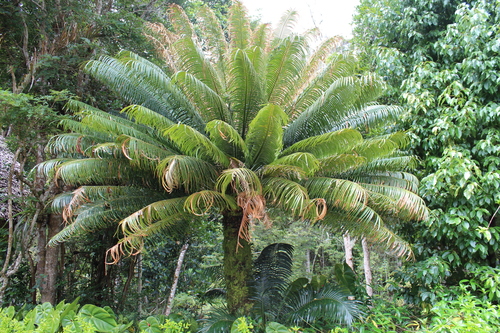
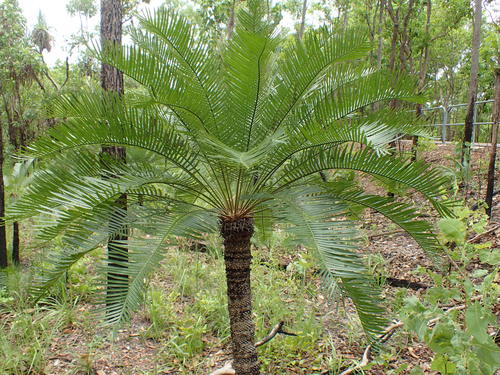
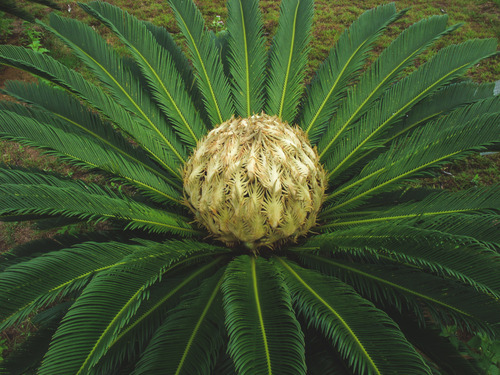
Cycas revoluta Thunb. is a very symmetrical plant. It grows a crown of shiny, dark green leaves on a thick, shaggy trunk that is typically about 20 cm (7.9 in) in diameter, and may sometimes grow wider. In young plants, the trunk is very low growing or grows entirely underground, but it lengthens above ground as the plant ages. Very old specimens can develop trunks 6–7 m (20–23 ft) tall, but this species is extremely slow-growing, requiring 50–100 years to reach this height. Trunks can branch several times, producing multiple heads of leaves. The largest recorded cultivated specimen grows at Ryugeji Temple in Shimizu, Japan, 136 km (85 mi) west-southwest of Tokyo; this specimen reaches 8 m (26 ft) in height and 1.6 m (5 ft 3 in) thick. Once plants reach reproductive age, their leaves are a deep semiglossy green and measure about 50–150 cm (20–59 in) long. Leaves grow outward into a feather-like rosette up to 1 m (3.3 ft) in diameter. The crowded, stiff, narrow leaflets are 8–18 cm (3.1–7.1 in) long and have strongly recurved or revolute edges. Basal leaflets gradually become more spine-like. The petiole, or leaf stem, of the sago cycad is 6–10 cm (2.4–3.9 in) long and bears small protective barbs. This species has specialized roots called coralloid roots that form a symbiosis with the cyanobacterium Anabaena, which allows the plant to fix nitrogen. Tannin-rich cells are found on both sides of the algal symbiont layer to resist overgrowth by the algae. Like all cycads, Cycas revoluta is dioecious: male plants produce pollen cones (strobili), and female plants produce groups of megasporophylls. Natural pollination occurs via insects, and artificial pollination is also possible. All parts of Cycas revoluta, also known as sago cycad or sago palm, are extremely poisonous to animals including humans if ingested. Pets are at particularly high risk, as they often find the plant palatable. Clinical symptoms of ingestion develop within 12 hours, and may include vomiting, diarrhea, weakness, seizures, and liver failure or hepatotoxicity marked by jaundice (icterus), cirrhosis, and ascites. Affected pets may show bruising, nose bleeds (epistaxis), blood in the stool (melena), bloody defecation (hematochezia), and bleeding into joints (hemarthrosis). The ASPCA Animal Poison Control Center estimates a fatality rate of 50 to 70% for confirmed sago palm ingestion. If any amount of this plant is ingested, a poison control center or doctor must be contacted immediately. Ingestion can cause permanent internal damage and death. All plant parts contain toxins, but seeds hold the highest concentration of the toxin cycasin. Cycasin causes gastrointestinal irritation, and in sufficient doses leads to liver failure. Additional toxins present include Beta-methylamino L-alanine, a neurotoxic amino acid, and an unidentified toxin that causes hindlimb paralysis in cattle. Cycas revoluta can be propagated either by seed, or clonally by removing and growing basal offsets. It is one of the most widely cultivated cycad species. It is grown outdoors in warm temperate and subtropical regions, and grown under glass in colder regions. It grows best in sandy, well-drained soil that contains some organic matter. It requires good drainage, as it will rot in waterlogged conditions. It is fairly drought-tolerant, and grows well in full sun or outdoor shade; when grown indoors, it needs bright light. Leaf bleaching can occur if plants are moved from indoor conditions directly to full sun outdoors. Among all cycads, C. revoluta is the most popular in cultivation. It can be found in almost all botanical gardens across both temperate and tropical regions. It is widely promoted commercially as a landscape plant in many parts of the world, and is also popular as a bonsai plant. This species was first scientifically described in the late 18th century. It tolerates mild to moderately cold temperatures when the ground stays dry. Frost damage occurs at temperatures below −10 °C (14 °F). In temperate climates, C. revoluta usually loses all its leaves in winter, but will typically grow a new flush of leaves by spring. This plant has received the Royal Horticultural Society's Award of Garden Merit, with confirmation of this award in 2017.