About Cycas media R.Br.
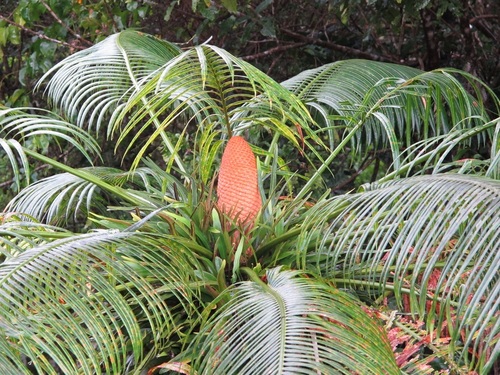
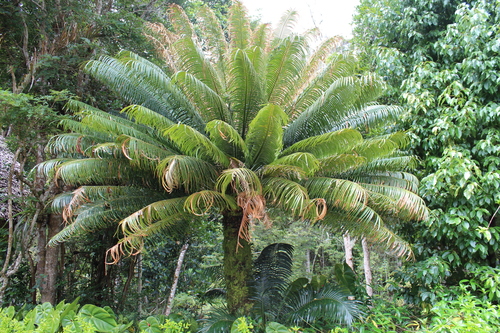
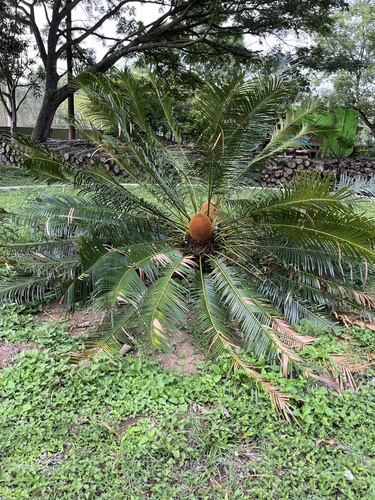
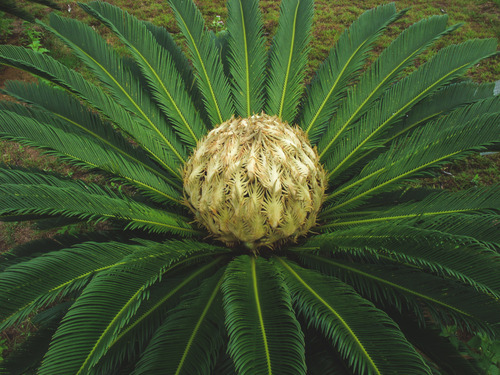
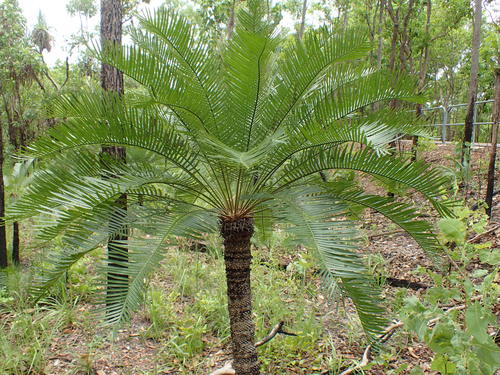
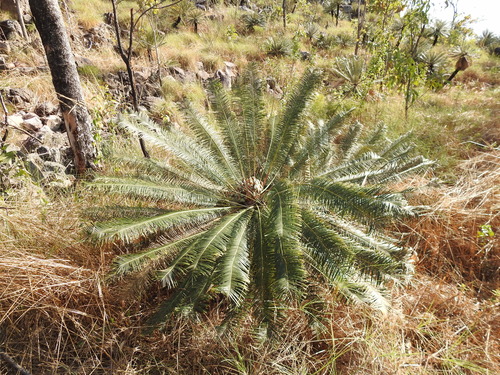
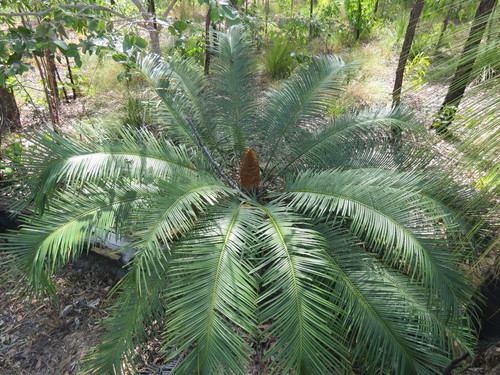
Cycas media R.Br. is a palm-like, cone-bearing plant. It is widespread in seasonally dry tropical sclerophyll woodlands near the east coast of Queensland, Australia, with scattered populations also found in northern Northern Territory and Western Australia. Its thick, leathery dark green leaves are pinnately divided, and grow in annual flushes from a large apical bud. The species is tolerant of bushfire, and commonly regrows new foliage immediately after a dry season fire, before the start of the next rainy season. All parts of this plant are considered highly toxic. Despite this, Aboriginal Australians ate the plant's seeds after careful, extensive preparation to remove toxins. The 1889 book *The Useful Native Plants of Australia* records that a common name for this species is "Nut Palm", while Central Queensland Indigenous people called it "Baveu". The source further states that an excellent farina is obtained from the plant. It describes preparation as: the nuts are stripped of their outer succulent cover (sarcocarp) and broken; the kernels are roughly pounded, dried for three to four hours in the sun, then placed in a dilly-bag and submerged in water — four to five days in running water, or three to four days in stagnant water. The correct softness from maceration is checked by touch. After this step, the kernels are ground between the two stones described for Colocasia macrorrhizon to form a fine paste, then baked under ashes in the same way that bush people bake damper. This preparation account is attributed to Thozet.