About Cycas armstrongii Miq.
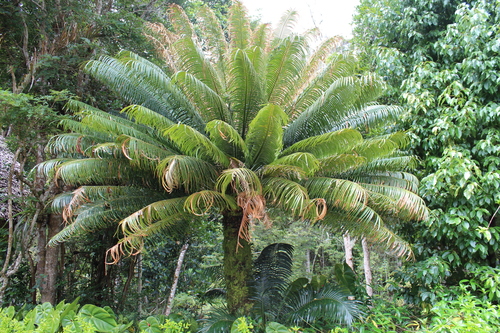
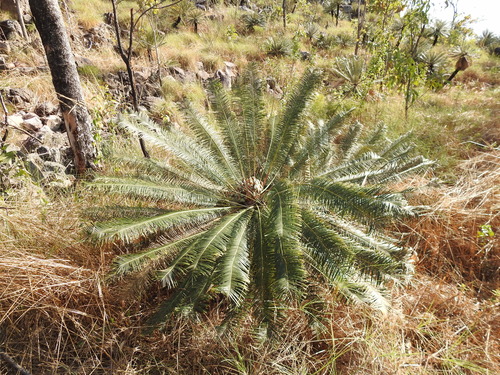
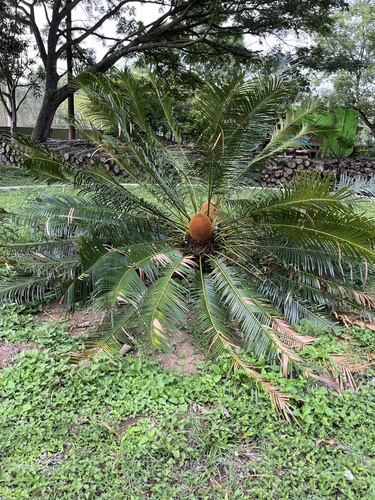
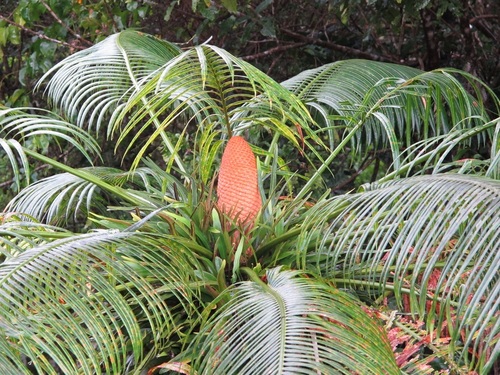
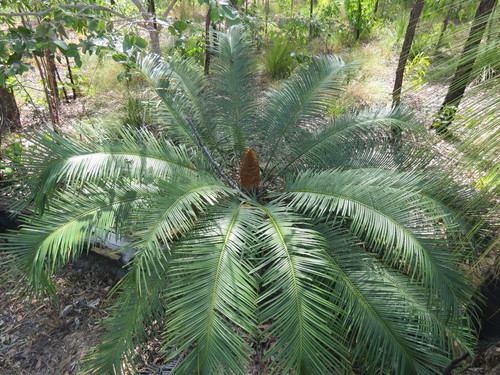
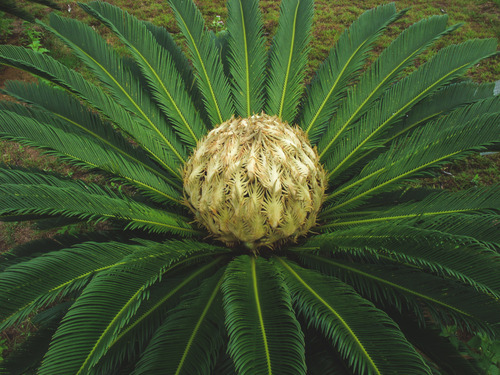
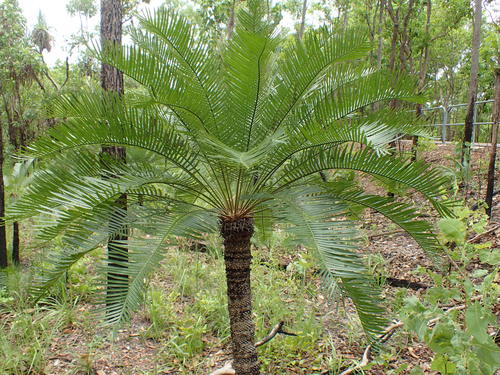
Cycas armstrongii Miq. is a cycad species in the genus Cycas, endemic to the Northern Territory of Australia. Its range extends from Darwin to the Mary River, from the Finniss River in the west to the Arnhem Highway in the east, and lies north of Pine Creek. It also grows on the Tiwi Islands and the Cobourg Peninsula. Stems of this species reach 3 meters tall, and rarely grow to 6 meters, with a diameter between 5 and 11 centimeters. Unusually for cycads, its leaves are deciduous in the dry season, though they remain persistent when grown in moister conditions. The leaves are 55 to 90 centimeters long, slightly keeled or flat, and pinnate with 100 to 220 leaflets. Leaflets are densely orange-pubescent when young, then become glossy bright green on the upper surface and light green on the lower surface. They measure 5.5–14 cm long and 4.5–8 mm wide, and angle forward at 40 degrees. The crown of a mature plant holds around 50 leaves. Female cones are open, with sporophylls 13 to 22 centimeters long. Each sporophyll holds 2 to 4 ovules on a lanceolate triangular lamina that has an apical spine. When seeds are ripe, the sarcotesta has a yellow coating. Male cones are ovoid, orange, 11 to 20 centimeters long and 7.5 to 10 centimeters in diameter, with the upper half of the cone tapering to a point. Fruiting occurs from March to September. This species is named after John Armstrong (d. 1847), a plant collector working for Kew Gardens who was based at Port Essington on the Cobourg Peninsula. This cycad is common in open forest and woodland across the Northern Territory's Top End, and can be easily mistaken for Cycas maconochiei. It most often grows on well-drained sandy and lateritic soils. Despite being locally abundant, less than 1% of these living cycads grow within conservation reserves. Annual grass fires are a regular feature of the species' natural habitat. Cycas armstrongii is extremely fire tolerant; the early spring fires that typically occur in its range trigger a large flush of new leaf growth, which gives the species its common name of fire fern. It is one of the most abundant cycad species in the world, with an estimated total population of over ten million individuals, and its conservation status is secure.