About Cyathodes glauca Labill.
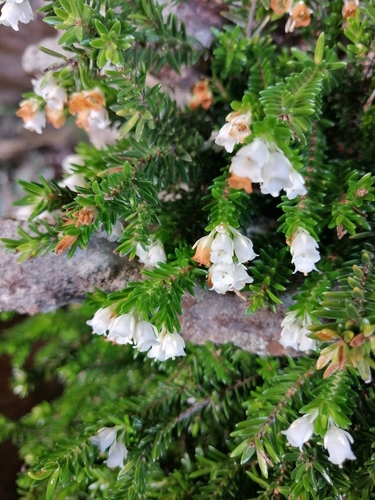
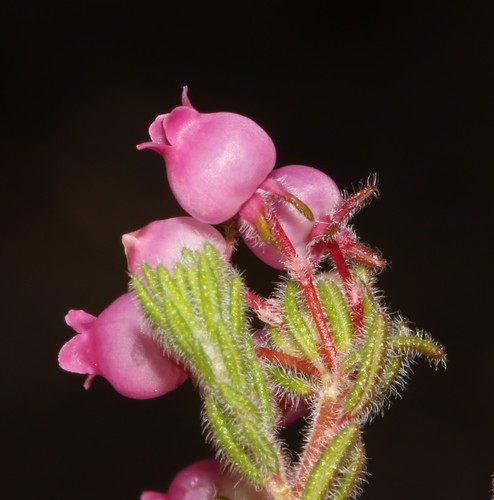
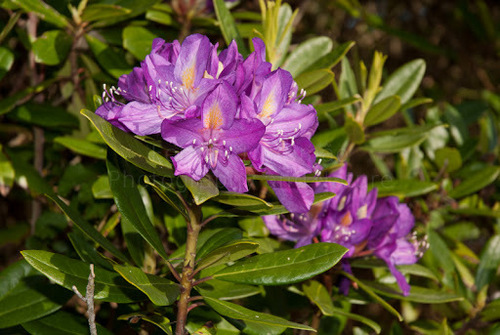
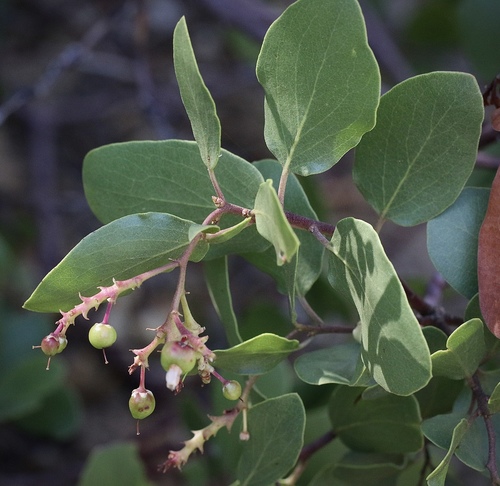
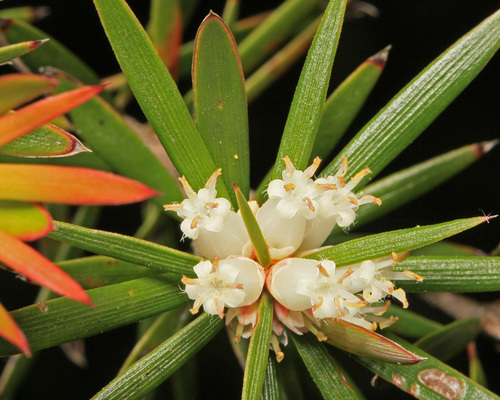
Cyathodes glauca Labill. has dark green, linear, pointed leaves that measure 2–4 cm long. Leaves of this species have parallel venation and grow in false whorls, especially toward the end of stems. The undersides of the leaves are distinctly glaucous. Cyathodes glauca produces numerous flowers, which are mostly terminal and grow solitary in the axils of the final leaf whorl. These flowers are small (around 1 cm), white, tubular, and slightly scented, with recurved lobes and protruding anthers. Flowering takes place in spring and early summer. The fruit is a distinctly pink-purple drupe about 1 cm in diameter, shaped like a partially flattened tennis ball. Cyathodes glauca is a widespread and locally common understorey plant of open forest growing below 1100 m in subalpine areas. It occurs almost exclusively in Tasmania, Australia, where it inhabits mostly subalpine sclerophyll woodland or wet sclerophyll forest. This species grows alongside the common dominant species Leptospermum scoparium, Pultenaea daphnoides, Monotoca glauca, and Acacia species. It prefers moist, well-drained, low-nutrient soil, so it is often found on rocky slopes and boulder fields where clay soils overlay dolerite. These slopes are typically southeast-facing, with gentle to moderate gradients and good drainage.