About Cyanothamnus coerulescens (F.Muell.) Duretto & Heslewood
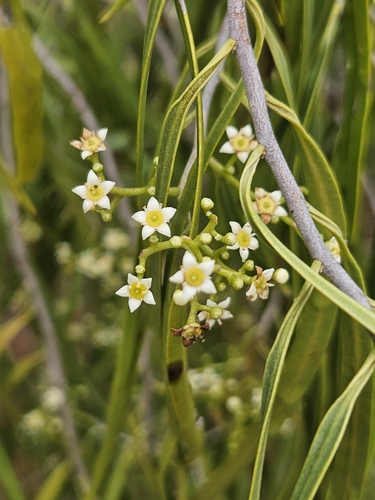
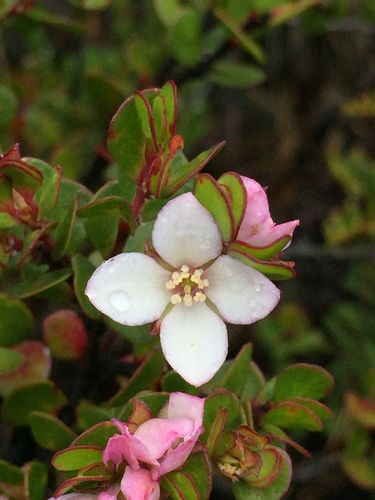
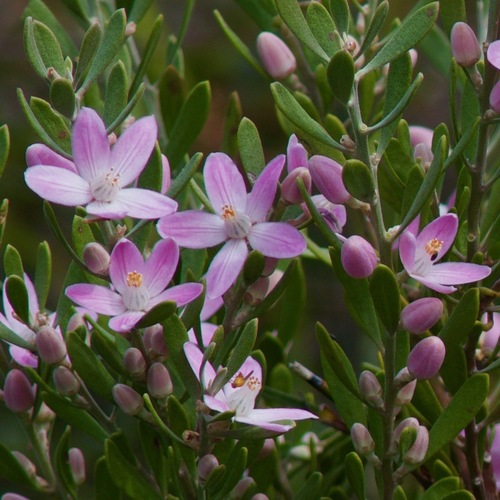
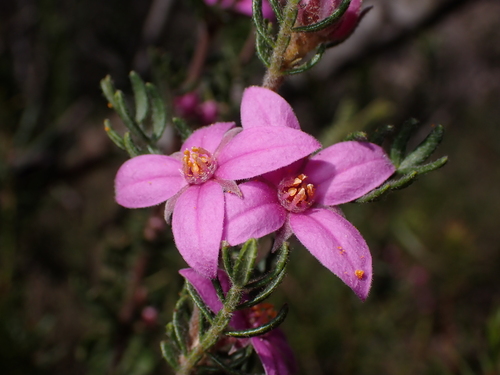
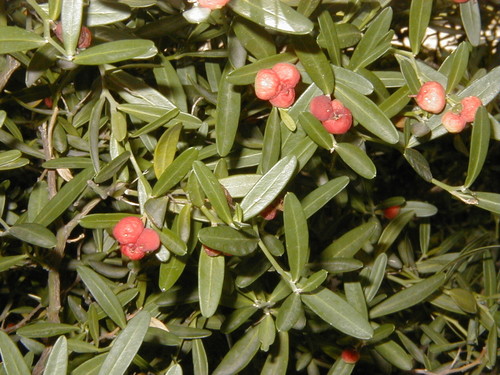
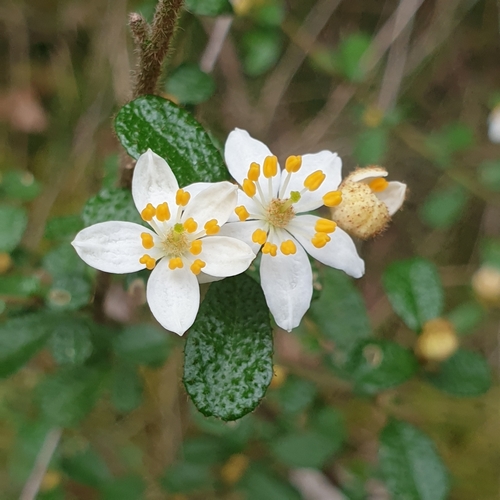
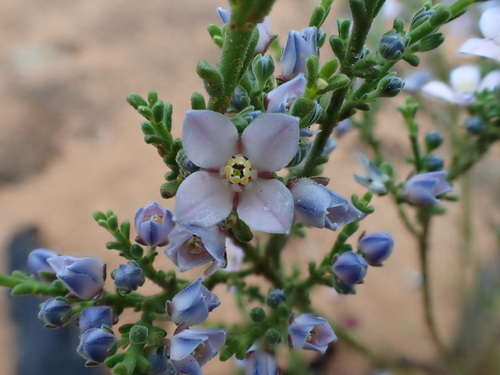
Cyanothamnus coerulescens, commonly known as blue boronia, is an erect shrub that reaches a height between 0.2 and 0.6 metres (0.7 to 2 feet). Its branchlets have a warty, glandular texture. Its leaves are usually simple, though they sometimes have three lobes, and range in shape from more or less cylindrical to narrow oblong or elliptic. Each leaf measures 5 to 10 millimetres (0.20 to 0.39 inches) long, and 0.5 to 1.5 millimetres (0.020 to 0.059 inches) wide. Flowers of this species can be bright blue, lilac, or white. They are arranged either singly in leaf axils, or in dense, leafy spikes at the ends of branches. Each flower sits on a pedicel 2 to 5 millimetres (0.08 to 0.2 inches) long. It has four sepals that are triangular to broadly egg-shaped, 1.5 to 7 millimetres (0.06 to 0.3 inches) long, with overlapping bases. It also has four petals that are more or less egg-shaped with a small, pointed tip, 3 to 9 millimetres (0.1 to 0.4 inches) long, with overlapping bases. The eight stamens and the style of the flower are slightly hairy. Flowering occurs mainly from August to November. The fruit is 3 to 4 millimetres (0.12 to 0.16 inches) long, and the petals remain attached to the end of the fruit. This species grows in mallee woodland. Three subspecies have distinct ranges: subspecies coerulescens occurs in the south-west of Western Australia, South Australia, Victoria, and the far south-west of New South Wales; subspecies spicata occurs in Western Australia between Wubin and Muntadgin; subspecies spinescens is found in areas similar to those of subspecies coerulescens, but only within Western Australia.