About Cyanoplax dentiens (A.Gould, 1846)
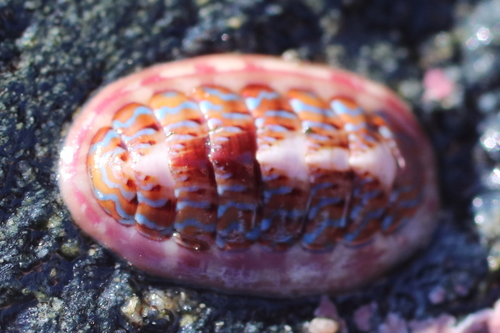
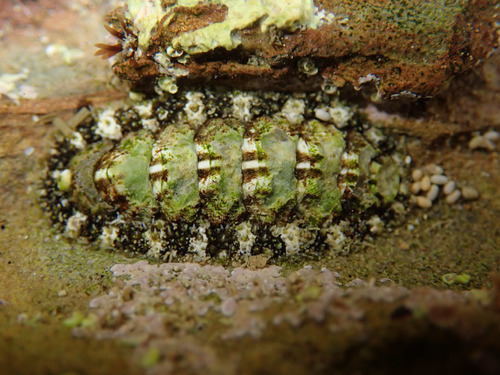
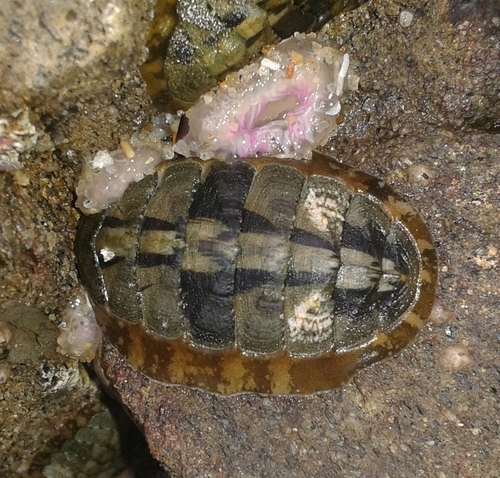
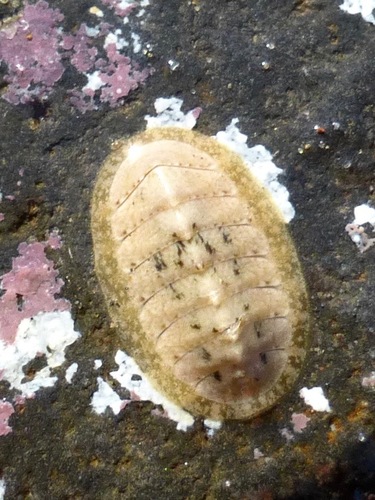
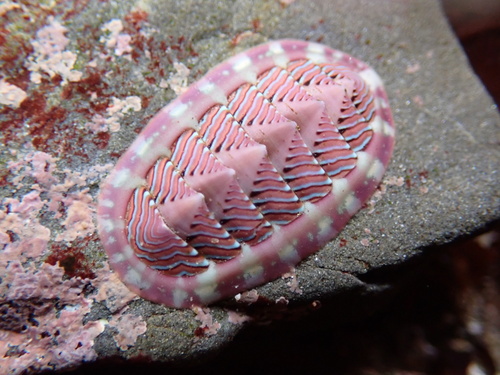
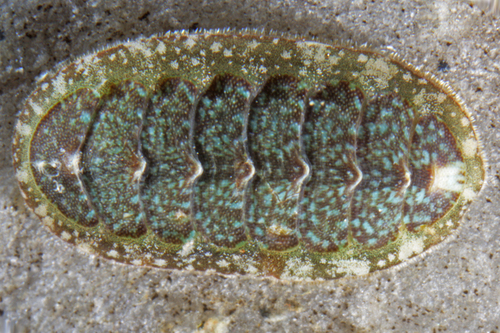
Gould's baby chiton, scientifically named Cyanoplax dentiens (A.Gould, 1846), is one of the most abundant chitons found along the west coast of the United States, north of Point Conception, California. It is frequently overlooked because of its small size and inconspicuous coloration. This chiton does not grow longer than 2.7 centimeters. Its most common color ranges from greenish-gray to brown, though its color can vary significantly. This species is well known for its high phenotypic variation, so much that some taxonomic guides suggest that if all collected individuals show the exact same coloration, the species cannot be C. dentiens. Gould's baby chiton is reproductively active during the winter and spring. While other species in the genus Cyanoplax brood their young, C. dentiens releases its eggs directly into the water column. Eggs hatch into free-swimming larvae, which later settle and metamorphose into adult chitons.