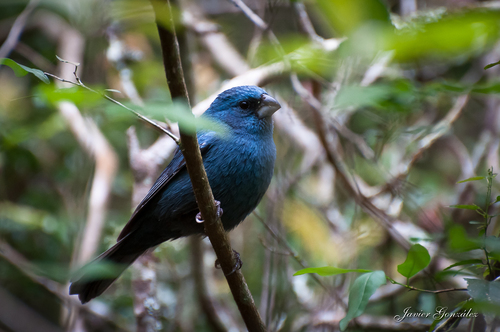
Cyanoloxia glaucocaerulea (d'Orbigny & Lafresnaye, 1837) is a animal in the Cardinalidae family, order Passeriformes, kingdom Animalia. Not known to be toxic.

Photo of Cyanoloxia glaucocaerulea (d'Orbigny & Lafresnaye, 1837) (Cyanoloxia glaucocaerulea (d'Orbigny & Lafresnaye, 1837))
🦋 Animalia

Cyanoloxia glaucocaerulea (d'Orbigny & Lafresnaye, 1837)

Cyanoloxia glaucocaerulea (d'Orbigny & Lafresnaye, 1837)

Glaucous-blue grosbeak (Cyanoloxia glaucocaerulea) is a small South American songbird with distinct plumage differences between males and females.

Family
Genus
Cyanoloxia
Order
Passeriformes
Class
Aves

About Cyanoloxia glaucocaerulea (d'Orbigny & Lafresnaye, 1837)

The glaucous-blue grosbeak (Cyanoloxia glaucocaerulea) has an approximate total length of 14 cm (5.5 in). Three measured individuals weighed between 16 g and 19.5 g (0.56 oz to 0.69 oz). Adult males are mostly dark sky blue, with lighter blue coloration on the forehead and rump, and grayish coloration on the lower belly. They have a small black facial "mask". Adult females are brown overall: they have warm, dark brown plumage on their upperparts, and orange-tinged brown plumage on their underparts. Immature glaucous-blue grosbeaks are orange-brown, with darker coloration on the back, and a faint blue tint on the forehead and cheek. This species breeds in northeastern Argentina, southeastern Brazil, and most of Uruguay. During the austral winter, some individuals migrate to southeastern Paraguay and areas further north in Brazil. It lives in low, moderately dense vegetation types, including habitats along forest edges, on river islands, in marshes, and in secondary forest. In Brazil, it occurs at elevations from near sea level up to 1,700 m (5,600 ft).
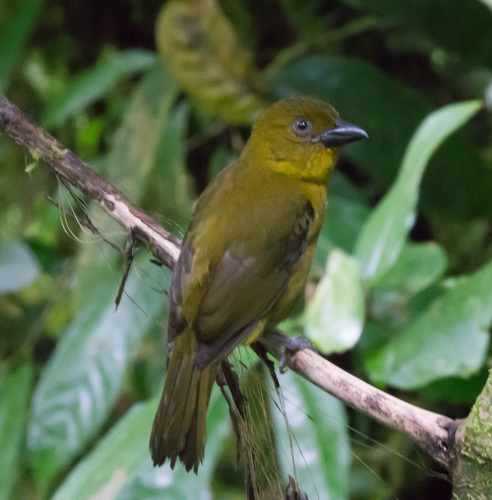
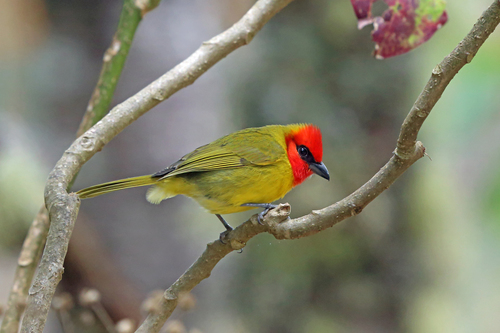
Photo: (c) Javier González, some rights reserved (CC BY-NC), uploaded by Javier González · cc-by-nc

Taxonomy

Animalia Chordata Aves Passeriformes Cardinalidae Cyanoloxia

More from Cardinalidae

Sources: GBIF, iNaturalist, Wikipedia, NCBI Taxonomy · Disclaimer

Identify Cyanoloxia glaucocaerulea (d'Orbigny & Lafresnaye, 1837) instantly — even offline

iNature uses on-device AI to identify plants, animals, fungi and more. No internet needed.

Download iNature — Free

Start Exploring Nature Today

Download iNature for free. 10 identifications on us. No account needed. No credit card required.

Download Free on App Store