About Cyanea annaskala von Lendenfeld, 1882
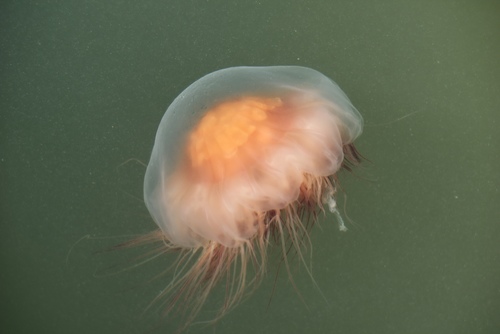
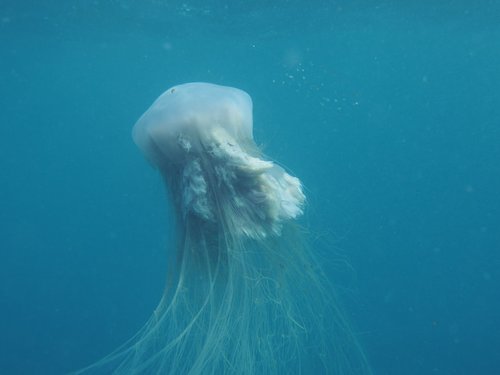
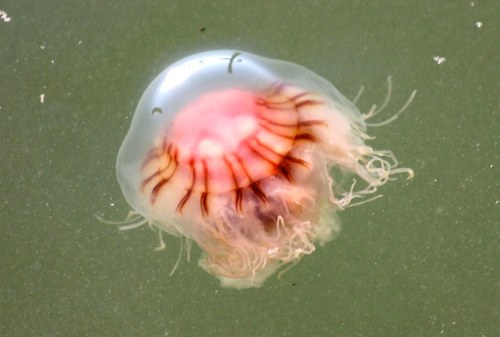
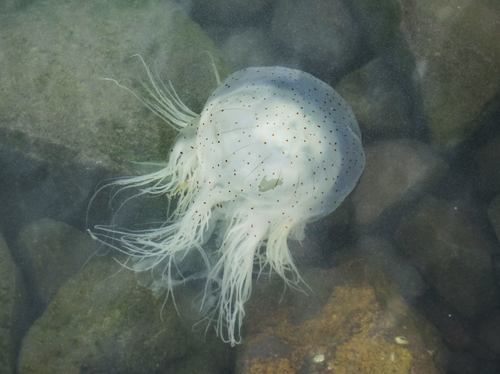
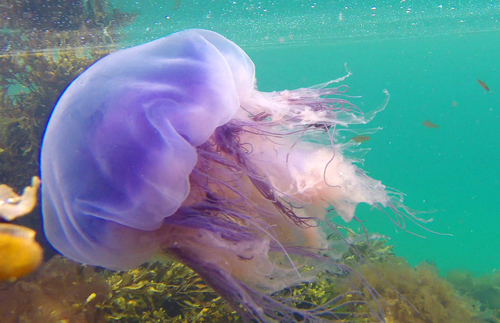
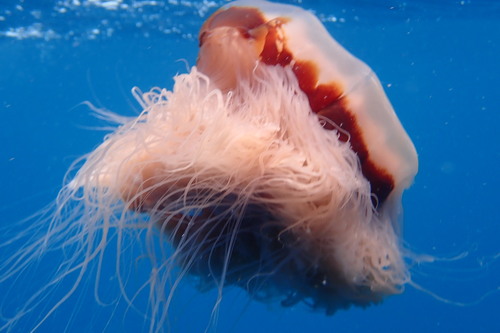
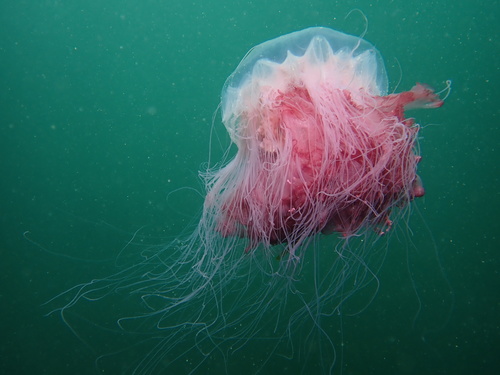
Morphology and ecology: The bell of Cyanea annaskala has 8 lobes, each with a central cleft. A key distinguishing feature of this species is purple coloration that runs the full length of its arms. Bell width typically ranges from 25 cm to 1 m. The bases of the oral arms are not thickened, the species has between 17 and 24 shallow coronal muscle folds, and there are no pits within these muscle folds. Cyanea annaskala is endemic to the waters of southeastern Australia, found at depths ranging from shallow nearshore waters to 20 m below the surface. It occurs at particularly high concentrations in Victoria’s Port Philip Bay and Port Jackson in Sydney, New South Wales. This species is carnivorous, feeding on small fish and crustaceans. To improve its chances of catching prey, it will often dive downward and fan out its tentacles to increase its overall surface area. As a cnidarian, it has characteristic harpoon-like stinging cells that inject venom, and like many scyphozoans, its populations can reach very high, uncontrolled bloom levels. Individuals occasionally wash ashore, where they cause minor stings to people visiting the beach. During C. annaskala infestations in Port Phillip Bay in the summers of 1950 and 1961, four young men were stung in the eyes while swimming. The affected individuals experienced severe pain, swelling, temporary vision impairment, photophobia, and blepharospasm. They developed abrasions to the corneal epithelium and punctures to the stroma. Another infestation occurred during the 1997-1998 summer; after hundreds of reported stings, the Victorian Environmental Protection Authority warned swimmers to avoid the water. These large population blooms can be quite damaging to the trophic structure of the local surrounding environment. Reproduction: The gonads of C. annaskala are folded into a ribbon-like structure within a genital band. When stretched out, this gonadial ribbon can reach 300 mm in length. Epithelial cavities form chambers that fuse together to create a genital sinus. Spermatozoa develop in follicles that remain connected to the genital sinus, which creates a pathway for sperm to travel through. A fertilized egg develops into a polyp via the budding process of strobilation. The polyp developmental stage, called a scyphistoma, begins as a coronate scyphistoma. It then develops into a semaeostome scyphistoma, and finally into a rhizostome scyphistoma.