About Cyananthus lobatus Wall. ex Benth.
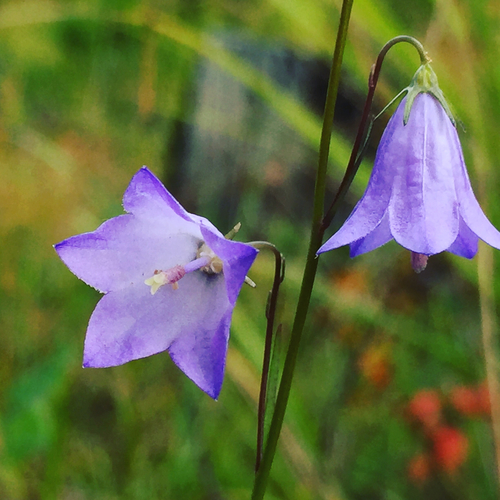
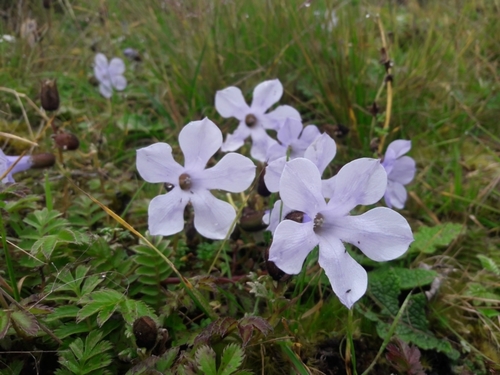
Cyananthus lobatus (scientific name: Cyananthus lobatus Wall. ex Benth.) is a low-growing mat-forming perennial plant. Mature specimens reach up to 10 cm tall and 10–50 cm wide, and it typically takes two to five years for the plant to reach its full maximum size. This species is native to the Himalayas, with a natural range extending from Himachal Pradesh, India to Tibet and Yunnan, China. It grows at altitudes between 3,300 m and 4,500 m, in habitats of grassy slopes and forests. When grown in cultivation in greenhouses, Cyananthus lobatus is usually disease-free, but may be infested by pests including aphids and glasshouse red spider mites. Cyananthus lobatus has received the Royal Horticultural Society Award of Garden Merit, an award that confirms it is a reliable plant well-suited for cultivation. It can grow in poor soil, but grows better in soil that contains rich humus. It requires consistently moist, well-drained soil, and prefers soil with a neutral to slightly acidic pH. It needs cool growing conditions and at least partial shade. It is most commonly grown in gravel gardens, rock gardens, or as a potted indoor plant, and requires no regular pruning. This species can be propagated from seed or from cuttings. Seed should be sown immediately once it is ripe. Softwood cuttings are used for propagation, taken and rooted in late spring or early summer. Cyananthus lobatus produces flowers in late summer, and keeps its foliage from spring through fall.