About Cuterebra fontinella Clark, 1827
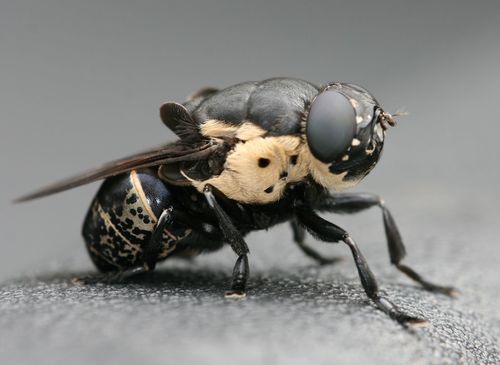
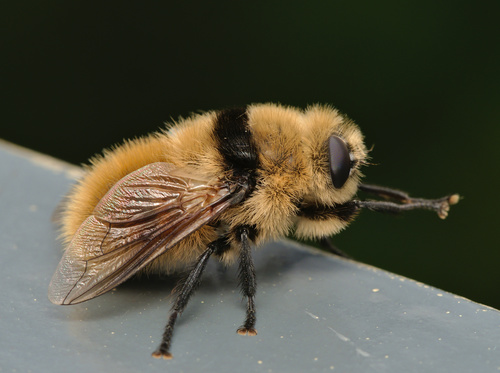
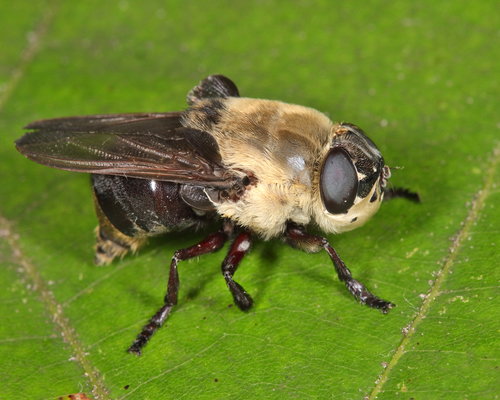
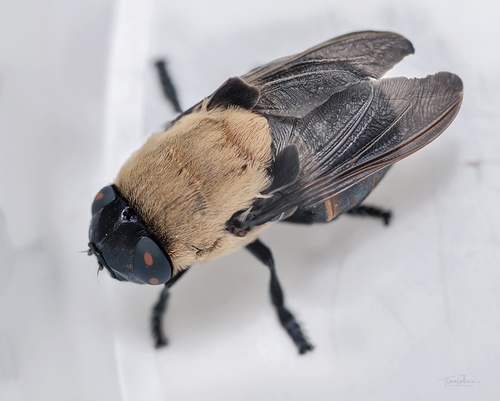
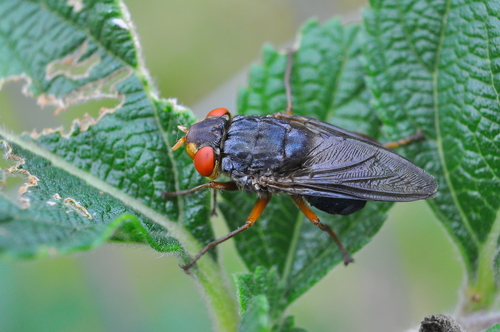
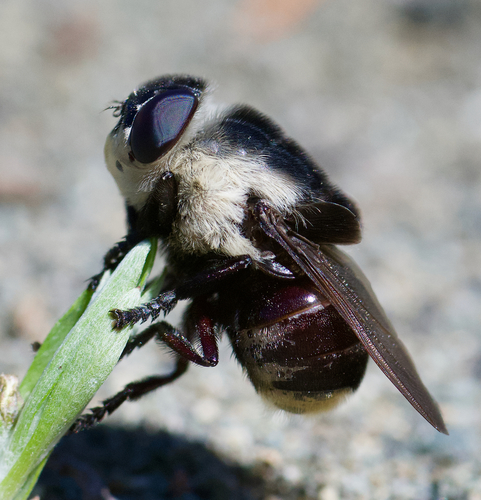
Cuterebra fontinella, a species of botfly, strongly resembles other species in the Cuterebra genus, but has a small number of unique distinguishing features. The simplest identifying characteristic is the host species it infests, since different Cuterebra species infest different host animals. This method is not always reliable, however, because C. fontinella is known to infest multiple host species in addition to its preferred host, Peromyscus leucopus, the white-footed mouse. C. fontinella eggs are generally 1.05 mm (0.041 in) long and 0.03 mm wide. They have a canoe-like shape and a large groove running along their underside; this groove allows the eggs to attach to vegetation. As C. fontinella larvae develop, their color changes from golden brown to black. The larvae have an oval shape. Mature larvae are typically 22 mm (0.87 in) long, 13.9 mm (0.55 in) wide, and 12.5 mm (0.49 in) thick. The larva’s body is segmented into 12 sections, and almost every segment is covered with backward-facing conical spines. The head segment is shield-shaped, colored white or tan, and holds antennal pits and retractable mandibles. The 12th segment holds two spiracles and is also lightly colored, but the spines on this segment face outward. Adult C. fontinella have black hair on their scutum and a black spot on their anipisterum. Adults are typically around 30 mm (1.2 in) in size and closely resemble bees. Genetic analysis can also be used to tell C. fontinella apart from closely related species. The COI and COII genes are reliable genetic markers for distinguishing between Cuterebra species. Using species-specific markers, researchers can accurately identify this botfly species at any life stage. Larvae of different species often look very similar and are easy to confuse, so genetic identification is very important for this group. Hybridization between different species in the Cuterebra genus is known to occur, and this can create ambiguous results during genetic testing. C. fontinella is distributed across all of North America, including most of the continental United States, southern Canada, and northern Mexico. The population density of C. fontinella depends on temperature; colder regions have less dense populations than warmer regions. C. fontinella lives in North American deciduous forests. It prefers areas near running water with low-elevation vegetation. These botflies reach their highest population density near the edges of these habitats. C. fontinella are territorial insects. Males chase away other intruding males while patrolling their territory by flying in figure-eight and oval patterns. Females only fly when searching for a mate, so males attempt to control as much high-quality territory as they can. They gather above heat-reflecting surfaces along roadsides and near streams. These flies are very dependent on temperature; although they can live across a wide range of latitudes, the local climate influences how common they are throughout the year. The host organism acts as the primary food source for this species. Different Cuterebra species target different rodent species, and C. fontinella has been recorded feeding on several different rodent species. Peromyscus leucopus (white-footed mouse) is the preferred host of C. fontinella, and typically 19% to 33% of all P. leucopus become infested within a year. Other recorded hosts for C. fontinella include Lepus artemisia (cottontail rabbit), Ochrotomys nuttalli (golden mouse), P. gossypinus (cotton mouse), P. maniculatus (eastern deer mouse), Heteromys irroratus (Mexican spiny pocket mouse), and very rarely humans. The highest infestation rates occur in late summer and early fall.