About Cuspicona simplex
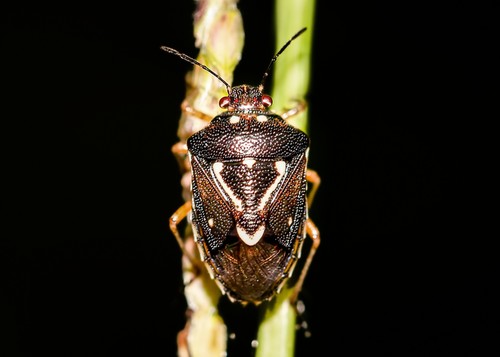
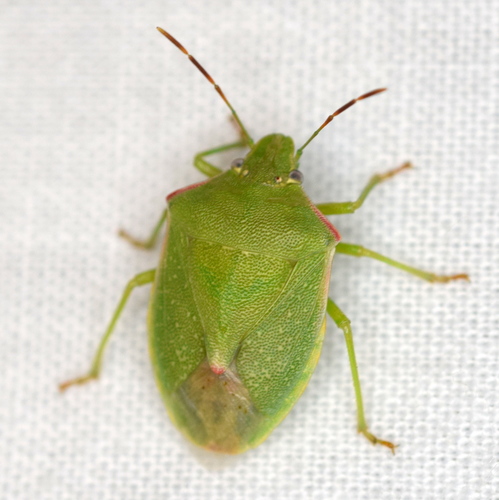
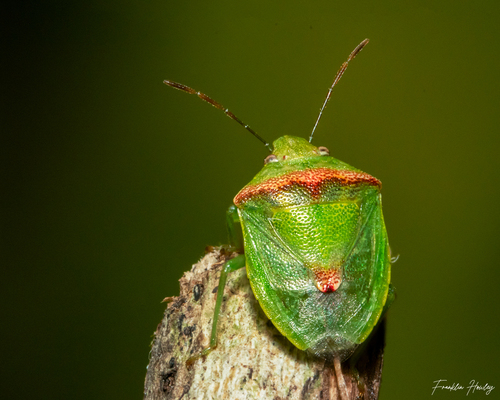
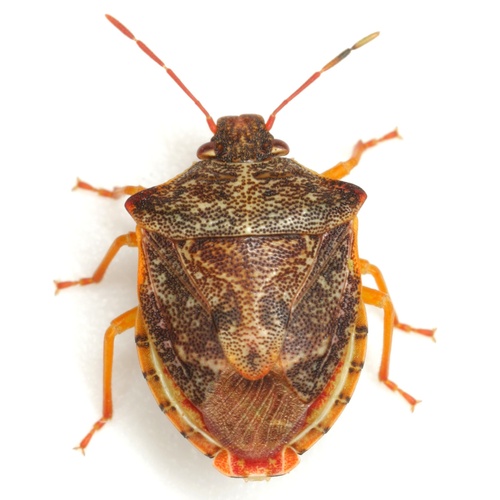
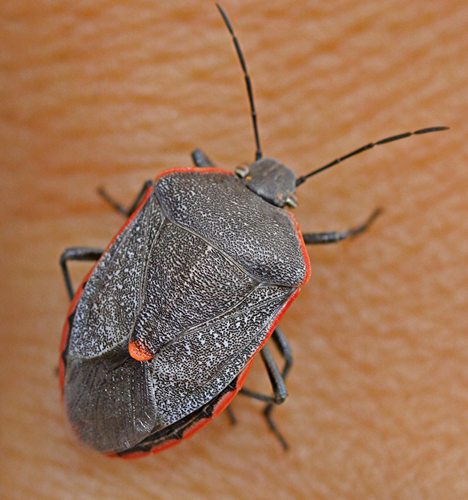
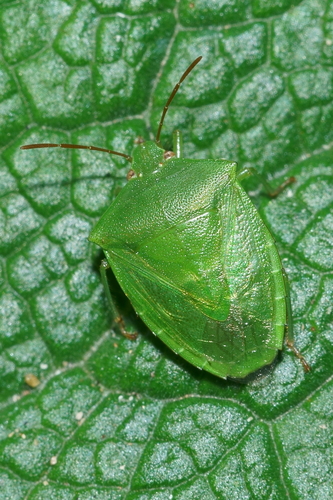
Scientific name: Cuspicona simplex Description: Adult Cuspicona simplex are bright green, range from 8.25 to 10.4 mm (0.325 to 0.409 inches) in length, and have pointed shoulder humeri. First and second instar nymphs are much smaller, primarily black and white, and may have patches of red or brown. Later nymph stages are pale green with black patches on the abdomen. Life cycle: Adult Cuspicona simplex usually lay 14 eggs together in a single mass on the undersides of leaves. Newly emerged nymphs remain near the egg mass until they molt their skins. Like other pentatomids, Cuspicona simplex develops through five juvenile nymph stages before reaching adulthood. Adults overwinter at the base of plants or in loose soil until late spring, when they aggregate to mate and lay eggs. The total development time from egg to adult depends on temperature, and ranges between 28 and 30 days when kept at a constant temperature of 21 °C (70 °F). Ecology: Cuspicona simplex is most commonly found associated with plants in the nightshade family, particularly species in the genus Solanum. It has also been recorded feeding on raspberry. Like other herbivorous stink bugs, C. simplex feeds on its plant hosts by piercing fruits or stems with its stylets, injecting saliva, and sucking plant fluids out of the host tissue. At least three species of egg parasitoids attack Cuspicona simplex eggs. The first, Trissolcus basalis, is a biocontrol agent introduced to Australia and New Zealand to target the green vegetable bug Nezara viridula. Eggs parasitized by T. basalis turn completely and uniformly black. The second species, Trissolcus oenone, is native to both Australia and New Zealand, and little is known about its biology. Eggs parasitized by T. oenone have a distinct black ring only at the top of the egg. The third species is an undescribed member of the genus Acroclisoides; this species may attack C. simplex eggs directly as a primary parasitoid, or it may attack eggs already parasitized by the first two species, acting as a hyperparasitoid in that case. A species of braconid wasp in the genus Aridelus has been recorded from fifth instar C. simplex nymphs, and a species of tachinid fly in the genus Alophora has been recorded from adult C. simplex.