About Curruca melanocephala (J.F.Gmelin, 1789)
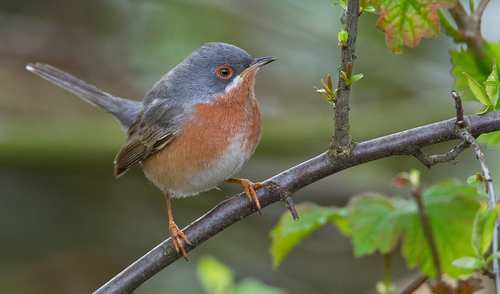
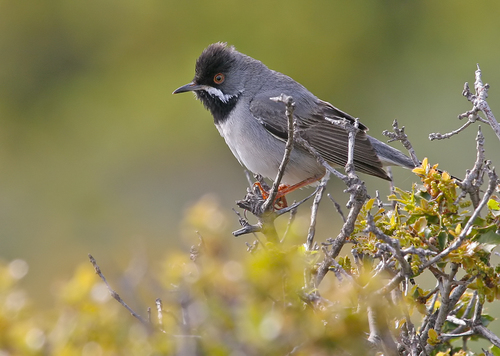
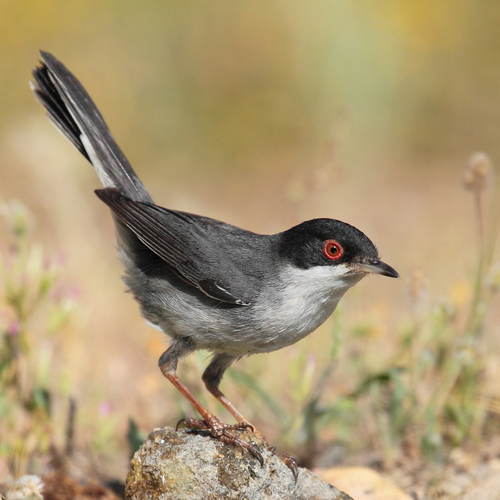
The Sardinian warbler, with the scientific name Curruca melanocephala, is a common and widespread warbler in the Sylviidae family that originates from the Mediterranean region. Like most species in the Curruca genus, it shows distinct plumage differences between males and females. Adult males have a grey back, whitish underparts, a black head, white throat, and red eyes. Plumage can be somewhat variable even within the same locality: the intensity of a reddish hue on the upperparts and/or underparts ranges from completely absent to pronounced in some subspecies. Females are mainly brown on the upperparts, buff on the underparts, and have a grey head. The song of the Sardinian warbler is fast and rattling, and it is a very characteristic sound of the Mediterranean areas where this bird breeds. This species breeds in the southernmost areas of Europe, extending just into Asia in Turkey and at the eastern end of the Mediterranean. Unlike most other warblers, this small passerine bird is not particularly migratory, though some individuals winter in North Africa. It has also been recorded as a vagrant far outside its breeding range, reaching as far north as Great Britain. The Sardinian warbler inhabits open country and cultivated land, with bushes available for nesting. It builds its nest in low shrubs or brambles, and lays between 3 and 6 eggs per clutch. Like most warblers, it is primarily insectivorous, but will also feed on berries and other soft fruits.