About Curcuma longa L.
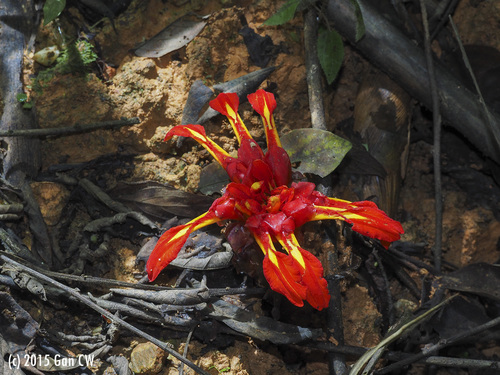
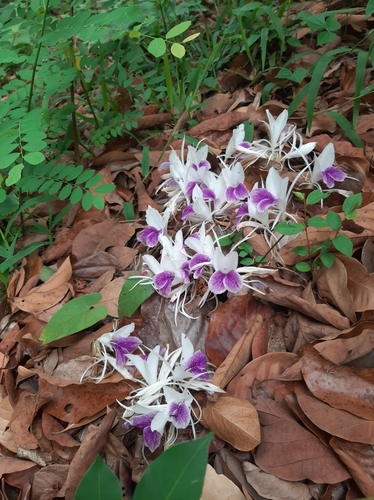
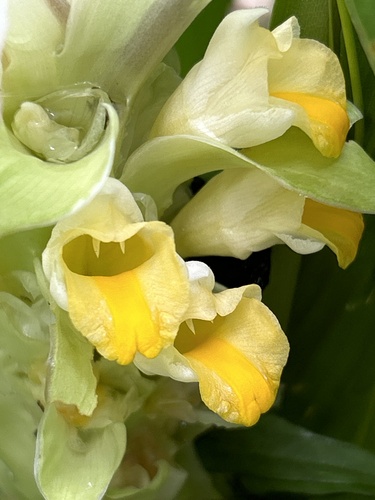
Turmeric (Curcuma longa L.) is a perennial herbaceous plant that grows up to 1 metre (3 feet 3 inches) tall. It produces highly branched, yellow to orange, cylindrical, aromatic rhizomes. Its leaves are alternate, arranged in two rows, and divided into three sections: leaf sheath, petiole, and leaf blade. A false stem forms from the plant's leaf sheaths. The petiole measures 50 to 115 cm (20–45 in) long. Simple leaf blades are usually 76 to 115 cm (30–45 in) long, rarely reaching up to 230 cm (7 ft 7 in), and 38 to 45 cm (15 to 17+1⁄2 in) wide. They have an oblong to elliptical shape, tapering to a narrow point at the tip. By number of species alone, India has the greatest diversity of Curcuma species, hosting around 40 to 45 species. Thailand has a comparable number, with 30 to 40 species, and other tropical Asian countries also host numerous wild Curcuma species. Recent research indicates that the taxonomy of C. longa is problematic: only specimens from South India can be definitively identified as C. longa. The phylogeny, evolutionary relationships, intraspecific and interspecific variation, and even the identity of other Curcuma species and cultivars around the world still need to be established and validated. Multiple different species currently used and sold as "turmeric" in other parts of Asia have been found to belong to several physically similar taxa that share overlapping local names. Turmeric grows wild in the forests of South and Southeast Asia, where it is harvested for use in classical Indian medicine systems including Siddha and Ayurveda. In 2019, the European Medicines Agency concluded that while there is insufficient scientific evidence confirming efficacy, turmeric herbal teas and other oral turmeric products can be used to relieve mild digestive discomfort such as feelings of fullness and flatulence, based on their long history of traditional use. In Eastern India, the plant is one of the nine components of nabapatrika, alongside young plantain or banana plant, taro leaves, jayanti barley, bilva wood apple, darimba pomegranate, Saraca indica, manaka (Arum or manakochu), and rice paddy. The turmeric-based Haldi ceremony, called gaye holud in Bengal (literally "yellow on the body"), is held before weddings across Indian cultural communities throughout the Indian subcontinent. In Tamil Nadu and Andhra Pradesh, a dried turmeric tuber tied with string is used as part of Tamil–Telugu wedding rituals to create a Thali necklace. In western and coastal India, during weddings of the Marathi and Konkani peoples and Kannada Brahmins, the couple tie turmeric tubers to each other's wrists with strings in the Kankana Bandhana ceremony. In many Hindu communities, turmeric paste is applied to the bride and groom as part of pre-wedding haldi ceremony festivities. Turmeric is a poor fabric dye because it is not lightfast, but it is still commonly used on Indian clothing such as saris and Buddhist monks' robes. During the late Edo period (1603–1867) in Japan, turmeric was used to dilute or replace the more expensive dyestuff safflower in the production of beni itajime shibori. In 1896, Friedrich Ratzel reported in The History of Mankind that people in Micronesia applied turmeric powder to decorate bodies, clothing, utensils, and for ceremonial purposes. Native Hawaiians, who introduced turmeric to Hawaii (where it is called ʻōlena in Hawaiian), make a bright yellow dye from the plant. Turmeric and its component curcumin have been tested in a range of low-quality clinical trials, with no high-quality evidence showing they produce anti-disease effects or general health benefits. As of 2019, there is no conclusive scientific evidence that curcumin reduces inflammation. There is weak evidence that turmeric extracts may relieve symptoms of knee osteoarthritis and reduce muscle soreness after physical exercise. Use of turmeric supplements is linked to rare but potentially serious liver injuries, particularly in people with genetic susceptibility to this harm.